A covered deck can turn your backyard into the place you actually want to be. It gives you shade on bright afternoons, shelter when the weather shifts, and a softer, calmer space for slow mornings, family dinners, and quiet nights outside.
Think warm wood underfoot, a light breeze moving through soft curtains, and golden evening light filtering across a table set for dinner. With the right cover, your deck feels cooler, cozier, and far more useful through the day.
These 9 ideas show how to shape that feeling in a way that fits your home. Some bring flexible shade. Some add privacy or bug protection. All of them can help you build a backyard retreat that looks beautiful and feels easy to enjoy.
1. Roofed Lounge with Ceiling Fans
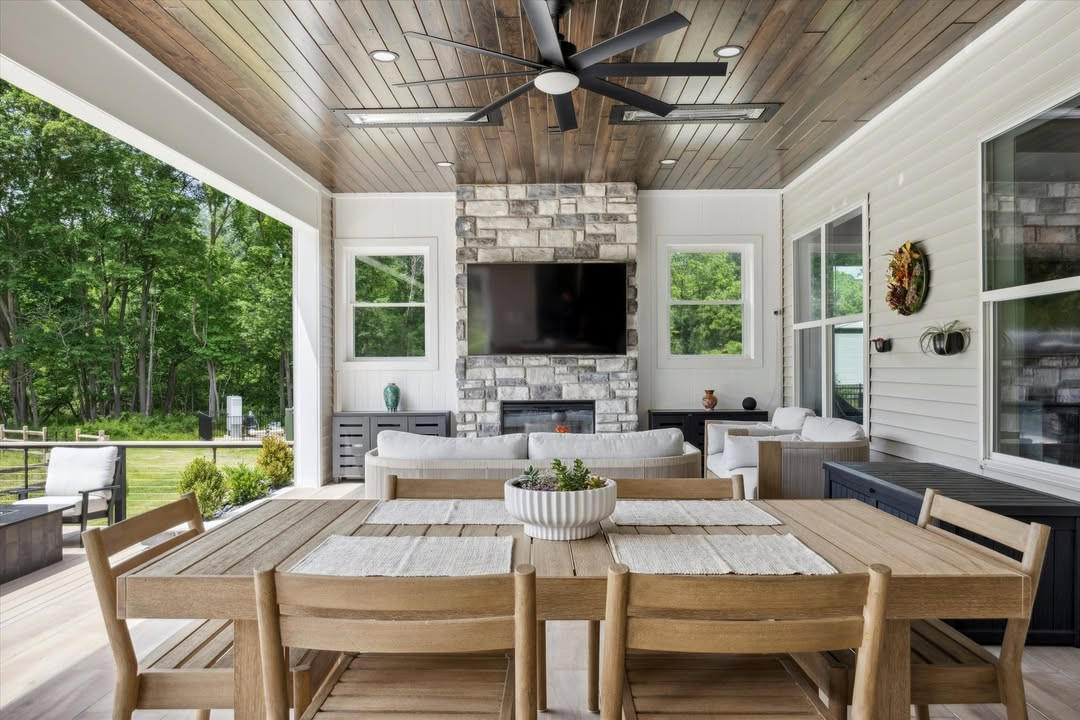
A roofed lounge with overhead fans gives your deck a true living-room feel outdoors, and that change affects how often you use the space. You stop thinking of the deck as a place for special occasions and start treating it like your daily spot for coffee, reading, or an easy evening conversation. The full cover blocks harsh sun and light rain, while the moving air from the fans helps the whole area feel cooler and less heavy in summer.
This setup works especially well if your deck faces strong afternoon sun or gets stuffy in warm weather. A simple seating group under a solid roof already makes the space more inviting, but adding ceiling fans turns comfort into the main feature. I have seen decks with good furniture still sit empty in July, simply because the air feels still. Fans fix that in a direct, practical way.
Cool air, calmer mood
When air moves above you, the deck feels lighter right away. That matters more than people expect. Thick summer heat can make even a pretty backyard feel tiring, and a fan helps cut that heavy feeling without changing the open look of the deck.
You can lean into that comfort with deep cushions, a woven outdoor rug, and soft neutral tones that reflect light instead of trapping it. White, sand, sage, and weathered wood all work well here. The result feels relaxed and quiet, almost like a shaded porch at a small resort, but it is right outside your back door.
Furniture that suits the structure
A covered lounge works best when the furniture matches the scale of the roof. If the roof is broad and high, choose a larger sofa, two roomy chairs, and a wide coffee table so the area feels grounded. If the roofline is lower and more intimate, use slimmer frames and fewer pieces so the deck stays open and easy to move through.
Fans also affect layout. You want the main seating zone centered under the airflow, not pushed to the edge where the breeze fades. Keep side tables, lamps, and planters low enough that the space still feels open from every angle.
Small details that make it work
Lighting matters here because a covered deck often becomes an evening room. Add warm ceiling lights or wall sconces so the space glows after sunset instead of turning flat and dim. A fan with a built-in light can help, but layered light usually feels better.
If you want the area to stay comfortable through more of the year, add outdoor curtains on one or two sides. They soften the structure, block some low sun, and make the lounge feel more private without closing it off. That balance is what makes this idea strong. You get shelter, airflow, and an outdoor room that feels easy to use every day.
Credit to @firststatebuildinganddesign
2. Pergola Deck with Retractable Canopy
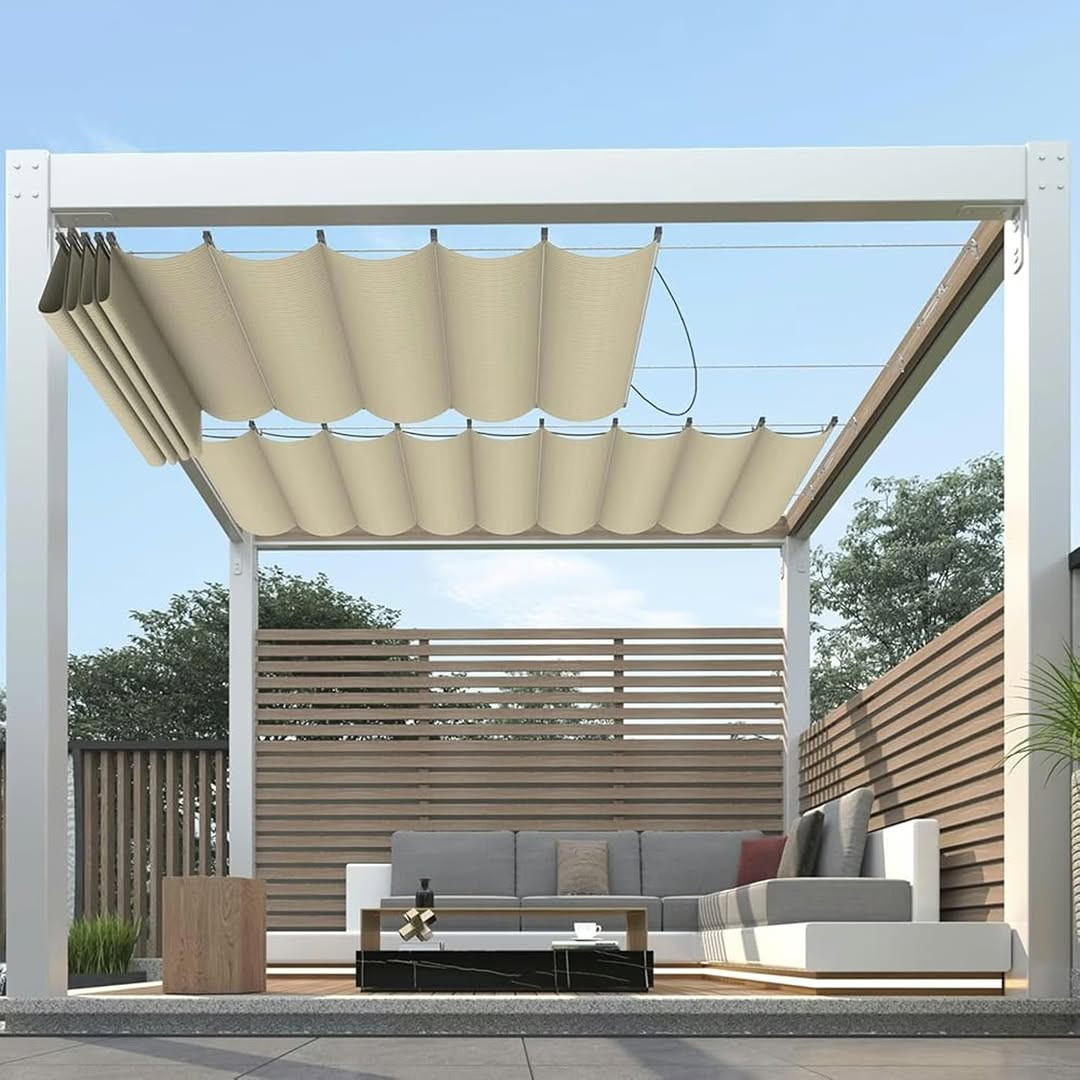
A pergola with a movable canopy gives you choice, and that is the real appeal. On bright days, you can pull the fabric across for shade. In cooler weather or early morning light, you can slide it back and enjoy an open sky above you. That flexibility makes the deck feel responsive instead of fixed, which is helpful if your yard gets different sun patterns through the day.
The structure itself keeps the space airy, so you still get that open backyard feeling. The canopy adds the comfort that many uncovered decks lack. If you love light but hate feeling exposed, this is one of the smartest ways to strike the middle ground.
Why flexible shade feels better
Permanent roofing creates a strong sense of shelter, but a pergola canopy offers a softer effect. You can shape the mood based on the weather, the season, or even the kind of gathering you are having. A brunch with filtered sunlight feels very different from a fully shaded afternoon with a book and a cold drink.
That shifting quality makes the deck feel more active and more personal. You are not stuck with one look or one level of coverage. I like this option for families who use the same deck in many ways, from quiet mornings to casual dinners to weekend visits with friends.
Materials that keep it stylish
The best pergola decks use simple, strong materials that age well outdoors. A painted white pergola feels crisp and coastal. Dark metal looks clean and modern. Natural wood gives off warmth and blends beautifully with greenery, stone planters, and soft outdoor textiles.
For the canopy, choose a fabric tone that supports the mood you want. Cream and light taupe keep the deck bright and calm. Charcoal feels more dramatic and can anchor a modern backyard. Try to match the canopy to your cushions or rug so the whole space feels pulled together rather than pieced together.
How to place the deck zone
This style works well over a lounge area, a pair of chaise chairs, or a compact dining setup. Since the roof is not solid, the deck still feels visually open, so you can use a slightly larger furniture arrangement without making the space feel crowded. Keep at least one side connected to plants or garden views. That helps the pergola feel like part of the yard, not an isolated frame.
You should also think about where the sun hits in late afternoon. If that is the harshest time in your yard, place the seating where the canopy can block it most effectively. A retractable feature is only useful if it solves a real comfort problem. When it does, the deck becomes a place you can enjoy for much longer each day.
Credit to @bfdeals.ca
3. Screened-In Deck for Bug-Free Evenings
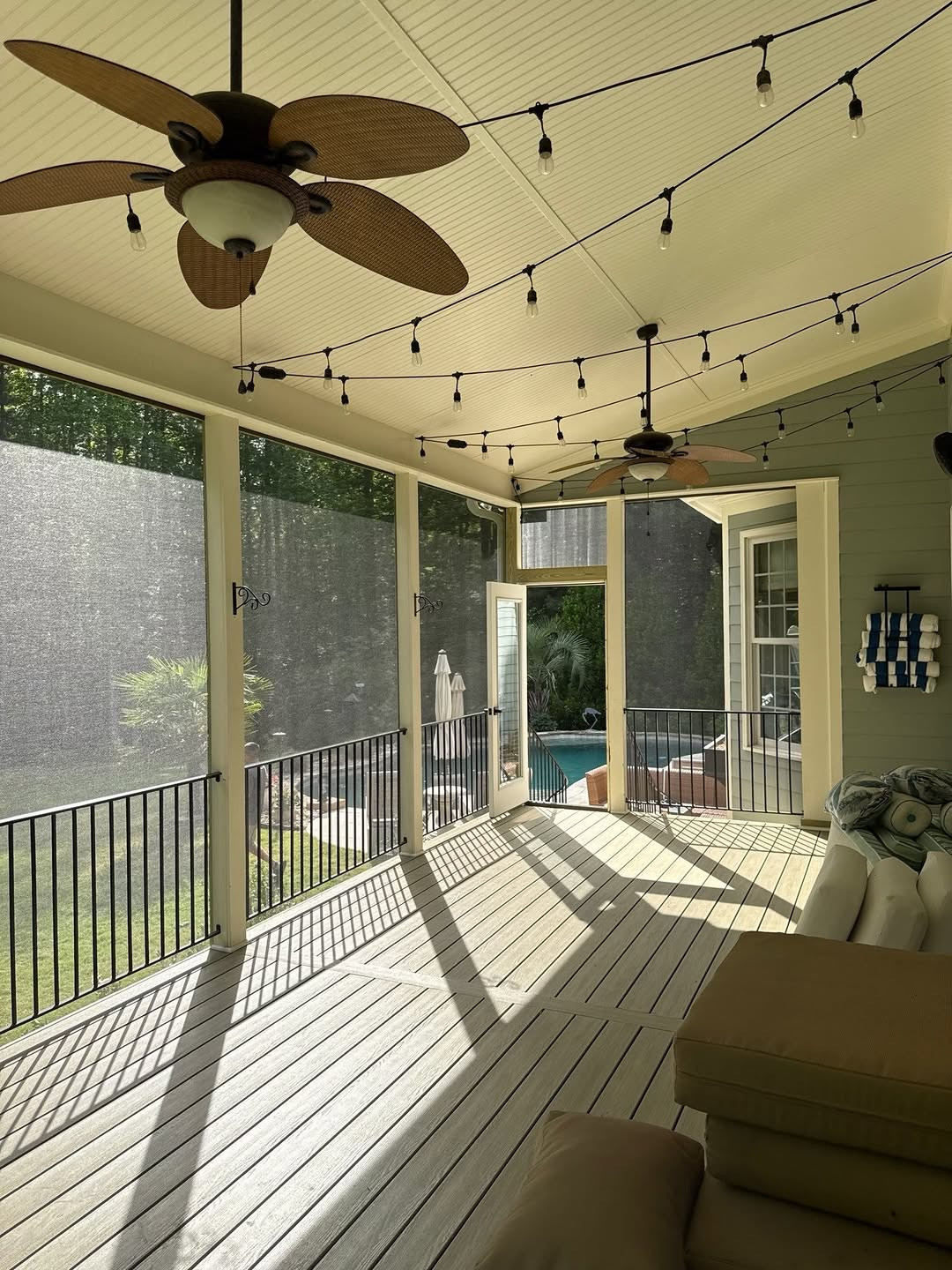
A screened-in deck changes the outdoor experience in a very clear way. You still get fresh air, garden views, and the sound of the evening around you, but you lose the constant annoyance of mosquitoes, flies, and other pests. That one change can make your deck much more useful for dinners, late-night conversations, and slow summer weekends.
For many homes, this is the difference between a pretty deck and a deck that gets used. If you avoid going outside at dusk because of bugs, screening the space can solve the problem without taking away the comfort of being outdoors. screened-in design feels practical, but it can also look polished and inviting when the materials are chosen well.
A room that still feels outdoors
The best screened decks never feel closed in. They feel soft, breezy, and protected. Slim dark screen frames tend to disappear visually, which helps your eye stay focused on the trees, garden, or backyard beyond.
You can make the space feel even more open with pale ceiling paint, natural wood flooring, and furniture with lighter frames. Add linen-look cushions, a simple dining table, or a hanging chair, and the room starts to feel like a porch retreat instead of a sealed box. That balance is what most people want. You get comfort without losing atmosphere.
Better dinners, better nights
Dining outdoors becomes much easier when you are not guarding your plate or swatting the air every few minutes. A screened deck supports the kind of evenings people actually remember, where the table stays set, the candles stay lit, and nobody rushes indoors after sunset. It creates a slower pace.
This setup is also great if you like to leave doors open between the house and deck. The screen acts as a buffer, so air can move through the space without inviting every insect inside. That can make your home feel larger in warm months because the indoor and outdoor areas work together more naturally.
Details that improve comfort
If you are planning a screened deck, think beyond the walls. A ceiling fan helps keep air moving. Good lighting keeps the room pleasant at night. Durable flooring matters too, because screened spaces still deal with moisture, pollen, and changing temperatures.
A screen door with a strong latch is worth adding if kids or pets use the deck often. Small gaps can ruin the whole point of the design, so neat installation matters here more than people expect. Done well, this kind of deck becomes one of the easiest spaces in the home to enjoy, especially when the day cools down and you want to stay outside longer.
Credit to @elitexteriorsnc
4. Outdoor Dining Under a Gabled Roof
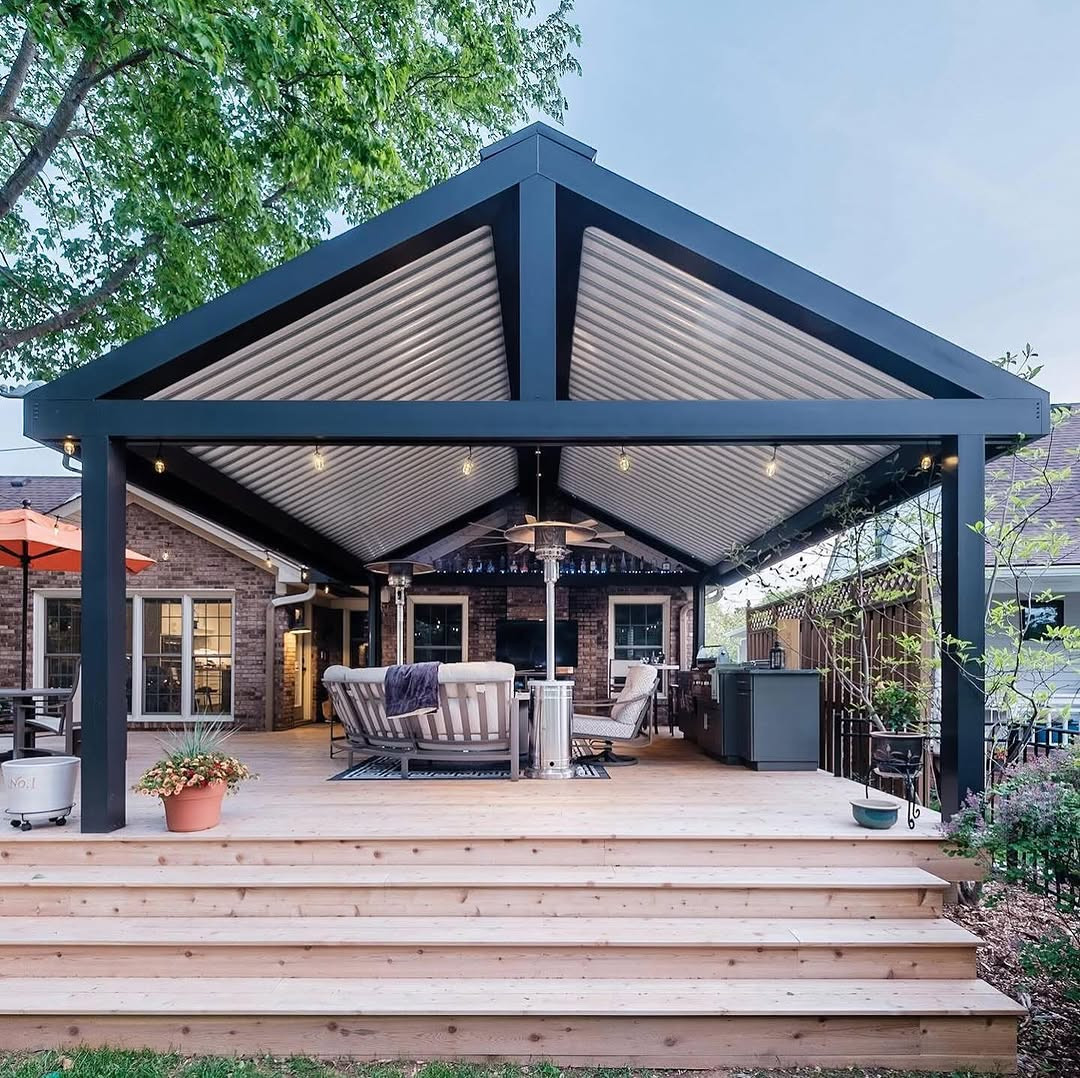
A gabled roof gives your deck height, shape, and a strong sense of purpose. It turns part of the backyard into a true dining area, with enough shelter for family meals, weekend guests, and long evenings around the table. The pitched form also draws the eye up, which makes the space feel larger and more finished than a basic flat cover.
This idea works well if you want your deck to host real gatherings instead of just holding a small café table in the corner. The roof defines the dining zone and protects it from sun and light rain, so meals feel less rushed and more comfortable. I think this style has a special kind of charm because it feels both grand and welcoming.
Height adds drama
The angled ceiling creates visual lift, and that changes the mood right away. A taller roof can make even a modest deck feel airy and generous. If your backyard is surrounded by trees, the shape of a gabled roof also frames the view beautifully and gives the dining area a sense of place.
Exposed rafters, tongue-and-groove wood ceilings, or painted beams can all add character here. Lighter finishes feel bright and classic. Dark stained wood creates a richer, more dramatic setting, especially with black lighting and a solid farmhouse table below.
Building a dining zone that works
Start with a table size that fits the roofed footprint comfortably. You want enough room to pull chairs out, walk around the table, and add a buffet console or planters if needed. A cramped dining deck quickly feels frustrating, even if it looks good in photos.
Lighting deserves special thought in this kind of setup. A pendant or chandelier centered over the table gives the area a strong focal point and helps the deck feel like an outdoor room. If the roof is high, choose a fixture with enough size to hold its own. Tiny lights can disappear in a tall space.
Comfort across seasons
A gabled roof also gives you room for extras that improve comfort over time. You may want a fan in hot weather, mounted heaters for cooler nights, or roll-down shades on one side if low sun hits the table. Those additions are easier to fit into a taller structure.
Keep the palette grounded with wood, stone, black metal, and soft neutral fabrics so the dining area feels timeless. Fresh greenery in large pots can soften the edges and connect the structure to the yard. When this setup is done right, the deck becomes more than a place to eat. It becomes where people gather first and linger last.
Credit to @louveredoutdoor
5. Rustic Timber Cover for Cabin Appeal
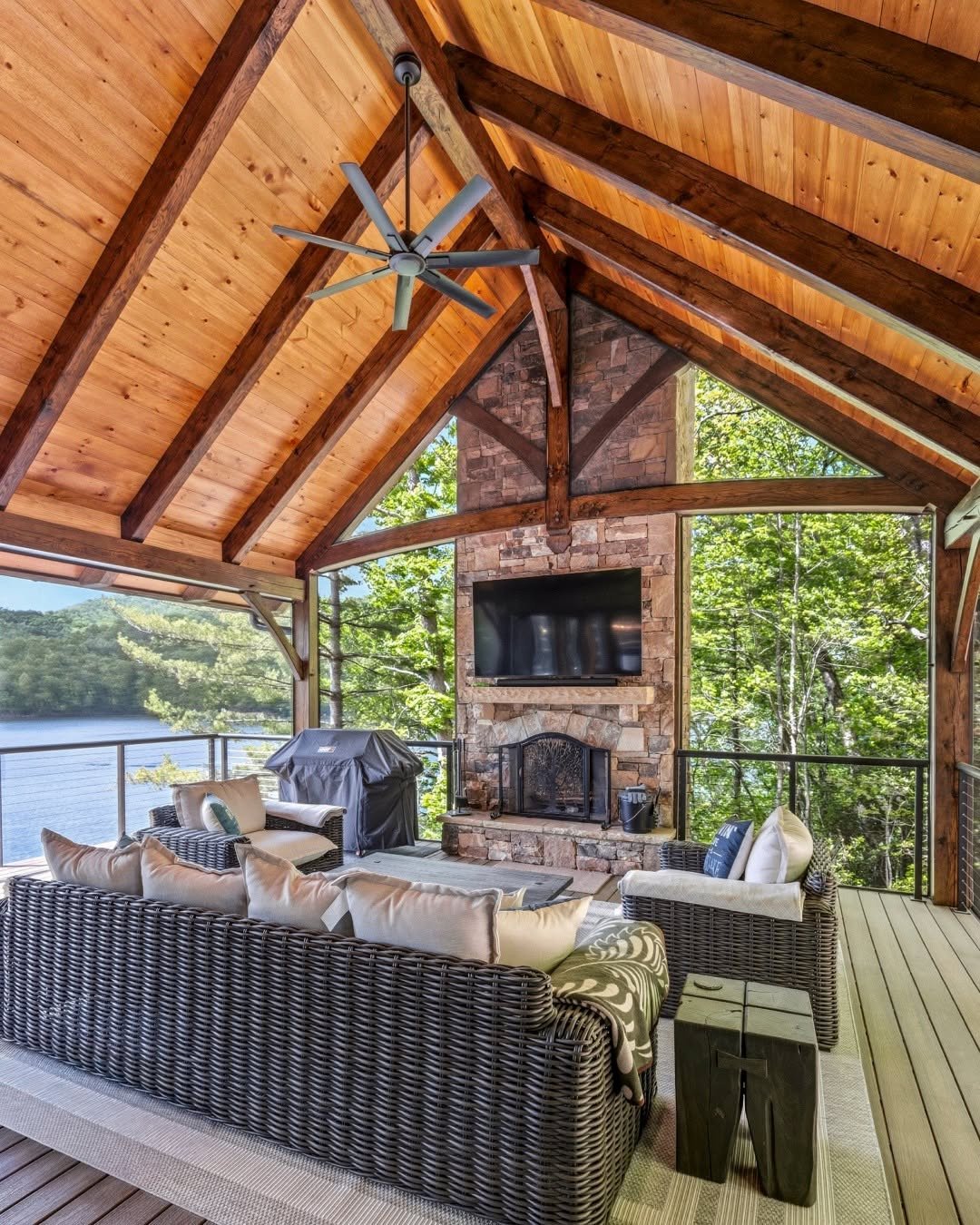
A timber cover brings warmth that many newer outdoor spaces lack. Thick posts, exposed beams, and natural finishes give the deck a grounded, settled look, as if it has always belonged there. If you want your backyard retreat to feel calm, sturdy, and deeply inviting, this style has a lot to offer.
The beauty of timber is that it adds character even before you decorate. The grain, knots, and weight of the wood create texture and depth on their own. That makes the deck feel welcoming in every season, from sunny summer afternoons to cool fall evenings with a blanket over your chair.
Warmth you can see
Natural wood changes the mood of a deck in an instant. Smooth painted structures can look neat, but timber adds soul. Honey tones, weathered browns, and matte finishes catch light in a softer way, which makes the whole space feel more relaxed and less formal.
This style pairs beautifully with stone paths, lantern lighting, iron details, and outdoor furniture in cream, rust, olive, or charcoal. You do not need heavy decoration. The structure itself does much of the visual work, so a few well-chosen pieces often look better than a crowded setup.
Making rustic feel refined
Rustic does not have to mean rough or dark. You can keep the charm of timber beams and still create a clean, polished space. Try simple seating with straight lines, neutral cushions, and a large woven rug to soften the wood and keep the deck from feeling too heavy.
Credit to @woodhouse_timber_frame
6. Modern Metal Roof with Skylights
A metal roof with skylights gives your deck strong weather cover without making the space feel dark or closed in.
Clean Lines, Brighter Days
A modern metal roof works well when you want your covered deck to look neat, simple, and current. The smooth panels create a crisp shape over the deck, and they hold up well in rain, wind, and hot sun. Skylights change the whole mood. Instead of blocking daylight, the roof lets sunlight filter in from above, which keeps the deck open and fresh even on cloudy afternoons.
This idea matters because many covered decks solve one problem and create another. They protect your furniture, but they can also make the deck feel heavy and dim. Skylights fix that. You still get shelter, but your backyard retreat keeps its connection to the sky.
Why This Combo Works
Metal is often chosen for its long life and low upkeep, but the real appeal goes beyond that. The roof feels sleek, and it suits both modern homes and updated traditional homes. I like this option for people who want something practical yet sharp-looking, because it does both jobs at once without trying too hard.
Skylights also make the deck more useful during the day. If you read outside, work on a laptop, or keep plants on the deck, that extra natural light makes a big difference. You may even need fewer lamps in the daytime, which helps the space feel more natural and relaxed.
Best Time to Choose It
This setup makes sense if your current covered deck feels too dark, especially if the deck sits near tall fences or mature trees. It also works well in places with frequent rain, since a solid roof gives better protection than lighter overhead structures. If your home already has black windows, steel railings, or simple trim, a metal roof can tie the whole exterior together in a very clean way.
A Detail Worth Planning Early
Think carefully about where the skylights sit before the roof goes up. Place them over seating areas where you want soft daylight, but avoid putting them where harsh noon sun will hit you in the face. If you can, use tinted or lightly frosted glass in the brightest spot. That small choice can keep the deck comfortable without losing the airy look that makes this idea so appealing.
7. Hot Tub Deck with Privacy Cover
A privacy cover around a hot tub deck creates a sheltered spa corner where you can relax without feeling exposed to neighbors or the street.
Your Own Quiet Spa Corner
A hot tub already feels like an escape, but the setting around it decides whether it feels truly restful. Add a covered structure, and the space becomes more comfortable in light rain, strong sun, or cool evening air. Add privacy walls, curtains, slatted screens, or tall built-in panels, and the whole deck starts to feel like a private room outside.
This idea matters most in smaller backyards, where homes sit close together and open views can work against comfort. You should be able to soak, talk, and unwind without worrying about who can see in. A privacy cover gives that sense of calm right away.
Comfort Beyond Seclusion
Privacy is the first reason people choose this setup, but it is not the only one. A covered hot tub deck also helps trap warmth around the area, which makes cooler nights feel better. If you step out of the water into a sheltered space instead of open wind, the whole experience feels far more inviting.
I also think this setup helps the deck look more finished. A hot tub placed on an open platform can feel dropped in, almost temporary. Frame it with a cover and some thoughtful screening, and it starts to look planned, polished, and worth using often.
Where It Makes the Most Sense
This is a strong choice if your backyard backs up to another yard, an alley, or upper-story windows from nearby homes. It also works well if you use your hot tub year-round and want more comfort in cold or wet weather. Families often like it too, because the defined structure makes the spa zone feel separate from the rest of the yard.
Make Privacy Feel Light
The smartest move is to block views without closing every side completely. Use solid coverage where you need it most, then mix in slatted wood, partial screens, or outdoor curtains that can move with the breeze. That balance keeps the area private, but it still allows air and light to pass through. If every wall is heavy and closed, the space can feel boxed in fast, and that takes away the calm mood you want.
8. Covered Deck with Outdoor Fireplace
An outdoor fireplace under cover turns a basic deck into a warm gathering space that stays inviting long after summer ends.
Warmth That Changes the Season
A covered deck does a lot on its own, but a fireplace changes how long you use the space. Cool evenings stop feeling like a reason to go inside. Instead, the deck becomes the place where people gather with a blanket, a drink, and a little extra time to talk. That shift is what makes this idea so memorable.
The cover above the deck helps protect seating, flooring, and the fireplace surround from weather, which keeps the area looking better over time. It also makes the fire zone feel more anchored. Rather than a loose patio setup out in the yard, you get a defined outdoor room with a clear focal point.
Style and Function in One Spot
An outdoor fireplace brings visual weight to the deck, and that can help the whole layout make sense. Sofas, chairs, and side tables naturally face the fire, so the seating plan feels easy and social. You do not have to guess where people will gather. The fireplace answers that for you.
This idea works in many styles. A stone fireplace feels classic and cozy, while a simple stucco or brick surround looks cleaner and more modern. I have always liked how a fireplace gives a covered deck a sense of purpose. It tells you exactly how the space should be used, and that makes decorating much easier.
Who Should Think About It
You should look at this option if your deck sits empty for much of fall, winter, or early spring. It also fits homes that host friends often, since fire naturally pulls people together and keeps them outside longer. If your backyard view is beautiful at sunset or after dark, this setup helps you enjoy it in more months of the year.
Plan the Venting First
The smartest step is to sort out clearance, chimney design, and local building rules before choosing finishes. A fireplace under a covered deck has to vent smoke properly, and the roof structure needs enough distance from heat. Once that is set, you can focus on stone, brick, seating, and lighting. Start with safety and structure, then build the mood around it.
9. Poolside Shade Structure for Lounging
A poolside shade structure gives you a cool, comfortable place to dry off, rest, and step out of the sun without leaving the fun behind.
The Break Spot You Will Use Most
A covered deck beside the pool can become the most useful area in the whole backyard. After swimming, you need somewhere easy to land. Not far away. Right there. A shaded lounge area gives you a place for towels, drinks, books, and quiet conversation, all within a few steps of the water.
This setup matters because pool decks can get harsh fast. Direct sun, wet surfaces, and glare off the water can wear you out sooner than you expect. A roofed lounging space solves that problem and helps the pool area feel more balanced. You get energy from the water, then relief from the shade.
Comfort That Feels Easy
The best poolside structures feel casual but well planned. A simple covered deck with lounge chairs, a small table, and strong outdoor fabric can handle daily use without feeling stiff. If the cover is tall enough, the space stays airy, which is a big deal near a pool where you want light and movement, not a dark corner.
I think this idea works especially well for families and frequent hosts. People rarely sit in the pool the whole time. They snack, scroll, nap, and chat. A shaded deck supports all of that and keeps the pool zone active even for guests who do not want to swim.
Get the Placement Right
Place the covered deck where it catches the strongest afternoon sun, since that is when shade matters most. Keep the path from pool to seating short and safe, and choose flooring that handles splashes without becoming slick. If you add a ceiling fan or outdoor curtains, the space feels even cooler and more relaxed without much extra work.
Conclusion
The right covered deck does more than block sun or rain. It changes how you use your backyard, and how often you want to be there. A skylit roof can brighten the space, a private spa cover can calm it, a fireplace can warm it, and a poolside shade structure can make every swim day easier.
Save the ideas that match your yard, your weather, and the way you relax. Start with one strong feature, then build around it. A comfortable backyard retreat usually begins with good cover and one smart decision.