A small kids bedroom can feel crowded fast. Toys spill out, clothes pile up, and even a sweet room starts to look busy instead of calm.
The right ideas fix that. You can make a tiny space feel open, useful, and full of charm with smart layouts, soft color layers, warm wood tones, hidden storage, and cozy corners that invite both rest and play.
These 10 ideas help you fit more into less space without making the room feel packed. Think low beds, wall shelves, reading nooks, tidy bins, and playful details that still look polished. If you want a room that works harder and looks better, these ideas will give you plenty to save and try.
1. Define Zones From the Start
Give Each Spot a Job
In a small kids bedroom, every area needs a clear purpose. That sounds strict, but it actually makes the room feel calmer and easier for your child to use. A bed zone for sleep, a dresser zone for getting ready, a small table for homework, and a soft rug for play can turn one tight room into a space that feels ordered and welcoming. You do not need walls to do this. You just need visual clues that tell the eye where one activity starts and another stops.
You can shape these zones with simple design moves. A painted wall arch behind the bed creates a sleep area. A narrow bookshelf beside a desk marks a study corner. A round rug and floor cushions can define a play spot. I have seen the smallest rooms feel twice as useful once the furniture stopped floating around without a plan. Children also respond well to clear zones because they know where things belong, and that makes cleanup less of a fight.
Use Color and Texture as Dividers
Furniture placement helps, but color and texture do even more. Soft sage or pale blue around the bed brings a quiet mood. A light wood desk and woven basket near the study area add warmth and structure. In the play corner, brighter tones like mustard, dusty pink, or soft green can lift the energy without making the room look loud. These shifts do not have to be bold. Even small changes in tone or material can create a clear sense of order.
Textiles are useful here. Curtains under a loft bed can hide toy storage and make a playful den. A quilted bench cushion by the window can mark a reading spot. A washable runner beside the dresser gives the dressing area its own footprint. This layered look adds comfort, and it helps a compact room feel intentional rather than crowded.
Start Early, Save Stress Later
Zoning works best when you plan it from the beginning, even if your child is still very young. Their needs will change, but the room will stay easier to update if the layout already has clear roles. A play zone can later become a homework zone. A reading corner can turn into extra clothing storage with a bench and baskets. The structure stays useful as your child grows.
If you are setting up from scratch, sketch the room before you buy anything. Measure the walls, note where the window and door swing are, and think about how your child moves through the space. Keep open floor area in the center if possible. That one choice can make a small room feel lighter from the moment you walk in.

Credit to @crateandkids
2. Choose Beds That Save Space
Make the Bed Work Harder
The bed takes up the most room, so it should do more than one job. In smart small kids bedroom designs, the best bed is often the one that gives back floor space. Loft beds free the space below for a desk, toy storage, or a reading corner. Trundle beds are useful if siblings share a room or if sleepovers happen often. Low-profile frames can also help because they keep the room feeling open and easy to move through.
Think about your child’s age before you choose. A loft bed may be perfect for a school-age child who needs a desk, but a younger child may do better with a low bed and open play space. You want the room to feel safe and simple first. Style comes after that. Even so, you can still pick something beautiful, with painted wood, soft bedding, and a shape that feels cozy rather than bulky.
Low Beds Can Open a Room
Many parents think a larger bed frame will look more polished. In a small room, the opposite is often true. A low bed lets the eye travel across the room without hitting a heavy block in the middle. That visual openness matters. It can make the ceiling feel taller and the whole room feel less cramped, especially when paired with light bedding and a slim nightstand.
Floor beds also work well for young children. They make it easier for kids to get in and out on their own, and they keep the room grounded and relaxed. Add a soft headboard, a warm lamp, and a few framed prints above the bed, and the look still feels finished. I like this option when a room needs to stay flexible because the extra wall space above and around the bed gives you more freedom later.
Built-In Sleep Solutions Pay Off
If you are renovating or ordering custom pieces, built-in beds can be a smart move. A bed tucked between wardrobes or set into a wall niche can create a neat, cocoon-like sleeping area while cutting visual clutter. That setup often looks more custom and more organized than separate pieces pushed together. It also makes use of awkward room shapes that standard furniture does not handle well.
Choose frames with drawers, hidden cubbies, or shelves at the head. Those details reduce the need for extra furniture, which matters in a tight room. The best bed choice is the one that fits your child’s life now and still leaves enough room for living, playing, and growing.

3. Build Storage Into Every Surface
In a small room, storage cannot be an afterthought. It has to be part of the design from the start. Under-bed drawers, benches with lift-up lids, and ottomans that hide toys all help you store more without adding clutter. This is one of the smartest ways to improve a kids bedroom because it keeps the floor clear and the room easier to clean.
Children usually have a mix of things that are hard to store neatly, from puzzle boxes to stuffed animals to tiny socks. Hidden storage solves that problem without making the room feel like a closet. A bench under the window can hold blankets and books. A headboard shelf can replace a bedside table. Even a narrow ledge above the bed can display favorite picture books without taking up extra floor space.
Walls Can Hold More Than Decor
Once the floor and under-bed space are working hard, look at the walls. Floating shelves, slim picture ledges, peg rails, and hanging baskets give you room for storage and style at the same time. They keep books, small toys, and daily items easy to reach, which helps kids use the room on their own. This matters more than many people expect. If storage is too high or too hard to open, children will not use it well.
Try mixing open and closed storage. Open shelves are nice for books, framed art, and a few baskets, but too many exposed items can make a small room look messy. Closed drawers or bins hide the visual noise. That balance helps the room feel tidy even when life is busy.
Small Furniture Should Earn Its Place
Every piece should do more than one thing if possible. A nightstand with drawers beats a plain stool. A desk with cubbies works better than a simple table. A toy chest that doubles as a seat gives you one less item to buy and one less thing to fit. These choices seem small, but they add up fast in a compact room.
Take inventory before you bring in more storage. You may not need a large dresser if you add hanging organizers inside the closet and drawers under the bed. You may not need a bookshelf if you install wall ledges and a bench with book storage. Good design is often about removing extra pieces, not adding them.

Credit to @unitrenderspace
4. Use Vertical Space With Purpose
Look Up for Extra Room
When floor space is tight, the walls become your best tool. Vertical storage helps a small kids room feel more open because it draws the eye upward and frees the lower half of the room. Tall bookcases, stacked shelves, wall hooks, and upper cabinets all make use of space that often goes empty. This is one of the simplest ways to improve a small bedroom layout without changing the room itself.
Height adds order, but it has to be used with care. Place everyday items lower so your child can reach them. Save the upper shelves for things used less often, like extra bedding, keepsake boxes, or off-season clothes. That keeps the room practical, not just pretty. If everything is too high, parents end up doing all the work.
Keep the Room Balanced
Vertical design should make the room feel lighter, not top-heavy. Spread storage across more than one wall if you can. A tall shelf on one side can be balanced by hooks, art, or a narrow cabinet on another. Leave some blank wall space too. A room packed wall to wall will feel smaller, even if it is organized.
Color matters here. Light shelves against a pale wall feel softer than dark, heavy units. Natural wood brings warmth without looking harsh. White, sand, and muted pastel tones help tall storage blend into the room instead of taking over. If you want a bit more personality, add it through baskets, books, or framed prints rather than oversized furniture.
Decor Can Work Hard Too
Vertical space is not only for storage. It is also where you can add charm without using up precious square footage. Wall-mounted reading lights free up bedside surfaces. Peg rails can hold a hat, a small bag, or tomorrow’s outfit. Hanging art in a vertical group can make the ceiling feel taller. These details bring style and function together in a way that suits a child’s room beautifully.
I also like using one tall focal point, such as a book tower or a painted wall panel behind the bed, to guide the eye upward. It gives the room a stronger shape. In a small space, that sense of structure makes a real difference. The room feels more designed and less improvised.
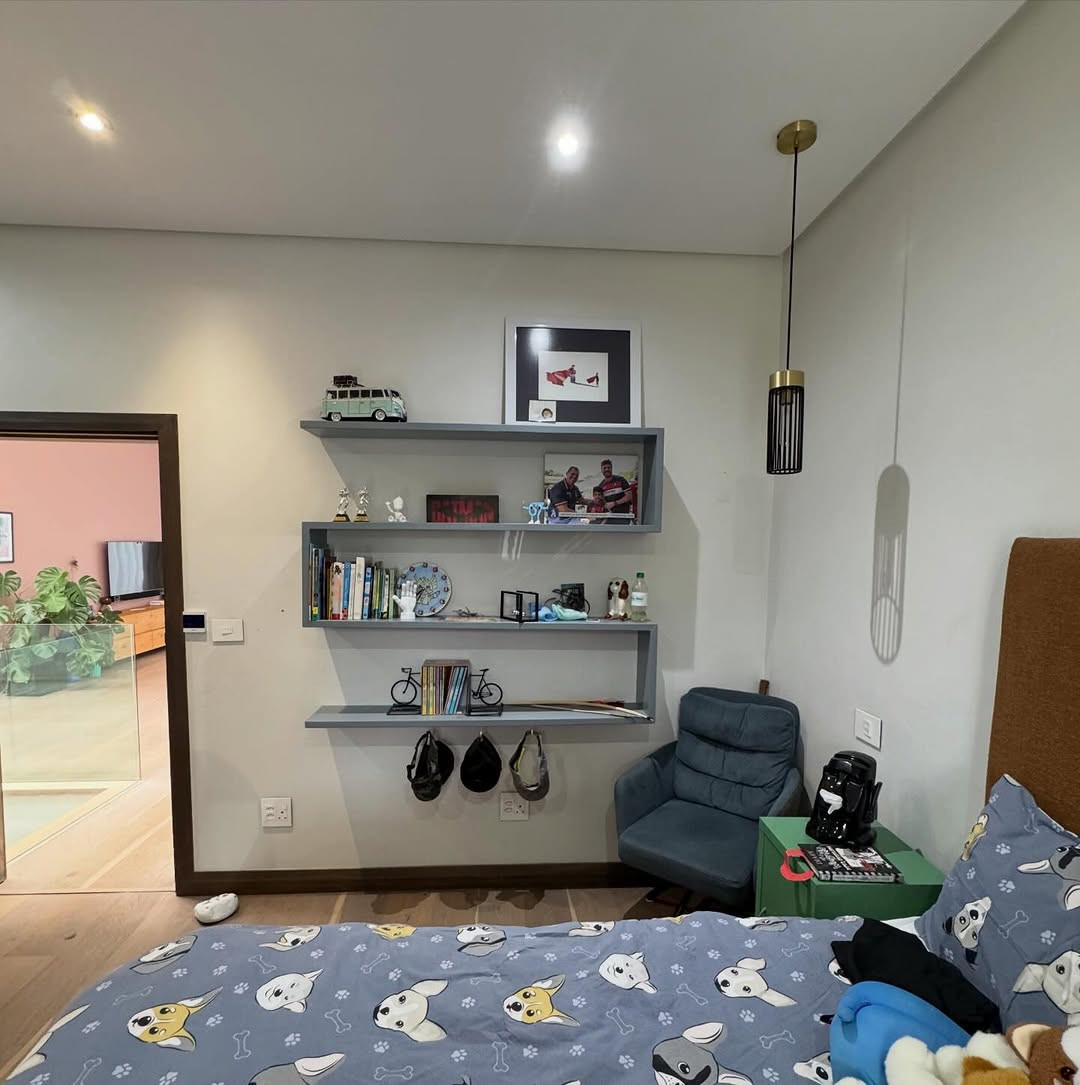
Credit to @tongue_groove_dbn
5. Create a Play Zone That Fits
Play Does Not Need a Big Footprint
A child still needs room to imagine, build, draw, and read, even in a compact bedroom. The trick is to make the play area feel real without letting it take over. A small rug, a floor cushion, and a low basket of favorite toys can be enough to create a clear play zone. That setup gives your child a place to settle in, and it keeps the rest of the room from turning into one large toy pile.
Limit the zone to what your child uses most. If they love books, build a reading corner. If they draw every day, add a small art table with paper stored nearby. If pretend play is the favorite, use a few open-ended items such as dolls, blocks, or dress-up pieces rather than a room full of large plastic toys. Smaller, thoughtful choices often lead to better play anyway.
Choose Pieces That Tuck Away Fast
The best play furniture in a small room is easy to move, fold, or store. Nesting stools, stackable bins, a wall-mounted drop-leaf desk, or a play table with storage underneath all help the room shift from active to calm in minutes. That matters at bedtime. Children rest better when the room does not feel wild and overstimulating at night.
Keep surfaces simple. Too many toys on display can make a child jump from one thing to the next without settling. Rotate a few favorite items every week or two and store the rest out of sight. This keeps the room feeling fresh, and it reduces mess without making play feel restricted.
Make It Feel Special
A small play zone can still feel magical. Add a soft canopy over a reading cushion, a string of warm lights around a shelf, or a corkboard for your child’s drawings. Those touches give the area a sense of identity. It feels like a place made for them, not just leftover space between the bed and dresser.
You do not need a big budget for this. A painted corner, a patterned rug, and a basket of books can do a lot. Keep the mood warm, easy, and personal. When the play zone fits the room instead of fighting it, the whole bedroom works better from morning to night.

6. Pick Colors That Expand the Room
A small bedroom can feel crowded before you even place the furniture. Color sets the mood first, and the right palette gives the room more air, more light, and a stronger sense of order.
Start With Light Tones
In small kids bedroom designs, pale colors do a lot of heavy lifting. Soft white, warm cream, light sand, pale blue, and misty green bounce light around the room and make walls feel less close. You do not need a plain room to get this effect. You just need a calm base that lets the eye move easily from one side of the room to the other.
I often think of paint as the background that decides how busy everything else looks. A toy bin in a bright room feels less messy than the same bin against dark walls. If your child loves bold color, keep that energy in smaller touches like bedding, art, or one painted shelf. That gives you personality without shrinking the room.
Use Gentle Contrast
Contrast still matters. A room with no contrast at all can look flat and washed out, especially in photos and in low evening light. The trick is to keep the shifts soft. Think ivory walls with oatmeal curtains, or pale gray walls with white trim and a dusty blue rug. This kind of layering gives the room shape without breaking it into hard visual blocks.
Gentle contrast also helps you define different parts of the room in a subtle way. A reading corner can have a slightly deeper shade in the pillows or a soft patterned throw, while the sleep area stays quiet and simple. Your child gets a room that feels interesting, and you keep the open look that small spaces need.
Save Bright Color for Accents
Accent colors work best when they are controlled. One sunny yellow lamp, two rust cushions, or a line of framed prints can wake up the whole room. Too many bright colors fight for attention, and that makes a small bedroom feel restless.
If you want a simple rule, pick one main light color, one supporting neutral, and one accent shade. That formula is easy to update as your child grows. A toddler’s peach accents can turn into terracotta or coral later, and the room still works. You spend less, repaint less, and the space stays fresh longer.
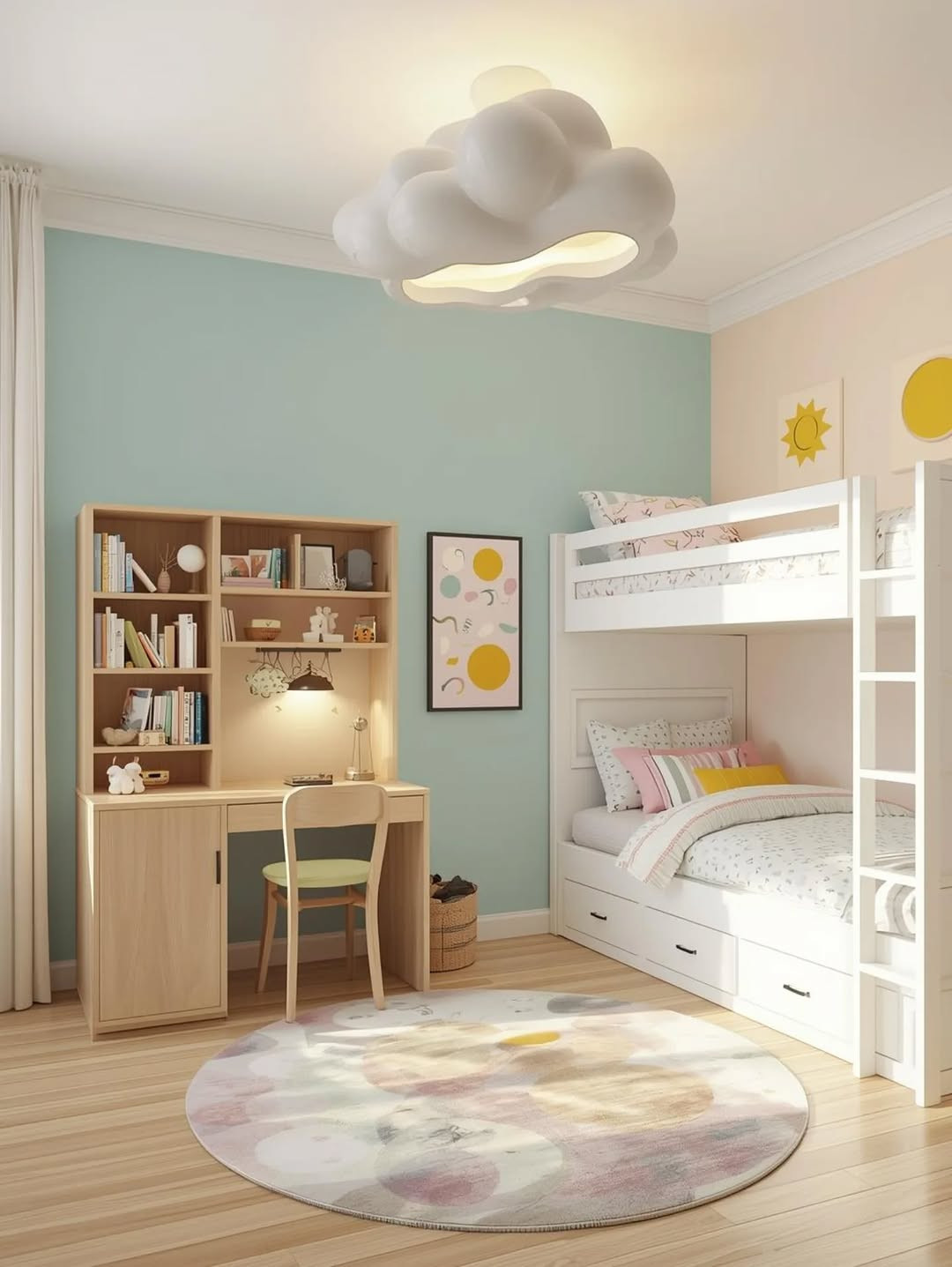
Credit to @drillsdecors.interior
7. Layer Lighting for Daily Routines
Good lighting changes how a child uses the room from morning to night. One ceiling light is rarely enough, because sleep, reading, homework, and play all ask for something different.
Think Beyond the Ceiling
Many small kids bedroom designs fail at night. The overhead light is too bright for winding down, yet too harsh for a cozy story before bed. A better plan is to build the room in layers. You can start with a ceiling fixture for general light, then add a small lamp near the bed and a focused light near a desk or craft spot.
This layered setup gives you control. You can brighten the whole room when it is time to get dressed and clean up, then switch to a softer glow in the evening. The bedroom feels more welcoming right away, and it also looks more finished. Light is part of the decor, not just a practical detail.
Support Sleep, Study, and Play
Kids use their bedrooms in different ways across the day, and lighting should follow that rhythm. A warm bedside lamp helps the room settle down before sleep. A desk light with a clear beam helps with drawing, puzzles, and homework. A soft wall light or string-style accent can make the play corner feel special without making the room look noisy.
You do not need fancy fixtures to make this work. A simple table lamp, a clip-on reading light, and one central fixture can be enough. What matters is placement. Put light where your child actually sits, reads, builds, or changes clothes. That sounds obvious, but many rooms miss it.
Choose Fixtures That Save Space
In a small room, every inch counts. Wall lights free up bedside surfaces for books and water cups. Slim sconces or clip lights help when the bed sits tight against a wall. If the room has a desk, a narrow lamp with a small base keeps the work area open.
Layered lighting also helps the room feel larger because it spreads brightness across different heights. Light on the ceiling, light by the bed, and light near a task zone create depth. The room stops feeling flat. It starts to feel planned, calm, and much easier to use every day.
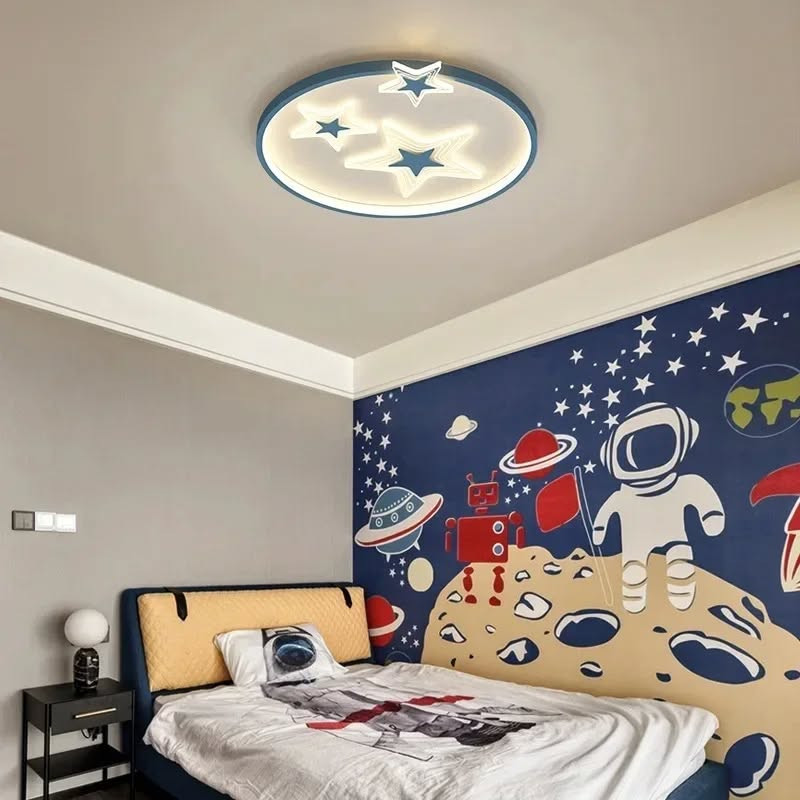
Credit to @tushopsupplies
8. Add Personality Without Visual Clutter
A child’s room should feel personal, but that does not mean every wall needs something on it. In small kids bedroom designs, the best personality often comes from a few clear choices that tell a story without filling every surface.
Pick a Theme Lightly
Themed rooms can be fun, yet they often become too much in a small space. Instead of turning the whole room into dinosaurs, stars, or race cars, choose two or three details that hint at the idea. A star-print pillow, moon art, and navy curtains can say “space room” without making it feel like a costume set.
This lighter touch gives you more freedom later. Kids change fast. Their room should not need a full makeover each time a favorite interest shifts. I like themes that live in things you can swap, such as bedding, framed prints, and one painted object. The room keeps its charm, and you keep your budget under control.
Let Textiles Do the Work
Soft furnishings carry a lot of personality with very little effort. A striped rug, quilted blanket, patterned cushion, or playful curtain adds color and movement without crowding the room. Textiles also make small bedrooms feel warmer and more finished, which matters when the room has to do many jobs.
If the walls are light and the furniture is simple, fabrics become the place where style shows up. You can mix checks, stars, florals, or simple shapes, as long as the colors relate to each other. That keeps the room from feeling random. It also makes everyday pieces, like storage cubes or a reading chair, blend in better.
Give Art One Clear Home
Children’s art deserves to be seen, but scattered papers taped everywhere can make a small room feel busy fast. Create one zone for it. A narrow picture ledge, a cork strip above the desk, or a frame that opens easily can hold new drawings without turning the whole bedroom into a collage.
Visual clutter often comes from too many small things fighting for attention. Grouping art together solves that problem and makes each piece feel more special. The same goes for collections. If your child loves little figures, shells, or toy cars, place them on one shelf with some space around them. The room still feels like theirs, just edited in a smart way.

Sharing a small bedroom can be sweet one hour and stressful the next. The room works better when each child has a clear place to sleep, store things, and step back for a moment.
Create a Fair Layout
In a shared room, layout matters almost more than style. If one child gets the window, the bigger dresser, and the easiest path to the door, tension builds quickly. Start by making the arrangement feel balanced. Beds should have similar access, and both children should have a spot for bedtime basics like a light, a book, and a water cup.
Symmetry helps, even if the room is not perfectly even. Matching bedding in different colors, twin shelves hung at the same height, or the same storage setup on both sides can make the room feel calmer. Children notice fairness. You should plan for that from the start.
Set Clear Storage Boundaries
Storage gets messy fast when everything is shared. Give each child a drawer section, a shelf, a hook, and one bin for small treasures. Labeling helps younger kids, but the bigger win is simple ownership. When children know what belongs where, tidying goes faster and arguments drop.
You can still keep some things shared, like books or stuffed animals in a common basket, but private items need a home. In very tight rooms, underbed drawers or slim bedside caddies can act as personal zones without using extra floor space. This is one of the easiest ways to make a small shared room feel more peaceful.
Use Style to Reduce Friction
Shared rooms often look busy because two personalities compete in one space. A calm base solves a lot. Keep walls and big furniture neutral, then let each child bring in color through bedding, art, or one small rug. That way the room feels connected, yet still personal.
Shared zones should also be easy to read. A central play mat, a small table between beds, or one common book nook gives the room a sense of order. I have seen tiny sibling rooms feel much bigger once the design stopped trying to split every single inch. Sometimes the smartest move is to mark what is personal, then let the rest be shared with care.
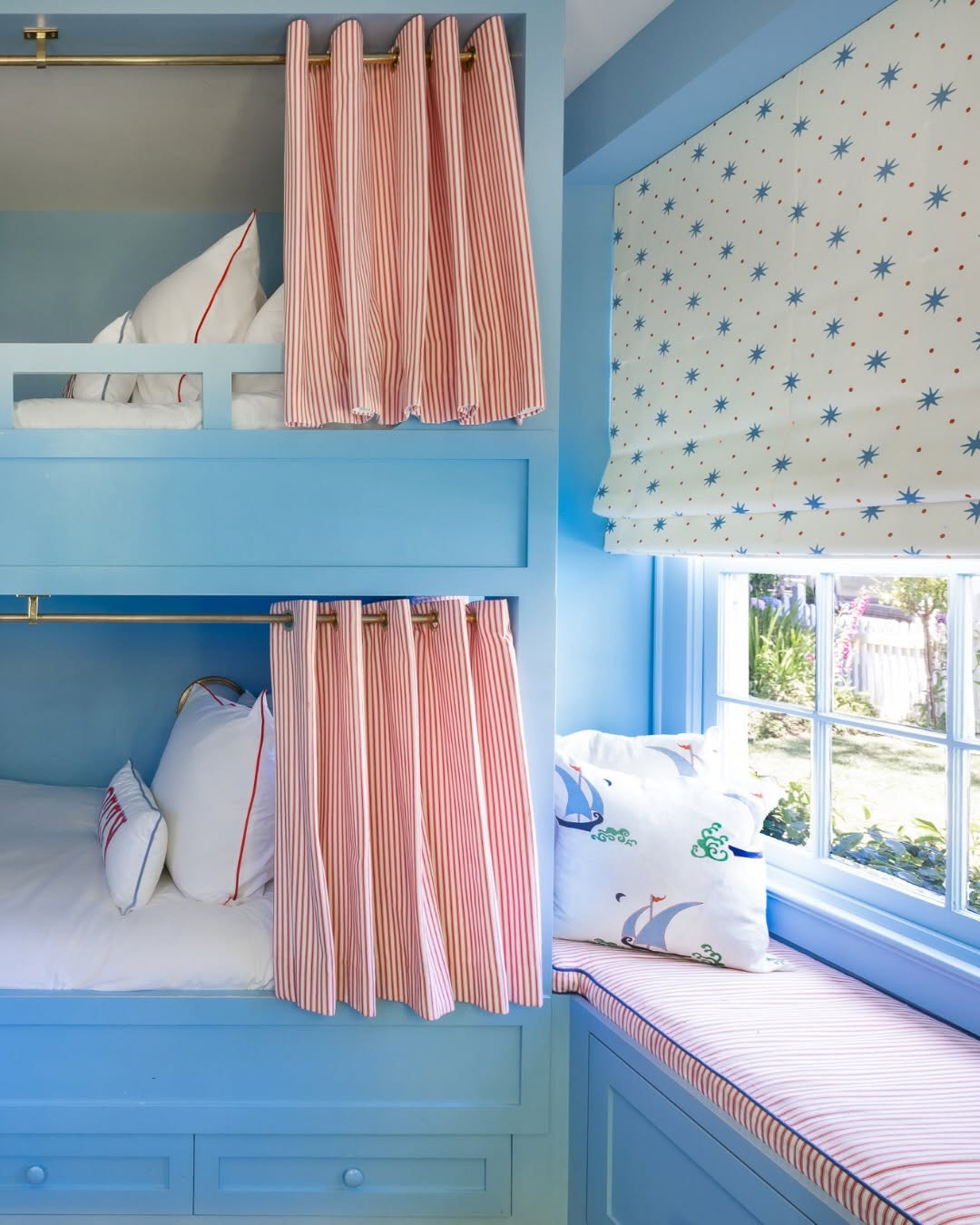
Credit to @baileymcallisterinteriors
10. Keep Layouts Easy to Adjust
Kids do not stay the same for long. Their bedrooms should be able to shift with new routines, bigger bodies, different hobbies, and changing storage needs without a full redesign.
Choose Pieces That Can Move
Flexible small kids bedroom designs start with furniture that is easy to reposition. A light desk, a narrow bookcase, or a simple nightstand can move as needs change. That matters more than people think. A room for naps and toy baskets may later need space for reading, schoolwork, or a second child overnight.
Try to keep the center of the room as open as possible. That open patch becomes useful again and again. It can hold floor play today and a study chair next year. If the main furniture pieces are too bulky or fixed in place, the room loses that freedom.
Leave Some Empty Space
It is tempting to fill every corner when a room is small. Yet packed rooms become hard to update. A little empty wall space, one clear floor edge, or a shelf with room to grow gives you options later. That empty space is not wasted. It is what keeps the room working over time.
Flexible layout planning also means avoiding trends that lock you in. A giant themed mural, a desk built for one exact height, or storage sized only for baby toys may look good for a season, then create problems. Simpler choices age better and adapt faster.
Make Change Feel Easy
You can help the room grow with your child by keeping updates simple. Use bedding, art, and small decor for personality, then keep the larger pieces plain and useful. A basic dresser can serve for years. The same goes for a sturdy chair, a plain shelf, or a compact table that can become a homework spot later.
I like rooms that can be reset in one afternoon. Move the rug, shift the desk, change the wall art, and the whole bedroom feels new. That is the real strength of a small room done well. It keeps up with life instead of falling behind it.

Conclusion
Small kids bedroom designs do not need more square footage to feel smart and beautiful. They need clear choices that help the room breathe, work harder, and change over time. If you save anything from these ideas, save the ones that make daily life easier first. Better color, better light, a calmer style, clearer sharing, and a flexible layout will do more than extra decor ever could. Start with one change this week. Even a small shift can make the whole room feel better.