Your room can feel warmer, richer, and far more finished with the right curtains. If your space looks flat, too modern, or missing that lived-in charm, these ideas will help you bring in depth, softness, and a strong sense of home.
Think misty grey checks, deep moss green folds, and the dry, cozy texture of wool against wood floors, leather chairs, and stone fireplaces. Tweed has a way of making a room feel grounded without feeling heavy.
These 7 ideas will show you how to use that timeless fabric in ways that feel classic, fresh, and easy to copy. From quiet bedroom layers to bold living room drama, each look brings a little Scottish soul into your everyday space.
1. Highland Plaid Layers
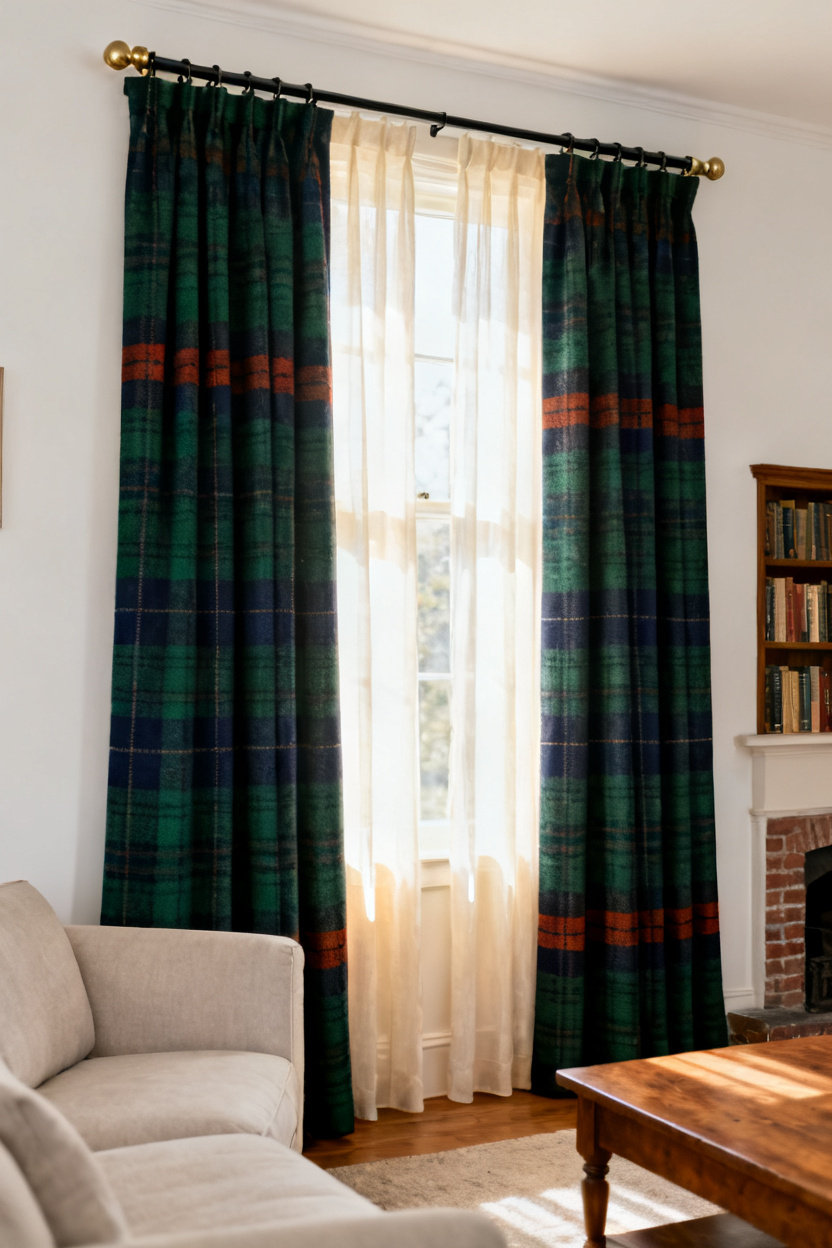
A warm, layered window look that gives your room color, pattern, and old-world comfort. This idea works well when you want your space to feel more inviting without buying all new furniture. Tweed curtains in plaid or soft check patterns can anchor the room, then lighter fabrics around them can keep the whole look easy and bright.
Living Room With Presence
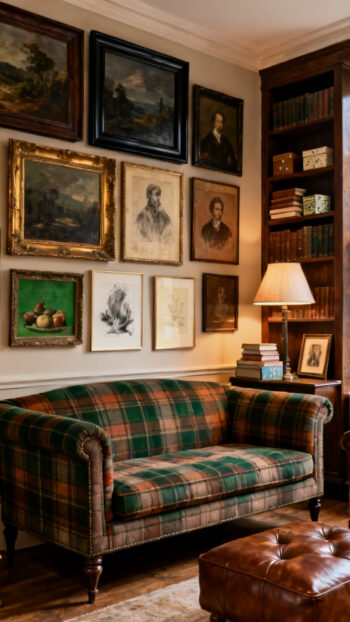
A plaid tweed curtain in deep green, rust, or navy can change the mood of a living room fast. It adds shape to the walls and makes basic windows look taller and more dressed. If your sofa is plain or your walls are soft white, that extra pattern helps the room feel finished instead of bare.
I like this look most in homes with wood tables, bookshelves, or a brick hearth. The curtain fabric picks up those natural textures and makes them feel even richer. You do not need a castle setting to make it work. Even a small suburban room can feel more rooted and calm with this kind of window treatment.
Sheers Behind The Tweed
You can keep tweed from looking too dark by hanging a thin ivory sheer behind it. During the day, the sheer lets in light and softens the strong lines of the plaid. At night, you close the tweed and get that cocooned, private feeling that many modern rooms miss.
This pairing also helps if you love Scottish style but do not want the room to feel formal. The soft fabric in back loosens the look and keeps it relaxed. Choose brass or black curtain rods for a stronger finish, and let the tweed panels kiss the floor for a fuller, more polished effect.
2. Stone Walls, Soft Tweed
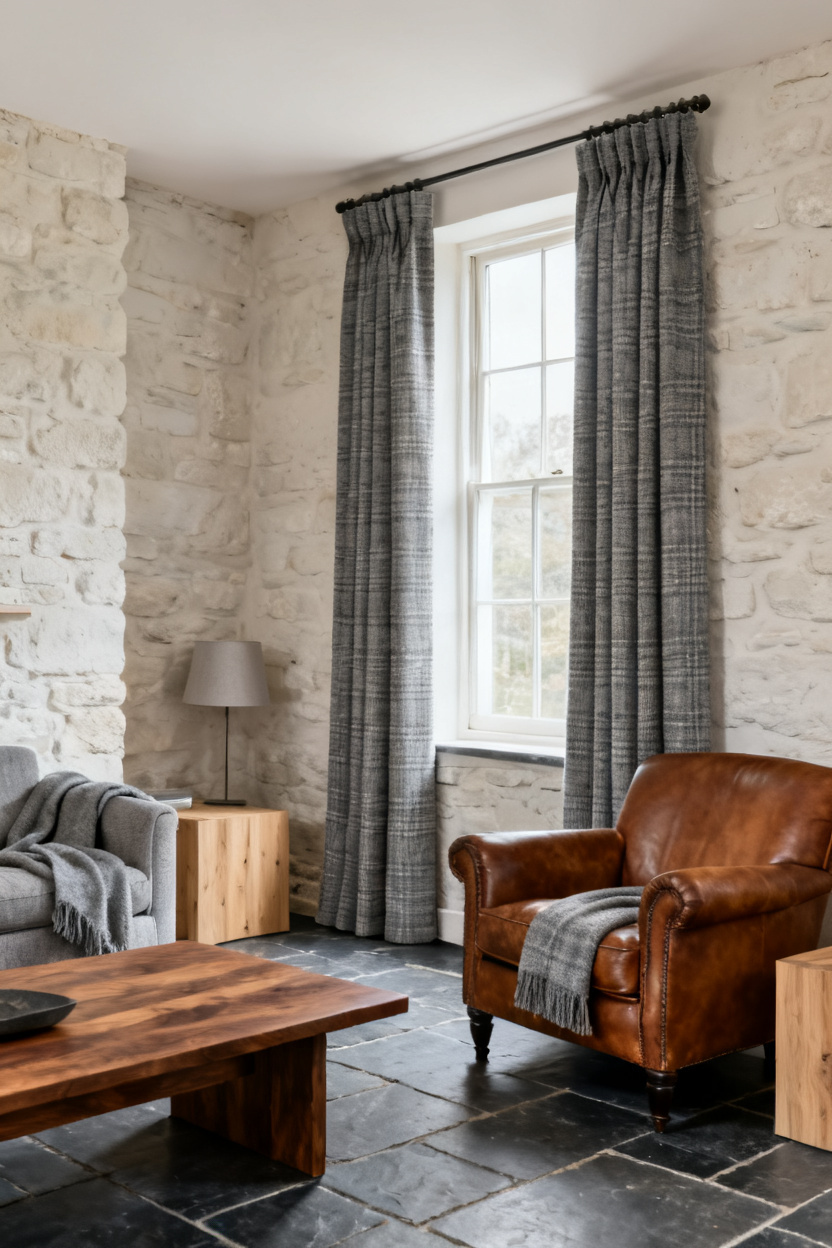
A quieter take on Scottish style that uses texture more than loud pattern. If bold tartan feels too busy for your taste, this route may suit you better. Herringbone tweed or small-scale checks bring the same timeless appeal, but they do it in a gentler way.
Grey On Grey Done Right
A pale stone room can feel cold if every surface is hard and flat. Soft grey tweed curtains fix that problem because they bring in movement and warmth without fighting the palette. The weave catches light in a subtle way, so the window area looks deeper and more thoughtful.
This works especially well with limewashed walls, slate floors, or light oak pieces. You keep the calm mood, yet the room no longer feels empty. If you want a clean look, skip busy trims and let the fabric itself do the work.
Leather, Wood, And Tweed
There is a reason this mix feels so right. Brown leather chairs, walnut tables, and textured curtains share the same grounded spirit. Put them together and the room feels honest, settled, and a little storied, as if each piece has been there for years.
You can push this style rustic or refined depending on your choices. A darker brown leather club chair makes the room feel more traditional, while a sleeker caramel sofa feels fresher. In both cases, tweed adds weight in the best way and stops the room from looking too slick.
Use Pattern In Small Doses
You do not need large tartan squares to get the look. A tiny check or a narrow herringbone often reads as a solid color from across the room, which makes it easier to live with every day. This is a smart move if you already have patterned rugs, art, or cushions in the space.
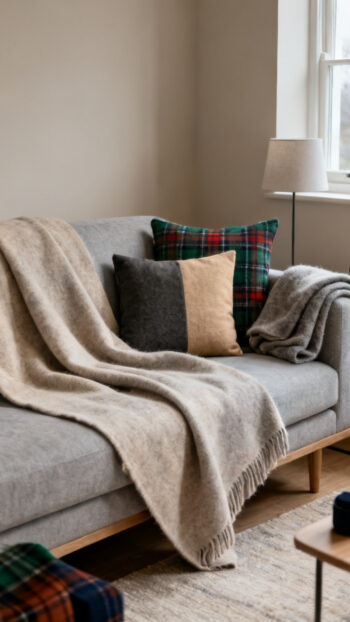
Try pulling one color from the curtain into a throw or lampshade, then leave the rest quiet. That one repeated note ties the room together without making it feel styled too hard. Small moves often look more expensive, and this is one of them.
3. Velvet Meets Heather Checks
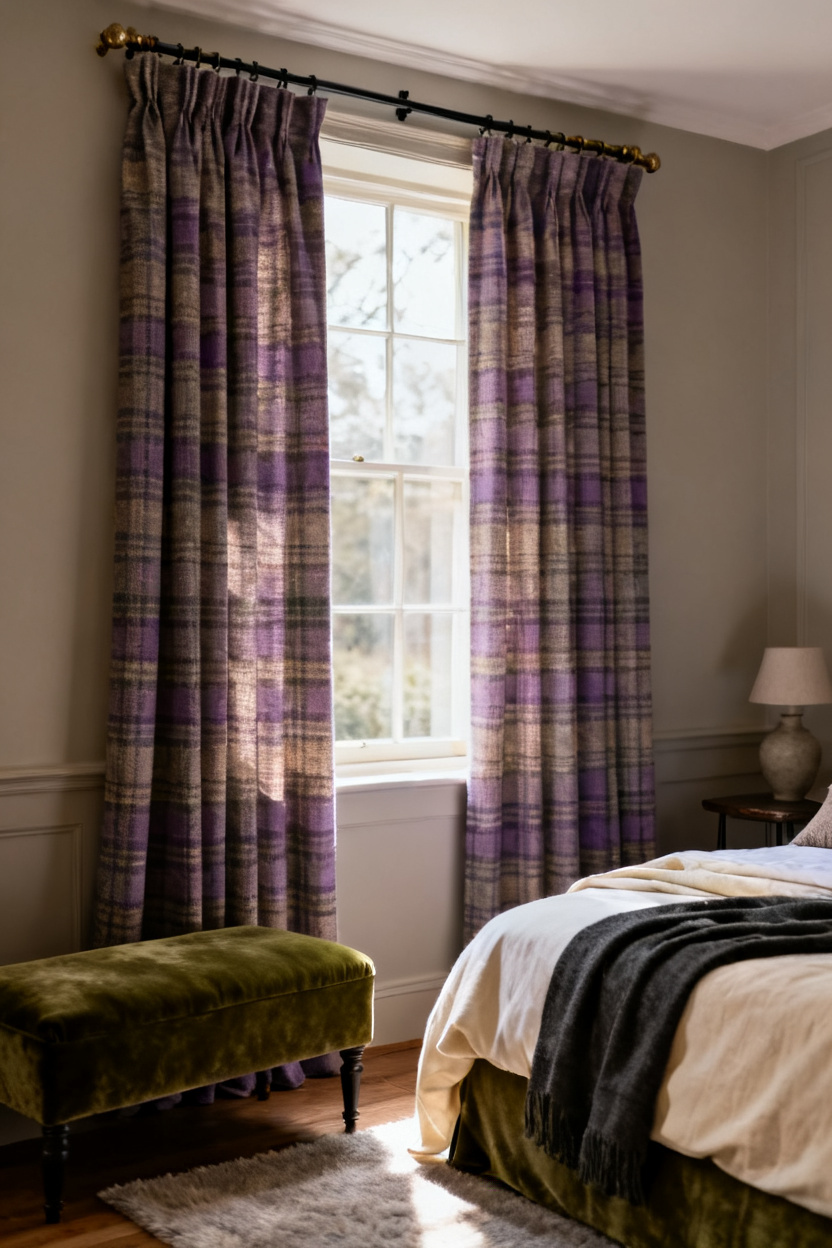
A richer, softer mix that gives bedrooms and small corners a moody glow. Some rooms need a little romance. In those spaces, heather tweed looks beautiful beside smoother fabrics like velvet, washed linen, or cotton with a light sheen.
Bedroom Curtains That Cocoon
In a bedroom, tweed curtains can make the whole space feel quieter. Choose muted tones like heather purple, warm taupe, or smoky blue, and the room takes on a soft, restful weight. The thicker fabric also helps the space feel more private, which matters if your bedroom gets strong morning light.
I have seen this look work best when the bed itself stays simple. Plain bedding in cream, oatmeal, or charcoal gives the curtain fabric room to shine. Then the texture becomes the star, not a loud print that takes over the room.
Pair It With Velvet Touches
A velvet headboard or bench can sit beautifully next to checked tweed curtains. The contrast between the smooth pile of velvet and the dry, nubby curtain weave adds depth fast. It feels dressed up, yet still warm and approachable.
Keep the colors close rather than exact. A moss tweed curtain with an olive velvet cushion looks far better than a perfect match. That slight shift in tone feels natural, like colors you would see outdoors on a rainy hillside.
Try Cafe Curtains In A Nook
Tweed also works in smaller doses. A breakfast nook, mudroom window, or cottage kitchen can look charming with short cafe curtains in a soft check. This is a good way to bring in Scottish character if full-length panels feel too heavy for the room.
Use lighter tweed here, especially if the space is small. Cream, oat, and light grey keep the area bright and still give you that woven texture. With painted cabinets or beadboard walls, the effect feels collected and calm.
Keep Hardware Simple
Heavy decorative rods can push this style too far. In a softer room, slim black iron or aged brass hardware usually looks better because it supports the fabric without stealing attention. The eye stays on the folds, the color, and the way the curtain frames the light.
If your room already has ornate furniture, this restraint matters even more. A simpler rod gives the curtain space to breathe. That balance helps the whole room feel classic instead of crowded.
4. Checked Curtains Home Office
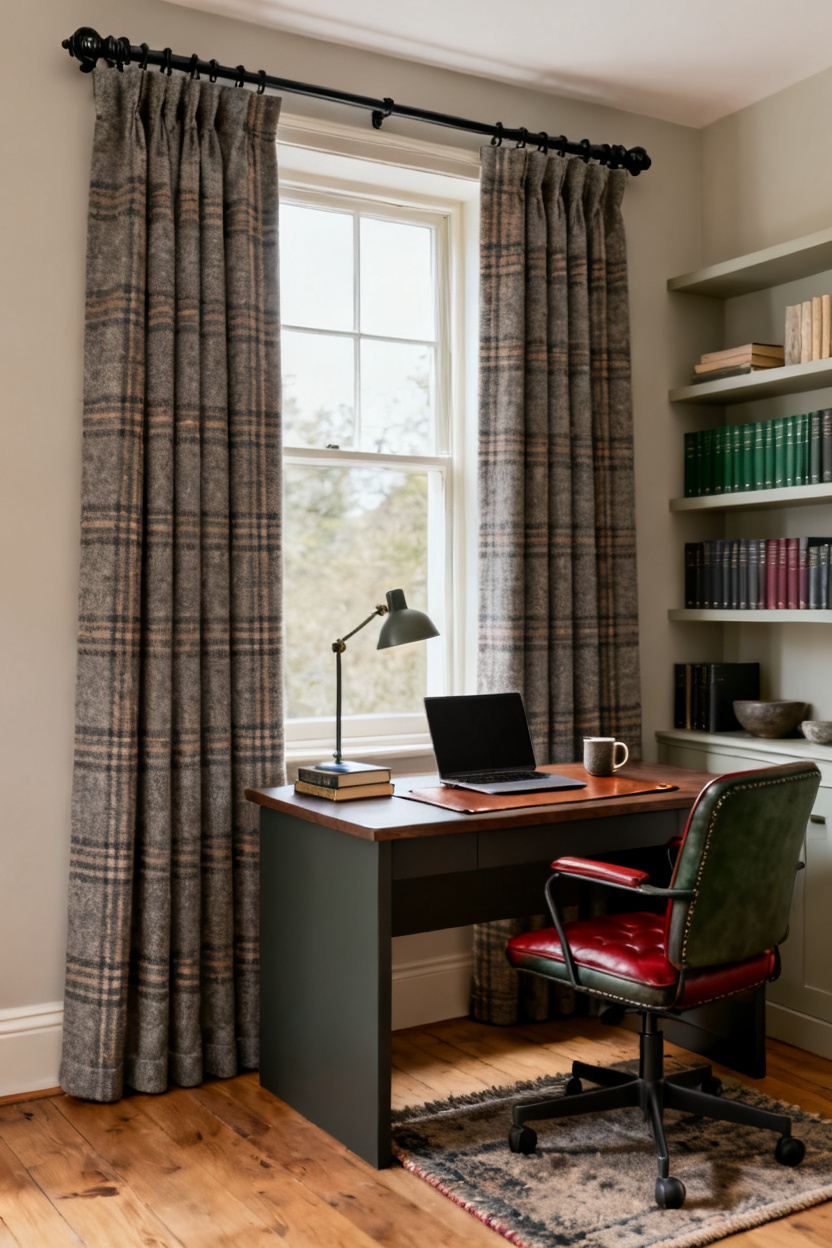
A home office with checked tweed curtains feels focused, grounded, and far more thoughtful than a spare desk by a plain window. This idea matters because work rooms often end up cold and flat, full of screens, straight lines, and sharp light. Tweed adds weight and calm, which helps the room feel serious without feeling stiff.
Make Workspaces Feel Human
If you spend hours in one room, the mood of that room starts to shape your day. A bare office can push you into a restless state. A room with texture slows the eye, and that matters more than people think. Tweed curtains bring in a steady pattern that feels ordered, which is useful when your desk is busy and your mind already has enough to process.
Checks work especially well here because they suit shelves, frames, and desk edges. They create rhythm. A fine windowpane check feels neat and light, while a larger plaid has more presence and can anchor a room with tall bookcases or dark paint.
Match The Curtain To The Job
The best choice depends on the kind of work you do. If you take video calls, pick a soft heather or grey-brown tweed that looks rich on camera and does not fight with your face. If your office doubles as a reading room or study, you can go deeper with forest green, charcoal, or muted red lines in the pattern.
You also need to think about sound. Tweed curtains can soften echo in a room with wood floors or large windows, and that makes calls clearer and the room less tiring. They will not block every noise, of course, but they take the edge off. In a busy house, that little shift feels huge by midday.
A Better Balance Of Old And New
One reason this look works so well is contrast. Your laptop, task chair, and lamp already bring the modern side. Tweed brings age, craft, and a sense of place. The room starts to feel less temporary, even if your desk is simple and your storage is basic.
I would keep the hardware dark and understated here. Black, aged brass, or weathered iron all suit a work setting better than shiny finishes. Add one leather detail, maybe a desk pad or a chair strap, and the office feels complete. You do not need much more.
If the room is small, let the curtains run close to the floor and keep the wall color plain. That gives the check room to breathe. Your eye reads the window as a feature, and the office gains identity without losing function.
5. Dining Room Tweed With Candlelit Depth
A dining room is one of the best places to use tweed curtains when you want the home to feel more settled, intimate, and quietly traditional. This approach brings a different kind of Scottish appeal than a living room or bedroom because the focus is not on softness alone. Here, tweed helps create atmosphere around the table. It makes meals feel more deliberate, even on ordinary evenings, and it gives the room a sense of ritual that plain cotton or slick synthetic panels rarely manage.
Curtains That Deepen Evening Light
When you hang tweed in a dining room, the biggest change often happens after sunset. Lamplight and candlelight catch in the woven surface and make the fabric look richer by the hour. A muted brown check, a peat grey herringbone, or a soft claret thread running through a neutral base can all make the room feel warmer without asking you to change the furniture. If your dining chairs are simple or your walls are painted in a pale tone, the curtain texture adds that missing layer that makes the room feel complete.
I especially like this look in spaces with wood tables, vintage sideboards, or simple ceramic tableware. Tweed gives those pieces context. Instead of floating separately, everything begins to feel tied together by a shared mood of craft and age. You do not need heavy formal drapery for that effect either. Even a tailored panel with a clean header can bring enough presence to shift the room from plain to memorable.
Balancing Pattern Around The Table
The key in a dining room is restraint. If your rug is patterned or your chairs already have strong lines, choose a finer tweed so the room feels layered rather than busy. A small check often works better here than a bold tartan because it reads as texture first and pattern second. That balance matters when people are seated close to the fabric and the room needs to feel restful instead of visually crowded.
You can also use the curtain color to quietly guide the rest of the palette. Pull a moss note into the seat cushions, a rust note into pottery, or a charcoal tone into the light fixture, and the room starts to feel considered in a way that still seems natural. I find that tweed is at its best when it does not look staged. In a dining room, that means letting it support the meal, the wood, and the glow of the room rather than trying to be the loudest feature.
6. Bay Windows Framed In Scottish Texture
Bay windows can feel awkward when they are left bare or dressed too lightly, but tweed gives them shape, rhythm, and a sense of purpose. This idea is less about drama and more about architecture. A bay already has presence because it projects into the room, and the right curtain treatment helps that shape feel intentional. Tweed works beautifully here because it has enough body to define the angles while still looking warm and domestic.
Let The Angles Feel More Graceful
One common problem with bay windows is that they can read as choppy, especially if each section is treated as a separate unit. Tweed softens that issue because its visual weight helps connect the parts. When you use panels in a similar tone across the whole bay, the window starts to read as one feature instead of several fragments. That makes the room feel calmer and more generous.
A soft oat herringbone or a weathered blue check works especially well if you want to keep the effect airy. Those kinds of tweeds have enough texture to add character, but they do not crowd the glass. If the room gets good daylight, the fabric will still feel substantial without darkening the whole corner.
A Window Seat That Feels Truly Finished
If your bay includes a built-in bench or deep sill, tweed curtains can help the area feel like a destination rather than leftover square footage. The fabric around the window creates a visual enclosure, and that enclosure makes reading, tea, or quiet morning light feel more special. You can repeat the curtain tone in a seat cushion or lumbar pillow, but it often looks better when the match is loose rather than exact. That slight variation keeps the nook from feeling overdesigned.
I have always thought bay windows suit homes that want a little story in them. Tweed supports that feeling because it suggests weather, landscape, and time without saying so too directly. In a nook like this, the room begins to feel less decorative and more lived in.
Tiebacks, Stacking, And Daylight Control
Bay windows often need flexibility. Some hours call for full light, while other times you want privacy or a softer glow. Tweed panels look especially handsome when they are drawn back with simple fabric tiebacks or narrow leather straps because the folds become part of the design. The curtain does not disappear when open. It still contributes shape and texture at the edges.
If you have a smaller bay, avoid overly thick pooling at the floor and keep the stack neat so the glass stays visible. That way you get the warmth of tweed without losing the openness that makes a bay window appealing in the first place. Done well, the treatment makes the architecture feel stronger and the whole room more rooted.
7. Tweed Curtains For Drafty Doors And Overlooked Passages
Some of the most charming uses for tweed curtains happen outside the obvious rooms, especially around doors, hall openings, and in-between spaces that often feel cold or unfinished. This is where Scottish practicality comes through most clearly. Tweed is not only beautiful in these areas. It also brings a sense of shelter. When you use it across a glazed door, a back entry, or a wide interior opening, the house can feel quieter, warmer, and more connected to its older, more traditional side.
A Back Door That Feels Less Exposed
Doors with glass panes are useful for light, but they can leave an entry feeling a little bare and exposed. A tweed curtain changes that fast. Instead of the door reading as a hard, cold surface, it becomes part of the room. The fabric softens the edge between indoors and out, which is especially helpful in cottages, mudrooms, or older homes where entrances can feel breezy in every sense of the word.
A simple panel in a tight check or plain herringbone usually works best here. You want enough pattern to add interest, but not so much that the entry starts to feel fussy. If the floor is stone, tile, or aged wood, tweed looks especially convincing because the textures speak the same language.
Portiere Style Between Rooms
In older houses, a curtain between spaces can feel wonderfully natural. A tweed portiere hung between a hall and sitting room, or between a dining area and a colder passage, adds softness in a way a door often cannot. It gives you movement, sound absorption, and a touch of old-world character that feels practical rather than theatrical when the fabric is right.
The beauty of tweed in this role is its weight. It hangs with purpose. When you pass through it, the room behind you feels momentarily tucked away, and that creates a stronger sense of comfort throughout the house. I think this is one of the most underrated ways to use the fabric because it adds atmosphere while solving a real problem.
Softening Stair Landings And Tall Narrow Windows
Stair landings often get ignored, yet they can shape the feel of the whole upper floor. A tall narrow window dressed in tweed has a quiet elegance that suits these transitional spots. The fabric gives the wall more presence and stops the landing from feeling stark, especially if the staircase has painted spindles, worn timber, or a runner underfoot.
You do not need a bold pattern here. In fact, a heathered plain or broken twill often looks more refined because it lets the texture do the talking. The result is subtle, but the house feels more cohesive from one level to the next.
Keeping Utility Spaces Beautiful
Laundry rooms, boot rooms, and side passages rarely get much decorative attention, but they benefit enormously from a material that feels sturdy and thoughtful. Tweed curtains can hide storage, cover a lower window, or soften a service door while still suiting the practical nature of the room. That matters because utility spaces often become more pleasant when they stop looking purely functional.
If you choose earthy colors such as oat, bark, or moss, these hardworking areas gain warmth without becoming dark. Pair the curtains with simple hooks, painted wood, and durable flooring, and the room starts to feel intentionally designed. Even the most ordinary passage can take on a little Scottish character when the fabric brings that note of craft, weather, and welcome.
Conclusion
Tweed curtains do more than cover a window. They shape mood, soften light, and give even simple rooms a sense of history. In a breakfast nook, they add comfort. In a home office, they steady the space. In a hall, they turn a forgotten spot into part of the home’s story.
Save the ideas that fit your rooms best, then start with one window. That is often all it takes. Once you see how much warmth and character tweed brings, the next choice gets much easier.