Your home should feel warm before you even light a candle. These 11 ideas help you build that soft, sheltered mood with layered wool, moody color, weathered wood, and a fireside layout that makes every corner feel calm.
Think peat brown walls, slate grey textiles, sea-glass blue accents, brushed lambswool, old pine, and the glow of fire on stone. Coorie Scottish Interior Ideas bring depth, texture, and comfort to rooms that feel flat, cold, or unfinished.
You do not need a grand country house to get the look. These ideas show how to create a richer, quieter home that feels rooted, restful, and deeply lived in.
1. Layer Wool Throws and Tartan
A coorie room feels best when the soft layers look collected over time, not dropped in all at once. Start with one calm base, then build warmth through touch, weight, and pattern so your sofa or bed feels inviting the moment you walk in.
Build the stack with purpose
The easiest way to style this look is to begin with a plain wool throw in a grounded tone such as oat, stone, or charcoal. Drape it first, and let it cover the widest area. That base gives your eye a place to rest, and it keeps the whole arrangement from looking busy before you add tartan.
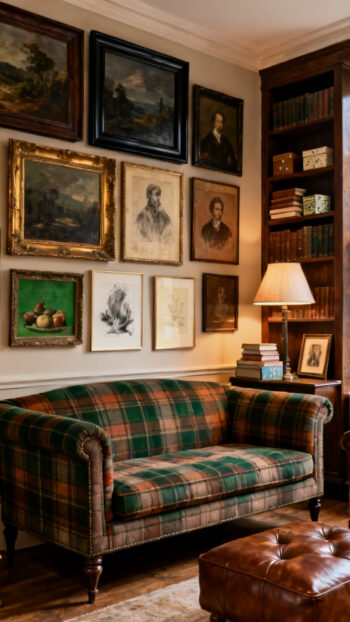
Next, add a tartan cushion or two rather than covering the whole seat in checks. A smaller hit of pattern feels richer and more believable. I find that one tartan at the center and one plain cushion beside it gives the room enough Scottish character without making the fabric fight for attention.
Finish with a brushed blanket folded across one arm or at the foot of the bed. This top layer should look soft and slightly relaxed. You want touchable comfort, not a stiff display. The best layering order is plain wool first, tartan second, brushed texture last.
Keep tartan from taking over
Many people love tartan but use too much of it in one small area. That is where the look can turn heavy. If your cushion, throw, curtains, and rug all carry different clan patterns, the room starts to feel crowded instead of calm.
Choose one tartan family and let the rest of the fabrics support it. Repeat one or two colors from the tartan in your plain cushions, lampshade, or blanket. That creates rhythm and makes the room feel settled. You still get the heritage mood, but it feels edited.
If you already own several tartans, spread them across the house instead of stacking them in one room. Put one on the sofa, another in a reading nook, and save the third for a guest bed. That simple move keeps the spirit of coorie style alive without turning every seat into a pattern story.
Use texture to warm plain furniture
A simple modern sofa often looks better with these layers than an ornate one. Clean lines let the wool and checks stand out. If your room feels cold, this is one of the fastest ways to soften it without changing the furniture itself.
Bedrooms benefit just as much. Lay a lambswool throw flat over the duvet, then fold a tartan blanket at the lower third of the bed. This gives the bed shape and makes it look fuller, warmer, and more thought through. The room will feel ready for a long morning with rain at the window.

2. Choose Colors from Moor and Sea
Color does a lot of the work in coorie decorating. If your space feels bright but thin, or neutral but dull, a palette drawn from the Scottish moor and coast can give it weight, quiet, and depth without making it dark in a gloomy way.
Start with grounded shades
The strongest rooms in this style often begin with colors that feel close to the land. Think peat brown, heather purple, slate grey, and sea-glass blue. These shades carry mood, but they still feel natural. They do not shout across a room, and that is part of their charm.
Use one shade as the anchor and two others as support. Peat brown works well on wood furniture, leather, or woven storage. Slate grey suits larger surfaces like a rug or sofa. Sea-glass blue can lift the palette on cushions, pottery, or a painted side table. Heather purple is best used with a light hand, like a thread running through the room.
When these colors sit together, they create the sort of quiet richness that many people want from Coorie Scottish Interior Ideas. The room feels tied to weather, stone, grass, and water. It feels settled. It also looks better in soft daylight than trend-led colors that need strong sun to come alive.
Match the palette to the room
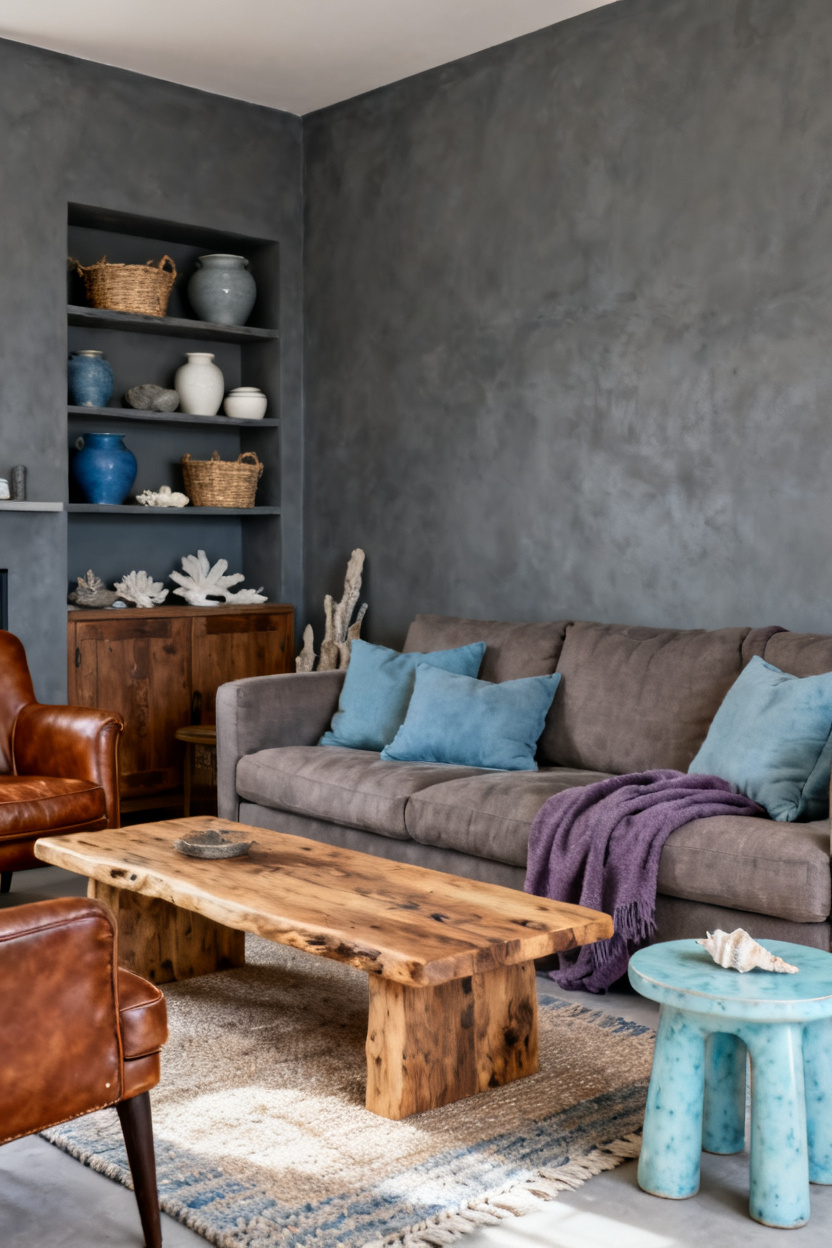
Each room can lean on a different part of this palette. In a living room, slate grey walls with peat brown wood and sea-glass blue cushions create a calm, steady backdrop for evening light. In a bedroom, heather purple works well in smaller touches, such as a blanket stripe or curtain trim, where it feels restful rather than sweet.
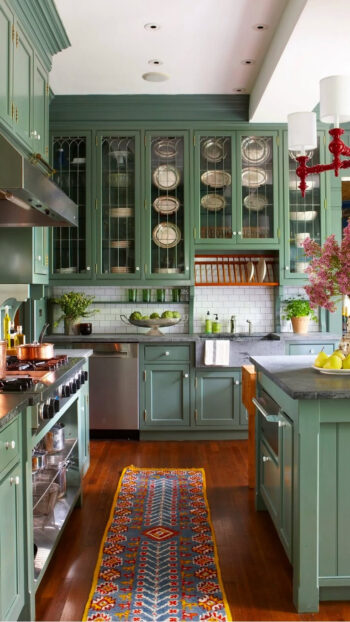
Kitchens look especially good with this mix because natural materials sit easily beside these tones. A painted lower cabinet in deep grey, open pine shelves, and pottery in muted blue can make the room feel warm even before you add textiles. Bathrooms can take the coastal side of the palette with blue-grey towels, off-white walls, and darker stone details.
I like this approach because it lets you shape the mood of each room without breaking the overall flow of the home. You can move from one space to the next and still feel the same calm thread running through everything.
Why matte beats shine here
Finish matters almost as much as color. Matte paint usually suits this look better than glossy surfaces because it softens light and gives walls a gentle, chalky depth. That kind of finish makes slate, peat, and heather tones look richer and more natural.
Glossy paint reflects more light, which can work in a small dark room, but it also feels sharper and less rooted. If you want a true coorie mood, save shine for small details such as glazed pottery, a glass lamp base, or a metal tap. Let the larger surfaces stay calm and low-sheen. The room will feel quieter, and the colors will hold their depth all day.
3. Bring In Weathered Wood
Rooms with too many smooth, new surfaces can feel cold even when they are well furnished. Weathered wood adds age, grain, and texture, which helps a space feel lived in and steady. You do not need a full rustic makeover. A few well-placed timber pieces can shift the whole mood.
Choose timber that shows its story
Oak, pine, and reclaimed boards all work well here, but each brings a slightly different feel. Oak has weight and depth, which suits dining rooms and larger living spaces. Pine feels lighter and a little more relaxed, making it a good fit for bedrooms, kitchens, and hall benches. Reclaimed wood has marks, knots, and old nail lines that give the room character right away.
The point is not to make everything look old. It is to bring in surfaces that show real grain and a little wear. Those marks catch the light in a softer way than shiny factory finishes. They also pair beautifully with wool, linen, stone, and muted paint colors.
If you are adding only one piece, a weathered wood table is a smart place to start. A scrub-top dining table gives the room a center with instant presence. It invites use. You can set down a mug, a stack of books, or a bowl of apples, and it still looks right.
Place it where it works hardest
A simple bench by the door can do more than a decorative table. It gives you a place to sit, drop bags, and add folded blankets or baskets below. In a coorie home, useful pieces often feel warmer than purely formal ones, because they support real daily life.
Open shelving is another strong choice, especially in a kitchen or dining space. A few pine shelves can hold crockery, jars, or dark pottery and create that easy, gathered look many people want. Keep the display loose and practical. If every shelf is styled too tightly, the warmth disappears.
Bedrooms benefit from timber too. A weathered bedside stool, a pine chest, or even a reclaimed headboard can soften painted walls and plain bedding. These pieces do not need to match. In fact, a little difference in tone often makes the room feel more natural.
Do not polish away the charm
One common mistake is over-finishing rustic timber. Heavy varnish can make old wood look plastic, and that cuts against the calm, grounded feel you want. A dry or lightly waxed finish usually looks better because it keeps the grain visible and the surface honest.
If you already own a glossy pine piece, you may not need to replace it. Light sanding and a more muted finish can change the whole look. Even leaving some dents and scratches in place helps. I always think a room becomes more welcoming when the wood looks comfortable being used, not precious about being touched.
4. Make the Fireplace the Heart
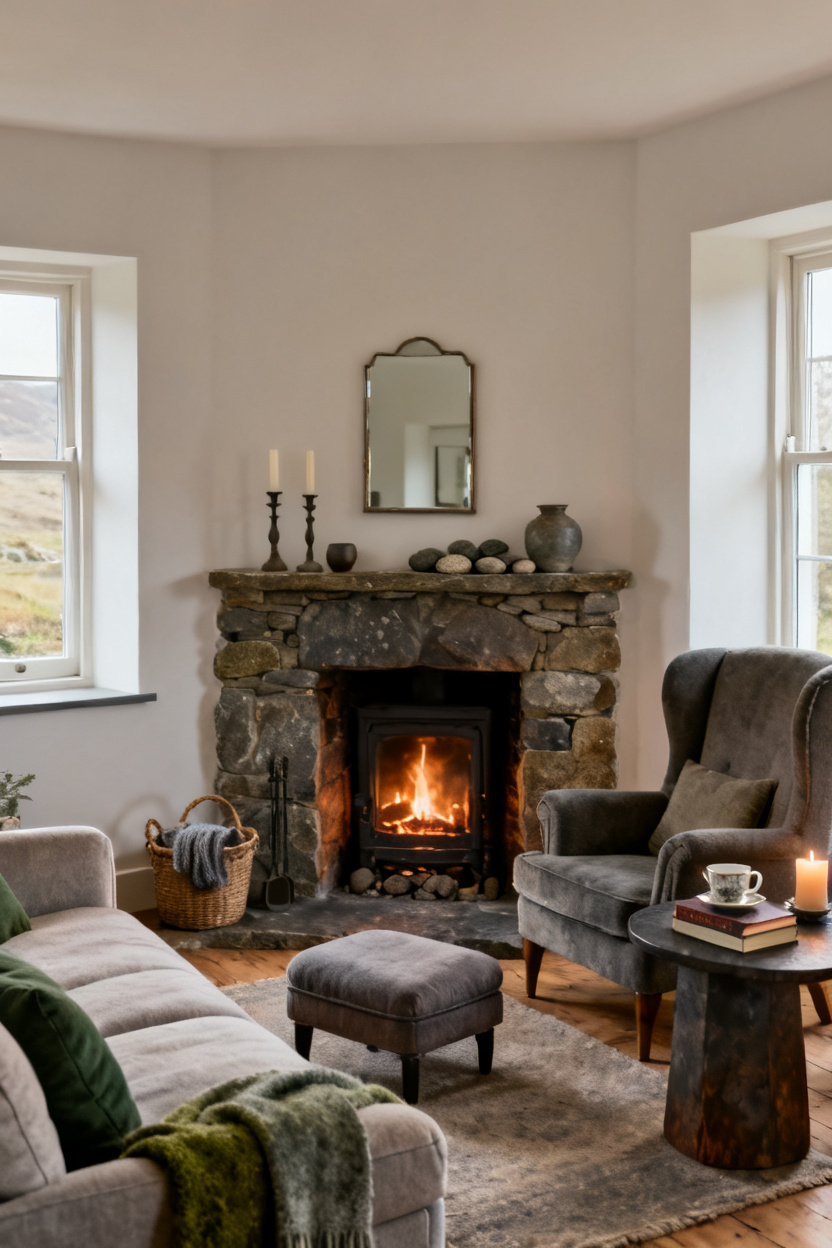
A fireplace or stove gives a room a natural center, and coorie style grows stronger when the seating gathers around that point. Even if your hearth is small, you can shape the space so it feels warm, social, and quiet at once.
Create a fireside circle
Begin with the main seat facing the hearth, or turned toward it at a soft angle. Then place an armchair nearby with enough space for conversation. Add a footstool and a small side table so the area supports real use, not just a pretty photograph. This layout makes the fire feel part of daily life.
If your sofa currently points at a television across the room, try shifting it a little so the fireplace shares attention. Even a small move can change the energy. The room starts to pull people inward instead of pushing them to the edges.
This kind of arrangement works especially well in homes that feel disconnected in winter. A good hearth setup gives everyone a reason to sit closer, stay longer, and slow down. That is why the hearth matters so much in these interiors.
Style the mantel with restraint
A mantel does not need many things to look beautiful. Stone, candles, and a modest mirror often do enough. The stone brings weight, the candles add glow, and the mirror lifts a little light back into the room without stealing focus from the fire.
Keep the scale balanced. One medium mirror or framed piece placed above the mantel usually works better than several small objects spread across it. A pair of candlesticks, a small vessel, or a few gathered stones can finish the scene. Leave some empty space. That pause helps the display feel calm.
If you do not have a traditional mantel, use the same thinking on a stove ledge, nearby shelf, or side table. The goal is not to copy a grand country house. It is to build a sense of warmth and stillness around the fire zone in whatever space you have.
Make comfort easy to reach
The best fireplace corner supports long evenings without fuss. Keep a wool basket nearby, store a few books within reach, and use a side table large enough for tea, glasses, or a candle. Small choices like these make the area feel complete.
5. Soften Floors with Thick Rugs
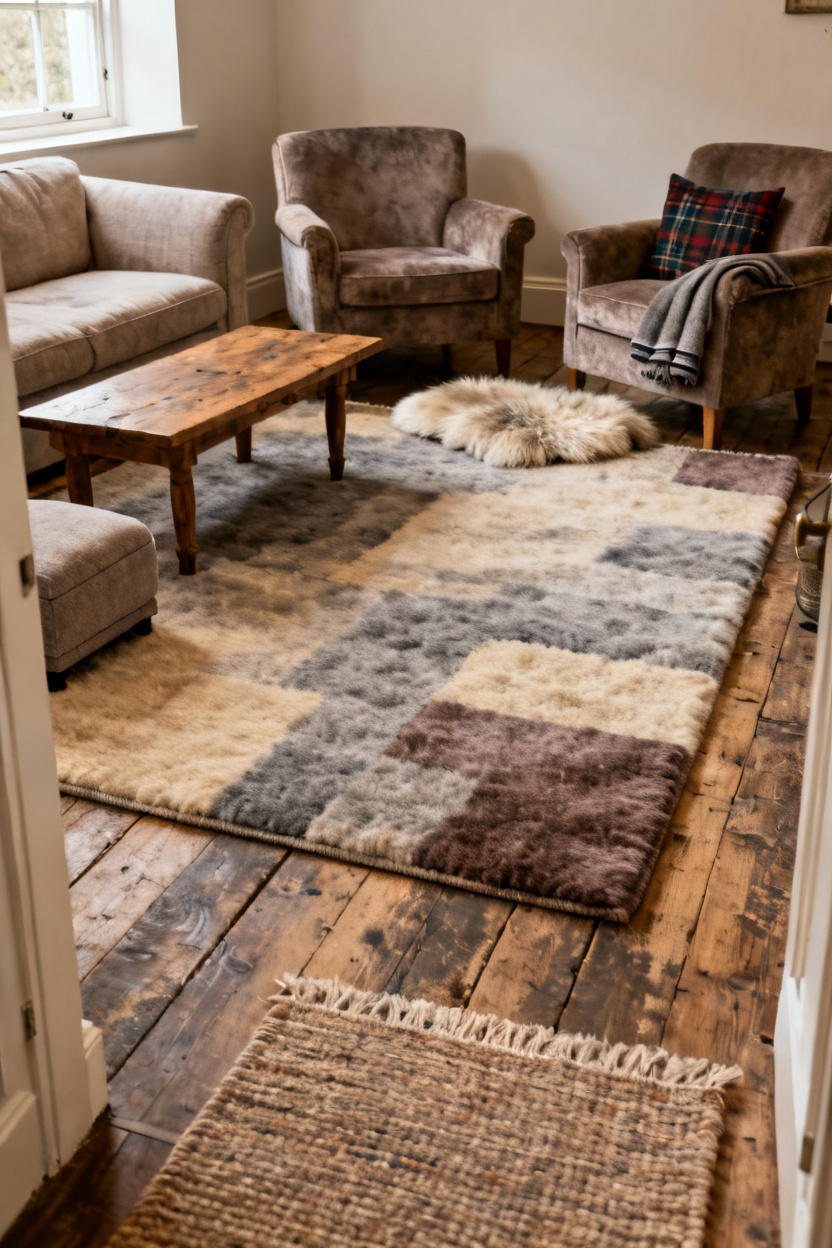
Hard floors can look beautiful, but they often make a room feel exposed. In Coorie Scottish Interior Ideas, a thick rug changes that mood fast. It adds warmth underfoot, softens sound, and gives the room a settled, sheltered feel that suits cozy living.
The rug that grounds the room
A deep-pile rug works best where you sit and stay awhile. In a living room, place it so the front legs of your sofa and chairs rest on the rug. That simple move pulls the seating together and keeps the layout from feeling scattered. I have seen even a plain room feel richer the moment the furniture stops floating on bare boards.
Size matters more than pattern here. A rug that is too small breaks the room into awkward pieces and makes everything feel tighter than it is. Go larger than you first think. If the rug reaches well under the front edge of your main furniture, the space will feel calmer and more generous.
Layers that feel lived in
If you want a softer, more collected look, add a flatwoven wool runner in a passage or beside the bed, then layer a sheepskin where your feet first land. This mix gives you comfort in the spots that count. It also brings a quiet Scottish feel that looks natural, not staged.
Layering works best when each piece has a clear job. Let the larger rug hold the room together, then use smaller skins or runners to soften edges and cold zones. You do not need many pieces. You need the right ones, placed where your body will notice them every day.
Texture over fuss
Choose rugs for touch before you choose them for trend. Wool is a smart pick because it feels warm, wears well, and suits the grounded mood of coorie style. A soft neutral, heathered brown, oat, or muted grey will sit easily with weathered timber, painted walls, and darker upholstery.
If your room already has tartan, wood grain, or strong color, keep the floor pattern quiet. Texture will do enough. The goal is not to crowd the room. It is to make the floor feel like part of the comfort, rather than a cold surface you happen to walk across.
6. Use Gentle, Low Evening Lighting
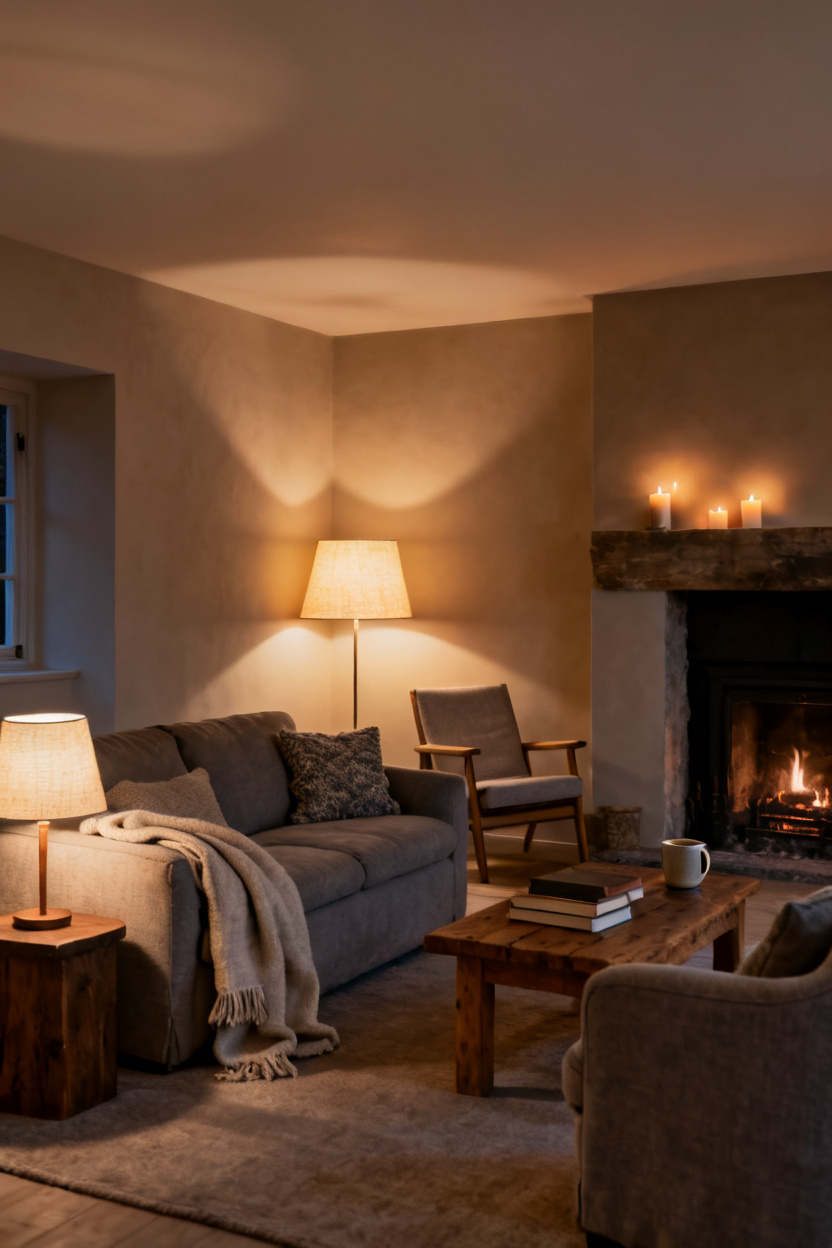
Light shapes mood as much as furniture does. If your room feels hard at night, the problem is often overhead glare. Coorie rooms feel better with low lighting that sits below eye level and spreads a soft glow across walls, fabric, and wood.
Why overhead light feels too sharp
A bright ceiling light flattens a room. It shows everything at once and leaves little mystery, which is the opposite of a sheltered evening mood. Table lamps, shaded wall lights, and candlelight create smaller pools of light, and those pools make a room feel deeper and more restful.
This change is easy to feel. Sit down in your room after dark and switch off the main light. Then turn on one lamp near the sofa and another across the room. You will notice how the corners soften, the walls recede, and the whole space starts to feel quieter.
Linen shades or bare bulbs
The shade you choose makes a real difference. Linen shades soften the light and spread it gently, so skin tones, paint colors, and wood all look warmer. Bare bulbs can work in the right setting, but in a coorie interior they often feel too exposed and too harsh, especially in the evening.
I usually think of linen as the safer choice for comfort. It filters the bulb, hides glare, and adds another layer of texture without asking for attention. If you like a simple look, pick plain shades in cream, flax, or soft grey. They do their job quietly.
Place light where you live
The smartest placement trick is to keep light sources close to seated eye level. A lamp on a side table, a wall light beside a reading chair, or candles on a deep mantel all feel welcoming because the light meets you where you rest. High light belongs to tasks. Low light belongs to evenings.
Spread the glow around the room instead of relying on one strong source. Two or three smaller lights will almost always feel better than one bright fitting in the center. That balance gives the room shape, and it helps every corner feel used, even when the night outside feels long and dark.
7. Dress Windows for Shelter
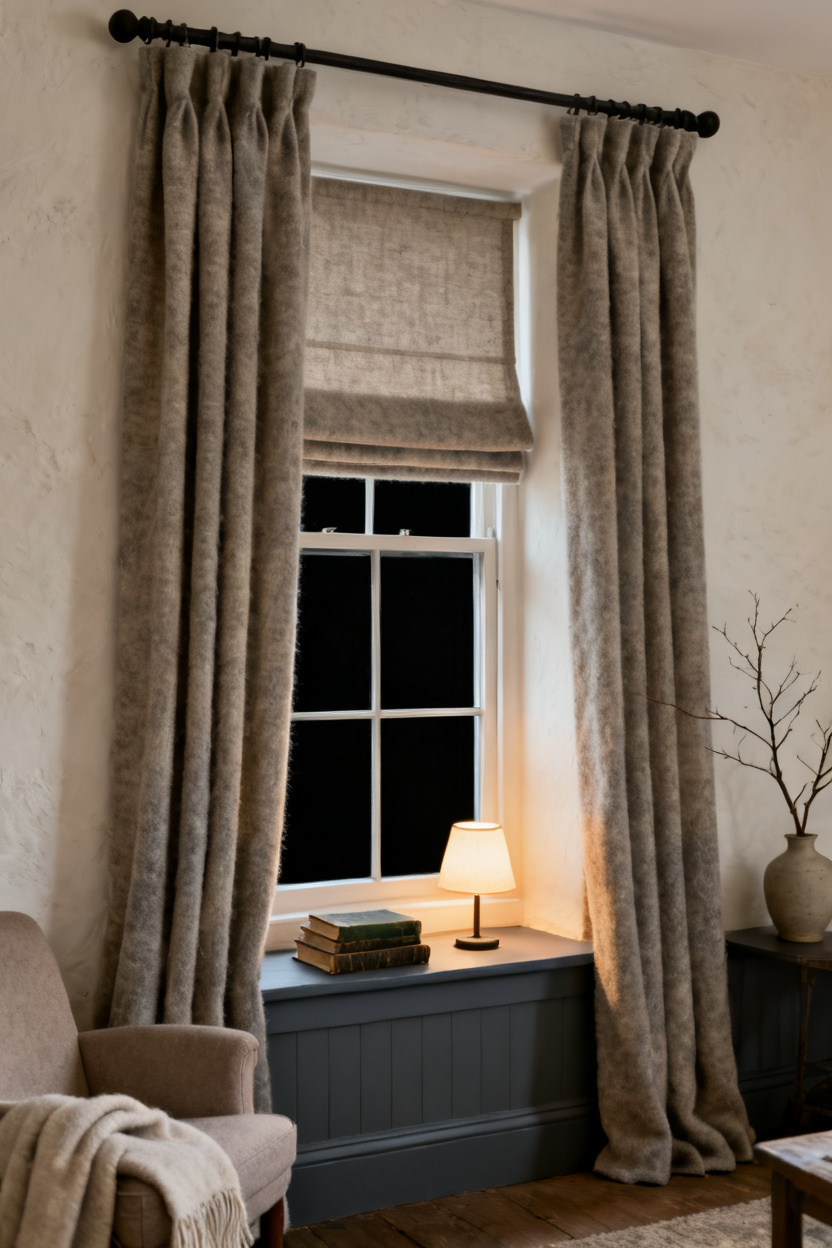
Windows can make a room feel open and bright, but they can also feel cold when left bare. In a coorie home, window dressings add privacy, softness, and a sense of refuge. The aim is simple: make the window feel like a protected part of the room, not a thin gap in the wall.
Full curtains change the mood
Long curtains bring instant shelter. Heavy wool or brushed cotton works especially well because the fabric has weight, and that weight helps the room feel held. Light cloth can look pretty in daytime, yet it rarely gives the same sense of comfort once evening comes and the glass turns black.
Hang the curtain pole slightly above the window frame, not right on top of it. That small lift makes the window feel taller and more finished. Let the curtains fall with enough width to look full when closed, because skimpy panels can make even a good room feel mean and underdressed.
Blinds that add quiet structure
Roman blinds are useful when you want a neater line during the day. They suit kitchens, smaller sitting rooms, and bedrooms where curtains alone might feel heavy. In a brushed cotton or wool-blend fabric, they still carry that soft Scottish mood, just in a cleaner shape.
A blind also helps with layering. You can pair it with side panels for depth, or use it alone if the room already has plenty of texture elsewhere. This is one of those choices where the room tells you what it needs. If the space feels busy, a single tailored blind can steady it.
Make the sill part of the room
Deep sills have real charm, and you should use them. A sill can hold a lamp, a small stack of books, a ceramic pot, or a simple branch in a jar. These touches make the window area feel furnished and intentional, which softens the hard edge of glass.
Keep the look restrained. One or two objects often work better than a crowded row. The best window styling feels settled, not decorated for show. You want the eye to read warmth and shelter first, then notice the details later.
8. Add Stone, Ceramic, and Iron
A coorie room should not feel too polished. It needs a little weight. Materials like stone, ceramic, and iron bring that grounded Scottish character into the space, and they do it without fuss. These surfaces add age, texture, and a quiet sense of permanence.
Give the room a steadier backbone
Stone has a calm strength that suits cozy interiors well. A soapstone tray on a coffee table, a stone bowl on a shelf, or a small lamp with a stony base can anchor softer elements around it. When a room has wool, cushions, curtains, and warm light, a harder surface keeps everything from feeling overly sweet.
You do not need large architectural pieces to get this effect. Small touches are enough if they are chosen with care. I like stone best when it looks slightly imperfect, with visible grain, clouding, or worn edges that suggest time and use.
Handmade pieces with warmth
Ceramic adds a different kind of comfort. A handmade mug, a matte jug, or a broad bowl brings shape and tactility to a room in a very human way. These objects feel personal because they often show the hand of the maker, and that small irregularity gives life to a shelf or table.
Use ceramics where your routine already happens. Keep mugs on open shelving, set a jug on the dining table, or place a bowl near the fire for matches or small gathered things. Everyday use matters here. The room becomes warmer when useful objects are also beautiful.
Iron that sharpens the softness
Blackened iron hardware, candle holders, or simple hooks can give the room structure. This dark note stops a soft palette from drifting too far into blur. Iron works best in short, clear touches, like punctuation across the space.
Balance rough and smooth surfaces so the room stays calm. If you add an iron wall light, pair it with a linen shade. If you use a rough stone dish, place it on a smoother timber top or beside glazed ceramic. That contrast gives depth without making the room feel busy, and that is often what makes a cozy interior last.
9. Create a Reading Nook Retreat
A coorie home needs one corner that feels set apart from the rest of the room. This idea works so well because it asks very little from you, yet it gives back a lot in comfort, quiet, and daily use.
The Corner That Finally Works
An unused corner can become a true reading nook with just a few well-chosen pieces. Start with a deep chair that supports your back and lets you settle in for a while. Add a footstool so the seat feels restful, not upright and formal. Then place a narrow side table close enough for a mug, a book, and a pair of glasses. That small group of pieces creates a retreat inside the room, and it does it without changing the whole layout.
Placement matters more than people think. If you can, set the chair near a window so the nook gets soft daylight in the morning or late afternoon. That natural light makes the corner feel calm even before you switch on a lamp. In the evening, the chair still holds its place because the side table and lamp give it purpose. You are not just filling a gap. You are making a corner that invites you to slow down.
Make It Feel Ready
The best coorie spaces feel lived in before you even sit down. Keep a blanket within reach, folded over the chair arm or tucked in a basket beside the footstool. This small move changes the mood at once. It tells you the seat is meant to be used, not admired from across the room.
I have found that a reading nook feels warmer when you resist the urge to add too much around it. One chair, one lamp, one table, and one soft layer often do more than a larger setup with extra pieces. In Coorie Scottish Interior Ideas, comfort comes from care and placement, not from crowding a corner with décor. Let the nook breathe, and it will call you back again and again.
10. Style Shelves with Lived-In Objects
Shelves should never look like a shop display in a coorie room. They should feel personal, slightly relaxed, and full of things that hold memory, texture, and use.
Start with Meaning, Not Perfection
The easiest way to style shelves well is to begin with objects that already belong in your life. Books with worn spines, a small pottery jug, framed landscape art, and woven baskets all carry the grounded mood that suits a Scottish interior. These pieces bring warmth because they show age, use, and taste. A shelf like this feels settled, and that feeling matters more than perfect symmetry.
You do not need rare antiques or a designer eye. You need contrast in shape and surface. Stack a few books flat, stand others upright, then place pottery near the books so the hard lines soften. Add a basket on a lower shelf to hide loose items and stop the whole arrangement from feeling too delicate. The mix does the work.
A Simple Order That Looks Natural
If styling shelves feels hard, use a plain sequence. Put the tallest pieces in first, then place medium objects beside them, and finish with smaller accents that fill quiet gaps. This keeps the shelves from looking stiff. Your eye moves easily across the display, which helps the room feel easy too.
Art can help anchor the shelf without making it heavy. Lean a framed landscape at the back instead of hanging it above every time. That relaxed look suits coorie style because it feels collected over time. You can shift it later, and the shelf still works.
The Spacing Mistake to Avoid
The biggest mistake is spacing every object too evenly. When each item sits at the same distance from the next, the shelf can look flat and overplanned. Real homes rarely feel warm that way. Leave some shelves a little fuller and some a little barer. That uneven rhythm gives the room a human touch.
I also like to step back after styling and remove one thing that feels shiny, fussy, or out of place. That quick check keeps the shelves in line with Coorie Scottish Interior Ideas, where comfort comes from depth and honesty. A lived-in shelf should hold your eye for a moment, then let it rest.
11. Keep the Room Warm but Spare
Coorie style works best when the room feels sheltered, not stuffed. Warmth and restraint have to work together, or the space loses the calm that makes it so inviting.
Comfort Needs Breathing Room
A cozy room can tip into clutter faster than you expect. Thick textures, dark colors, and collected objects all add weight, so each one needs space around it. If every corner is full, the room starts to feel busy instead of restful. The aim is warmth with shape and order.
This is where many people get stuck. They add soft layers, baskets, candles, books, and extra stools, then wonder why the room feels smaller. Comfort should support daily life, not block it. You still need clear surfaces, easy paths, and places where your eye can pause.
Edit Each Zone
A simple editing habit helps. Stand in one zone at a time, the fireplace area, the sofa side, the shelf wall, the reading corner, and remove one shiny or unused item. That single step clears visual noise without stripping away character. Often it is the metallic tray you never use, the glossy vase that catches too much light, or the small table object that serves no real purpose.
I like this method because it feels manageable. You are not clearing the whole room in one sweep. You are making a series of small choices, and those choices protect the coorie mood far better than a dramatic reset.
Know the Line Between Warm and Crowded
There is a real difference between comfort and crowding. Comfort makes you want to stay. Crowding makes you shift things just to sit down or set a cup somewhere. One supports rest, and the other creates low-level stress that you feel before you name it.

Conclusion
Coorie style stays with you because it changes how a room feels, not just how it looks. A deep chair by the window, shelves that hold books and pottery with a real sense of use, and a quick edit of each zone can do as much as bigger design moves. Pair those ideas with the earlier layers of wool, softer lighting, and grounded materials, and the room begins to feel settled from every angle.
Save the ideas that match your home now. Then try one small change first. Build a reading corner, restyle one shelf, or remove one item from each area. Those simple steps often bring the quiet, sheltered mood you wanted all along.