You do not need a castle to get that warm, collected Scottish look at home. The right mix of tartan, stone, deep color, wool, leather, and wood can turn a plain living room into a space that feels calm, rich, and deeply inviting.
Picture smoky blue walls, weathered oak, soft wool throws, and the glow of firelight against rough stone. These 10 ideas help you create that mood without making your room feel heavy, old-fashioned, or themed.
In the sections ahead, you will find practical ways to bring in heritage, texture, and comfort. Each one is easy to adapt, whether your home is modern, traditional, large, or small.
Layer Tartan Without Overwhelming
A Scottish living room feels most believable when tartan appears with restraint. You want character, not costume. A careful touch gives the room history, warmth, and pattern without taking over every surface.
Start With One Strong Piece
The easiest way to use tartan well is to let one item lead the room. A single armchair in muted plaid, a bench cushion, or full drapes in a soft check can set the tone and keep the space grounded in Scottish tradition. When too many tartans compete, the room starts to feel busy. One strong feature gives your eye a place to rest.
I often think a tartan chair works better than a sofa because it feels special rather than dominant. You can pair it with plain linen, velvet, or brushed cotton in solid colors, and the pattern still has presence. This also helps if you want the room to feel elegant rather than themed.
Keep The Colors Quiet
Not every tartan has to be bright red and green. In fact, some of the best Scottish living room ideas use softer versions with moss green, charcoal, navy, brown, or faded plum. These shades feel older, calmer, and easier to blend with wood, leather, and stone.
If your room already has strong features such as dark beams or a fireplace, choose tartan with low contrast. A subtle plaid can add depth without shouting for attention. That is often what makes the space feel timeless.
You can also repeat one color from the tartan in a throw, lampshade, or painted wall. That small link makes the room feel thought through. It is a quiet move, but it works.
Balance Pattern With Plain Texture
Tartan looks best when it sits beside simple textures. Think wool throws, smooth painted walls, leather seating, or a sisal rug underfoot. These plain surfaces calm the pattern and stop the room from looking crowded.
If you love tartan cushions, keep the number low and vary their scale. One larger plaid pillow and one small solid cushion often look better than five matching covers spread across a sofa. You still get that Scottish charm, but the room stays polished and easy to live in.
View this post on Instagram
Anchor the Room With Stone
Few things bring Highland character into a living room like stone. It adds weight, age, and a sense of shelter. Even in a newer home, stone can make the room feel rooted and lasting.
Make The Fireplace Matter
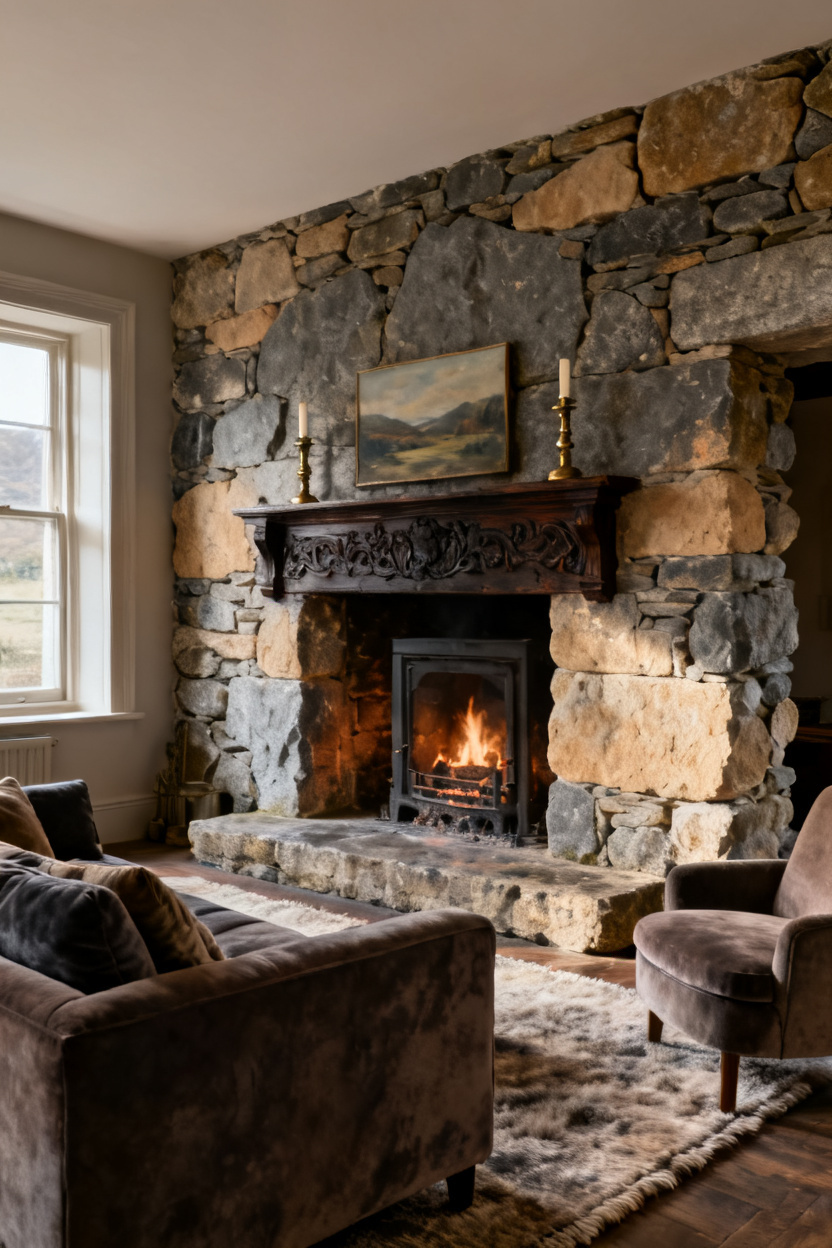
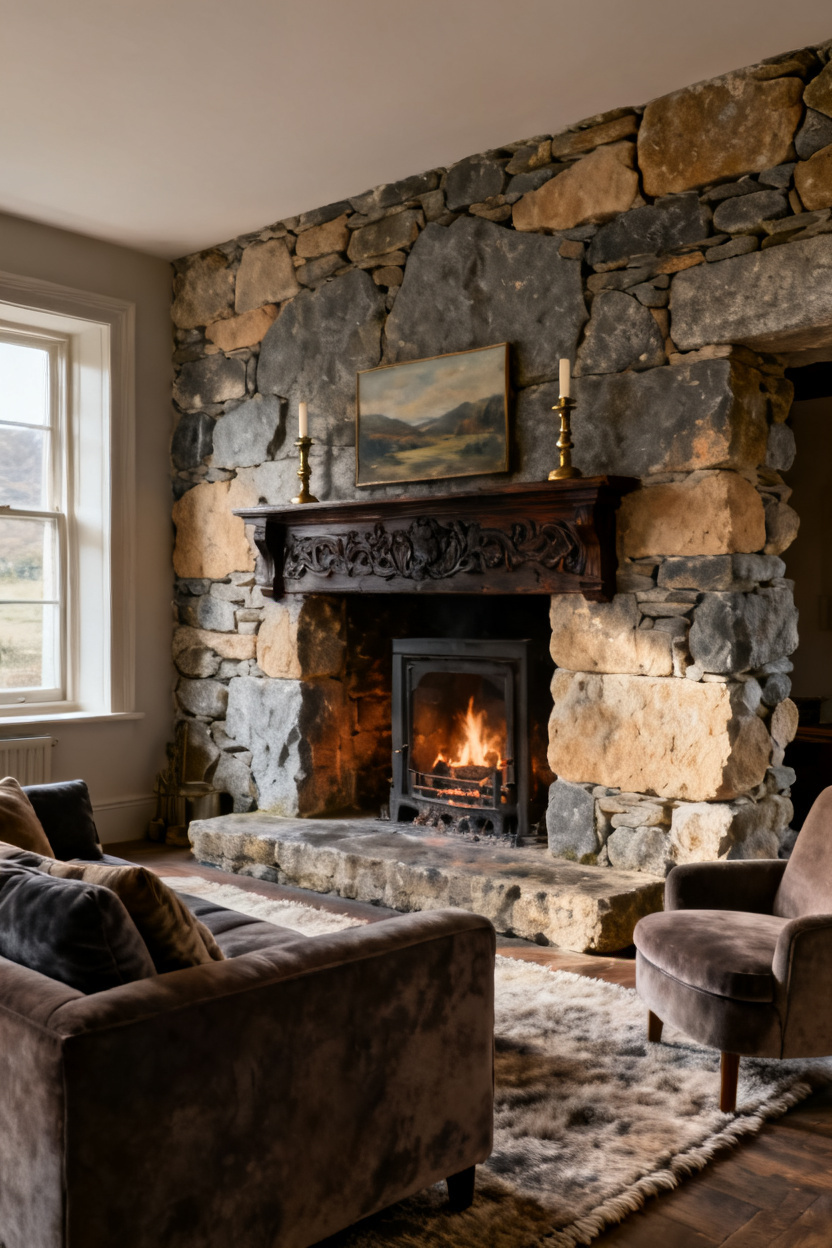
A stone fireplace naturally becomes the heart of the room. It draws attention, gives structure to your furniture plan, and adds the rugged beauty that Scottish interiors do so well. If you already have a fireplace, consider exposing more of the original material or adding a thicker hearth to give it stronger presence.
In homes without an old fireplace, a stone surround can still create the same effect. Choose finishes that feel honest and slightly uneven rather than polished and perfect. I always prefer stone with rough edges and soft color changes because it feels older and more believable.
Use Texture Beyond The Hearth
Stone does not have to stay at the fireplace. A partial accent wall, a low hearth extension, or even stacked stone around an alcove can add depth and make the room feel more architectural. This works especially well if the rest of the space feels flat or lacks detail.
The best Scottish-inspired rooms mix rough stone with softer materials nearby. A wool rug, deep sofa, or velvet cushion keeps the space from turning cold. That contrast is what makes the room feel cozy instead of severe.
If real stone is not possible, limewash, textured plaster, or reclaimed brick can give a similar aged effect. The goal is not perfection. You want surfaces that catch light and shadow.
Let The Material Set The Mood
Color matters with stone. Warm gray, sandy taupe, smoky brown, and charcoal all work well because they echo cliffs, hearths, and old country houses. Bright white stone can feel too sharp for this look unless the room has lots of dark wood to balance it.
Once stone is in place, keep the decor around it simple. A carved wood mantel, a few brass candlesticks, or a landscape painting is often enough. Too many small objects weaken the strong, grounded feeling that stone brings to a Scottish living room.
Choose Deep, Weathered Colors
Color shapes the mood before furniture does. In a Scottish-inspired space, weathered colors create the feeling of mist, moorland, forest, and worn old houses. These shades wrap the room in calm and give it quiet richness.
Borrow From The Scottish Landscape
Some of the most beautiful living rooms take their palette from nature. Deep green can echo pine and moss, heather purple brings a faded floral note, warm brown feels like peat and timber, and misty blue reflects sky and sea. These colors do more than look pretty. They make the room feel settled.
You do not need all of them at once. Pick one main shade, then support it with two or three quieter tones. A moss green wall with brown leather and blue-gray textiles can feel layered and natural without looking too planned.
Go Moody Without Losing Light
People often worry that deep color will make a room feel smaller. It can, but it can also make the room feel richer and more intimate, which suits this style very well. The trick is to balance darker paint with warm lamps, natural wood, and fabrics that catch light.
I like matte finishes here because they soften the effect and make the walls feel older. Glossy paint can look too sharp for a room built around heritage and comfort. If you feel unsure, start with one dark wall or paint the room in a medium tone rather than the deepest version on the sample card.
Ceilings matter too. A soft off-white or pale stone color can lift the room and stop the palette from feeling heavy. That small contrast gives you mood without gloom.
Use Color In Layers
Paint is only one part of the palette. Curtains, rugs, books, and upholstery can all repeat your chosen shades in softer ways. This creates a room that feels collected over time rather than bought in one weekend.
Try mixing a dark wall with a faded tartan cushion, an olive throw, and a brown leather ottoman. Each piece adds depth, and none of them has to match exactly. In fact, a little variation makes the room look more lived in, which is part of the charm.
Mix Leather With Soft Wool
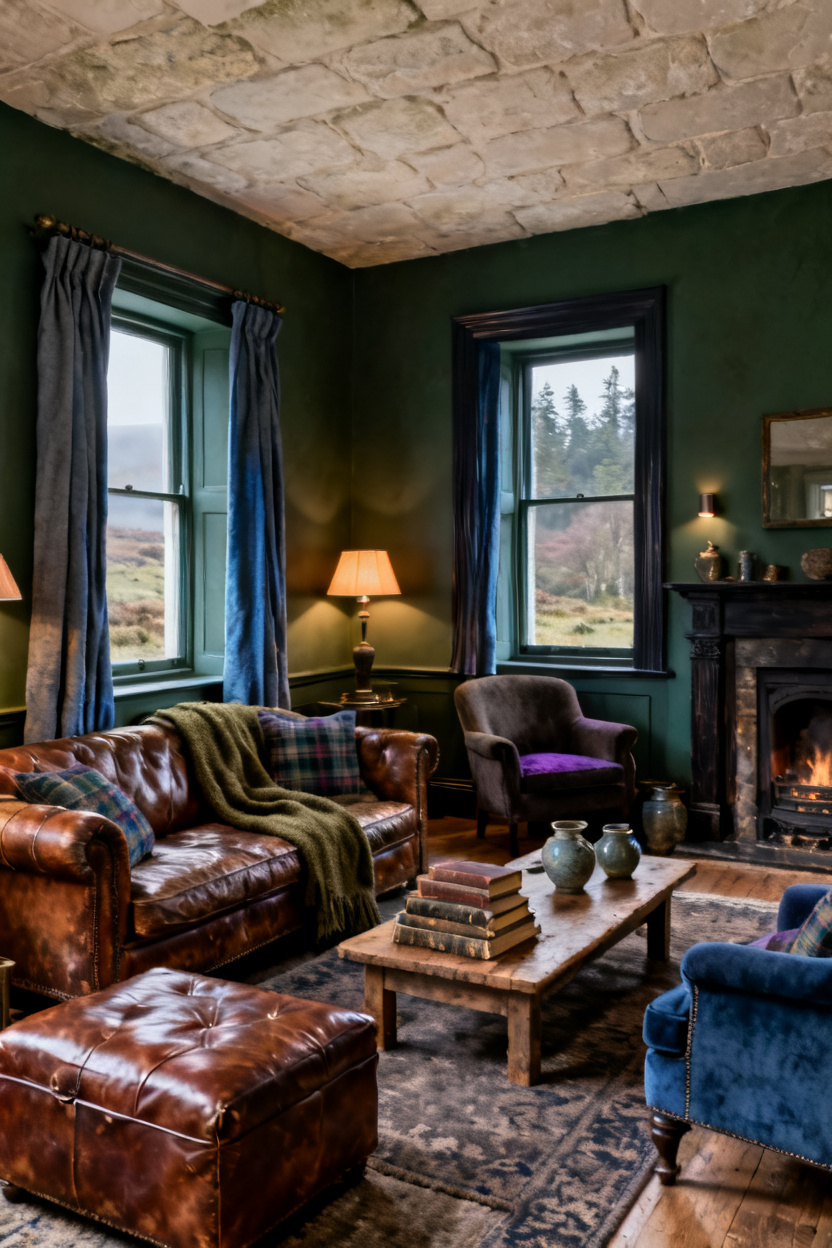
A room can feel polished and welcoming at the same time when you combine leather and wool. Leather gives shape and strength. Wool brings warmth, softness, and that quiet comfort people want in a Scottish living room.
Let Leather Add Structure
A brown or oxblood leather sofa can anchor the whole space. It has a classic, settled look that works beautifully with tartan, dark paint, and stone fireplaces. Leather also ages well, which suits a room inspired by heritage and timeworn beauty.
If a full sofa feels too heavy, use leather in smaller ways. An armchair, ottoman, or even a pair of stitched stools can bring in that same depth. The point is to add something sturdy that keeps the room from feeling too soft or fussy.
Bring In Wool For Comfort
Once leather is in the room, wool helps soften its firmness. A thick throw over the arm of a chair, a plaid blanket folded on a sofa, or a wool rug underfoot adds instant warmth. You can feel the difference before you even sit down.
Choose wool in natural, slightly muted shades. Cream, gray, moss, rust, and navy all work well because they blend easily and look at home beside leather. I find that chunky weaves and brushed finishes make a room feel more relaxed than sleek, tight fabrics do.
This pairing also works well through the seasons. In colder months, the wool makes the room feel deeply cozy. In warmer weather, the leather still keeps the space from looking too wintery.
Play With Contrast Carefully
The charm of this look comes from contrast, but it needs balance. If your leather is dark and heavy, lighten the room with pale wool, linen curtains, or a lighter rug. If your sofa is camel or tan, you can go richer with charcoal or forest green wool accents.
Avoid making every soft piece plaid or every hard piece brown. Mix tones and textures with a light hand. The result feels more personal, and your living room keeps that elegant Scottish mood instead of slipping into a showroom look.
View this post on Instagram
Bring In Traditional Woodwork
Nothing gives a room old-world warmth quite like woodwork. Paneling, beams, carved tables, and aged cabinets add craft, history, and visual weight. Even one or two pieces can change the whole mood of a living room.
Use Paneling To Add Depth
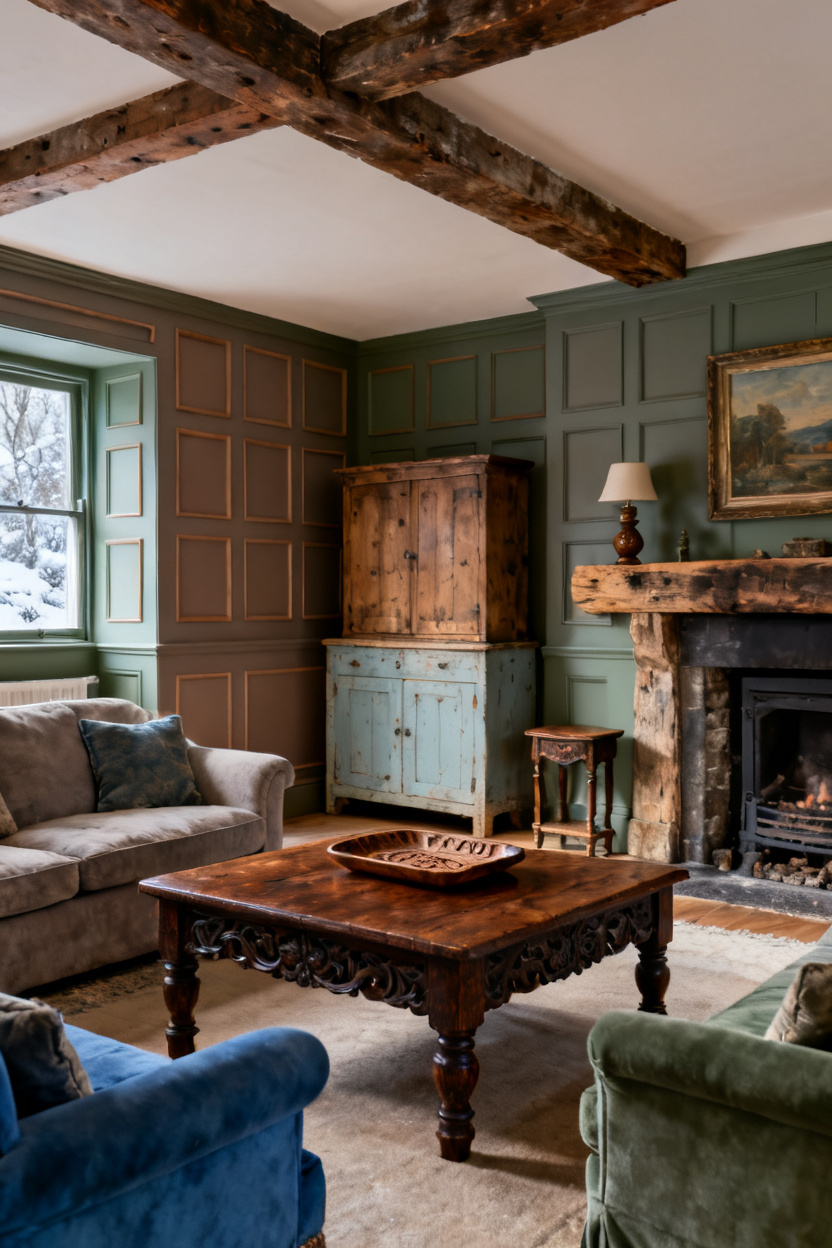
Wall paneling can make an ordinary room feel far more special. It frames the walls, adds shadow and shape, and gives paint colors more richness. In a Scottish-inspired space, simple tongue-and-groove boards, square panels, or painted timber walls all work well.
Darker paneling creates drama, especially in larger rooms with good natural light. Painted wood in green-gray, deep blue, or warm taupe feels classic and calm. If your room is small, half-height paneling can still add character without making the space feel closed in.
Look For Pieces With Age
Traditional wood furniture should feel solid and lived in. A carved side table, old chest, bookcase, or weathered cabinet can bring that sense of history without any major renovation. Small marks, softened corners, and uneven color often make these pieces more beautiful, not less.
You do not need a matching set. In fact, a mix of wood tones often feels more real. A darker coffee table with a medium oak cabinet and a painted sideboard can sit together beautifully if the shapes are simple and the room’s colors connect them.
Exposed Beams And Quiet Detail
If your home has beams, let them show. Their rough texture and strong lines instantly add country-house character. If you do not have original beams, reclaimed timber used on a mantel or ceiling feature can still bring in that same grounded feeling.
Woodwork also shines in smaller details. Think picture frames, lamp bases, shelving, or a carved tray on the coffee table. These touches may seem minor, but together they build the slow, collected beauty that makes Scottish living rooms feel timeless. I love how wood carries warmth even on the darkest winter day, and that is exactly why it belongs here.
Use Antiques With Restraint
A Scottish living room feels richer when a few old pieces bring depth and history into the space. The trick is simple: choose less, and choose well.
Let One Piece Lead
You do not need a room full of heirlooms to create charm. One well-made antique chest, a small side table, or an aged mirror can do more than six random vintage finds. A single strong piece gives the room a sense of story without making it feel crowded or dark.
I think this is where many people go wrong. They fall in love with the idea of an old-world room, then fill every corner with carved wood, brass, and floral prints. The result feels heavy. A Scottish interior works best when an antique has room to breathe, so its shape, patina, and age can stand out.
This approach also helps your budget. You can spend more on one beautiful piece instead of buying many weaker ones that fight for attention. In a living room with strong materials and deep colors, that quiet confidence matters.
Mix Old With Clean Lines
The easiest way to keep antiques fresh is to place them beside simpler shapes. A worn oak table looks better next to a plain linen sofa than beside another ornate piece. That contrast gives the room balance and keeps it from slipping into a museum mood.
Think about visual weight. If your antique has turned legs, carved trim, or a darker finish, pair it with lighter upholstery, softer curtains, or a clean lamp base. You still get the soul of the old piece, but the room stays easy to live in.
Choose Meaning Over Quantity
The best antiques often carry a personal link. Maybe it is your grandmother’s chair, a framed landscape from a local market, or a small clock found on a trip through the Highlands. Those pieces feel honest, and that honesty is what gives a room lasting charm.
Look for items that show age in a graceful way. A little wear on wood, faded brass, or softened paint can add warmth. What you want is patina, not clutter. If a piece feels too formal, too large, or too fragile for daily life, leave it out and keep the room useful.
View this post on Instagram
Create Warmth Through Layered Lighting
Light changes everything in a Scottish living room. It shapes the mood from gray morning to quiet evening, and it can make even a simple room feel deeply cozy.
Build Light at Different Heights
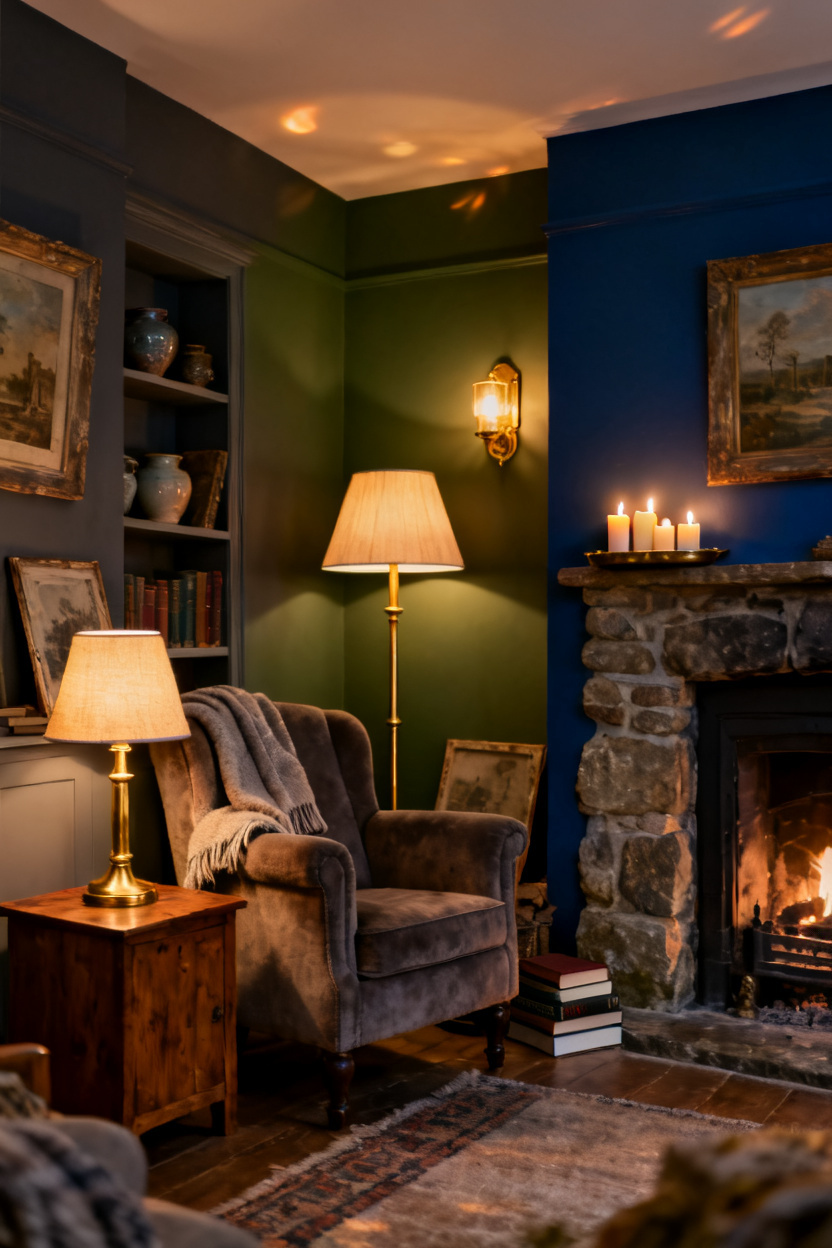
One ceiling light cannot do this job well. You need light in layers, with some low, some at eye level, and some higher up to soften the whole room. A table lamp on a side table, a wall sconce near a fireplace, and a shaded floor lamp by a reading chair work together to make the space feel calm and lived in.
This matters even more in rooms with deep paint colors or rich wood. Darker walls absorb light, so a single overhead fitting can leave the room flat. Small pools of light make the shadows feel intentional, and that creates the kind of welcome people remember.
Borrow the Glow of Firelight
Scottish interiors often feel their best in the evening. That is why the glow should feel soft, golden, and a little flickering, even if you do not have a real fire. Warm bulbs, fabric shades, and lamps placed near stone, wood, or books can mimic that gentle firelit look.
I always notice how much more inviting a room feels when the corners are softly lit. A bright white bulb can make beautiful textures disappear. A warm lamp brings out wool, wood grain, old frames, and pottery in a much kinder way.
You can also use candles, but place them with care. Group a few on a tray, a mantel, or a sideboard rather than scattering them everywhere. The room should feel peaceful, not theatrical.
Light for Living, Not Showing Off
Good lighting should support real life. You need enough light to read, talk, and relax, but not so much that the room feels exposed. A dimmer helps, though simply turning on two lamps instead of five can do the same thing.
The word to remember here is layered lighting. It gives your living room depth, flatters your furniture, and helps the space shift naturally through the day. That is a big part of cozy elegance. It looks beautiful, and it works hard too.
Style Shelves With Heritage Details
Shelves can do more than store things. In a Scottish living room, they can quietly tell the story of place, memory, and taste.
Start With Books and Art
If you want shelves to feel grounded, begin with items that already carry weight. Old books, landscape prints, and framed sketches give the room a sense of culture without trying too hard. They also soften the hard lines of shelving because paper, worn covers, and wood frames add texture.
You do not need rare first editions. A stack of weathered novels, local history books, or poetry collections can look beautiful. Turn some upright, lay a few flat, and leave open space between them so the shelf does not feel packed from edge to edge.
Art helps too. Small framed paintings of moors, coastlines, or village scenes echo the wider Scottish mood in a subtle way. If the room already has strong furniture, quiet art keeps the look balanced.
Add Collected Objects Slowly
The strongest shelves are built over time. Pottery, a brass candlestick, a small bowl, a carved box, or a stone found on a walk can each add meaning. These details should look gathered, not bought in one afternoon to fill a styling gap.
I like shelves that show a bit of real life. Maybe there is a cracked old jug that still looks lovely, or a framed family photo tucked between books. Those touches make the room feel personal, and they stop the design from feeling too polished.
Leave Room for the Eye
One of the easiest mistakes is overfilling every shelf. Heritage style does not mean crowding every inch with objects. Empty space is part of the design, because it lets each item stand out and gives the room a calmer rhythm.
Try stepping back after you place a few pieces. If one shelf looks too busy, remove two items before adding anything else. The goal is collected detail, not display-case perfection. Shelves should feel warm and thoughtful, as if they grew naturally with the home.
View this post on Instagram
Soften Formal Lines With Textiles
Some Scottish living rooms have strong bones. Tall windows, structured seating, and stately furniture can look beautiful, but they need softness to feel welcoming every day.
Use Curtains to Relax the Room
Long curtains change the mood fast. They frame the windows, soften hard edges, and bring a sense of comfort that bare glass never can. In a room with formal lines, curtains add movement and visual warmth, especially when they fall in loose, full folds.
Choose colors that work with the room rather than stealing the show. Muted plaid, soft oatmeal, moss, or deep blue can all feel right in a Scottish setting. If the walls and furniture already carry a lot of pattern or detail, plain curtains often do a better job.
Length matters. Curtains that just skim the floor look calmer and more finished than panels that stop short. That small choice can make the whole room feel more elegant.
Ground Furniture With Rugs
A good rug helps formal furniture settle into the room. It makes a seating area feel connected and cuts the echo that bigger rooms sometimes have. This is especially useful if you have wood floors, stone, or larger pieces with legs that leave a lot of open space beneath them.
Pattern can help here, but scale matters. A busy small print may fight with carved furniture or tartan accents. A larger, quieter design usually gives the room more grace and keeps the eye moving easily.
Layer Fabrics on Seating
Sofas and chairs look less stiff when you layer in softer textiles. A brushed throw, a simple lumbar cushion, or a seat in a faded print can take the edge off a formal silhouette. The room starts to feel touched and used, which is exactly what you want.
I have seen this work in rooms that once felt too proper to sit in. Add texture, and suddenly the space invites you in. The idea to remember is softening. Textiles do not erase elegance. They make it livable.
View this post on Instagram
Balance Grandeur and Everyday Comfort
The best Scottish living rooms feel graceful, but they also feel easy to use. That balance is what makes the style last. You can admire the room, then put your feet up in it an hour later.
Keep the Bones Elegant
Grandeur often comes from scale and proportion, not from excess. A tall bookcase, a generous sofa, or a well-placed fireplace surround can give the room presence without making it feel showy. If the main pieces have strong shape and good size, the room already feels more refined.
You do not need every item to look expensive. You need a clear structure, steady color choices, and furniture that suits the room. That creates a quiet kind of confidence that works well in Scottish interiors.
Choose Materials That Age Well
Everyday comfort depends on surfaces that can handle real life. Washed linen, sturdy wood, worn leather, and thick rugs all look better when they have been used. That is a gift in a family home, because a little wear adds character instead of ruining the mood.
This is where lasting style begins. If a room is too delicate, you will never relax in it. Durable materials let you keep the elegant look without turning the living room into a space that no one touches.
Finish With Personal Warmth
The last layer should feel human. A favorite chair by the lamp, a stack of books you actually read, or a framed photo near the mantel can soften the grander parts of the room. These details remind you that timeless design is not stiff. It is deeply personal.
Keep your eye on balance. If the room feels too formal, add one more lived-in touch. If it feels too casual, sharpen it with one classic piece or better lamp placement. That small back-and-forth is what gives a Scottish living room its lasting beauty.
View this post on Instagram
A timeless Scottish living room is built in layers. You add history with care, shape the mood with light, tell a story on the shelves, and soften the room with fabric and personal pieces.
That is why this style stays appealing year after year. It looks elegant, but it also feels calm and usable. Save the ideas that speak to you most, then try one change at a time. A single lamp, one antique table, or a better rug can shift the whole room in the right direction.