A tiny backyard can feel cramped, messy, and hard to use. The right ideas can turn that same space into a calm, pretty retreat where you can sit, plant, and breathe a little easier.
Picture warm pavers under your feet, leafy green walls, slim chairs tucked into a sunny corner, and soft layers of plants that make the whole yard feel deeper. Small spaces respond fast to smart design, and that means even a few changes can bring color, texture, order, and comfort.
You do not need a huge budget or a wide lawn to get a backyard that feels polished. These ideas help you make every inch count, so your outdoor space looks bigger, works better, and feels far more inviting than it does now.
1. Define Zones With Pavers
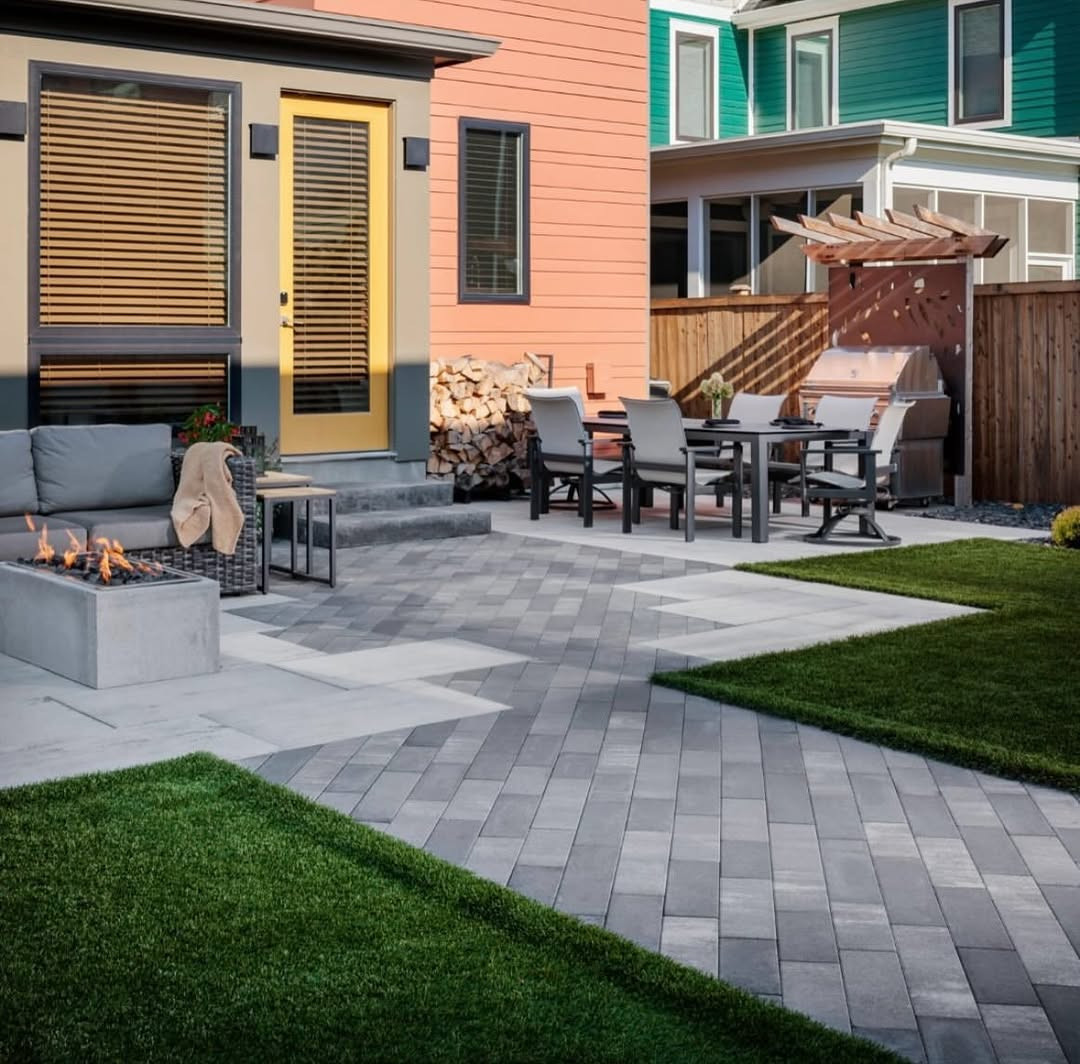
A small backyard works better when each part has a job. Pavers help you show where to sit, where to walk, and where plants should shine, and that simple structure can make a tight space feel much calmer.
Give Each Spot a Purpose
In a tiny yard, open space can quickly turn into wasted space. A small paver patio for two chairs, a narrow path to a gate, or a square pad under a bench tells your eye exactly how the yard is meant to be used. That clear layout matters because it stops the whole area from feeling random.
You do not need a big build to get this effect. Even a modest section of stone or brick can create a strong visual pause between grass, gravel, mulch, and planting beds. I have seen the smallest yards feel wider just because the ground was broken into neat, useful sections instead of one flat patch.
Make the Yard Feel Bigger
Pavers also change how you move through the space. A straight path feels clean and modern, but a gentle curve can slow the eye and make the yard seem longer than it is. That is a smart trick when you are working with a narrow or boxy backyard.
Color plays a role too. Light gray, sandy beige, and soft terracotta pavers reflect more light and keep the space airy. Dark stone can look rich and dramatic, though it often feels heavier in a very small yard. If your fence already looks dark, a lighter paver usually gives better balance.
Size matters as well. Large pavers with tight joints tend to look less busy, which helps a small space read as more open. Tiny stones or too many pattern changes can make the ground feel chopped up.
Choose Materials That Match Your Style
Concrete pavers suit clean, simple backyards. Brick brings warmth and a more classic look. Natural stone feels softer and more organic, especially next to planting beds full of grasses, herbs, and flowering shrubs. You do not need the most expensive option. You need one look that repeats well and ties the yard together.
Think about maintenance before you choose. Smooth pavers are easier to sweep and rinse, which matters if your yard collects leaves or dust. Textured stone offers more grip, but it can hold dirt in the surface. If you want an easy-care backyard, keep that in mind from the start.
A Small Move With Big Impact
Start with the area you use most. If you drink coffee outside, create a paver pad near the back door first. If you need a cleaner route for kids or pets, begin with a path. One defined zone often makes the next design choice much easier because the yard stops feeling blank.
Leave a slim border of gravel or creeping ground cover around the pavers so the edges look finished. That extra detail softens the hard lines and helps the whole backyard feel planned, not pieced together over time.
Credit to @belgardmidatlantic
2. Build Up With Vertical Planters
When ground space is scarce, the walls, fence, and corners above eye level become your best planting area. Vertical planters let you grow more without crowding the floor, and they bring softness to hard surfaces at the same time.
Use the Air You Already Have
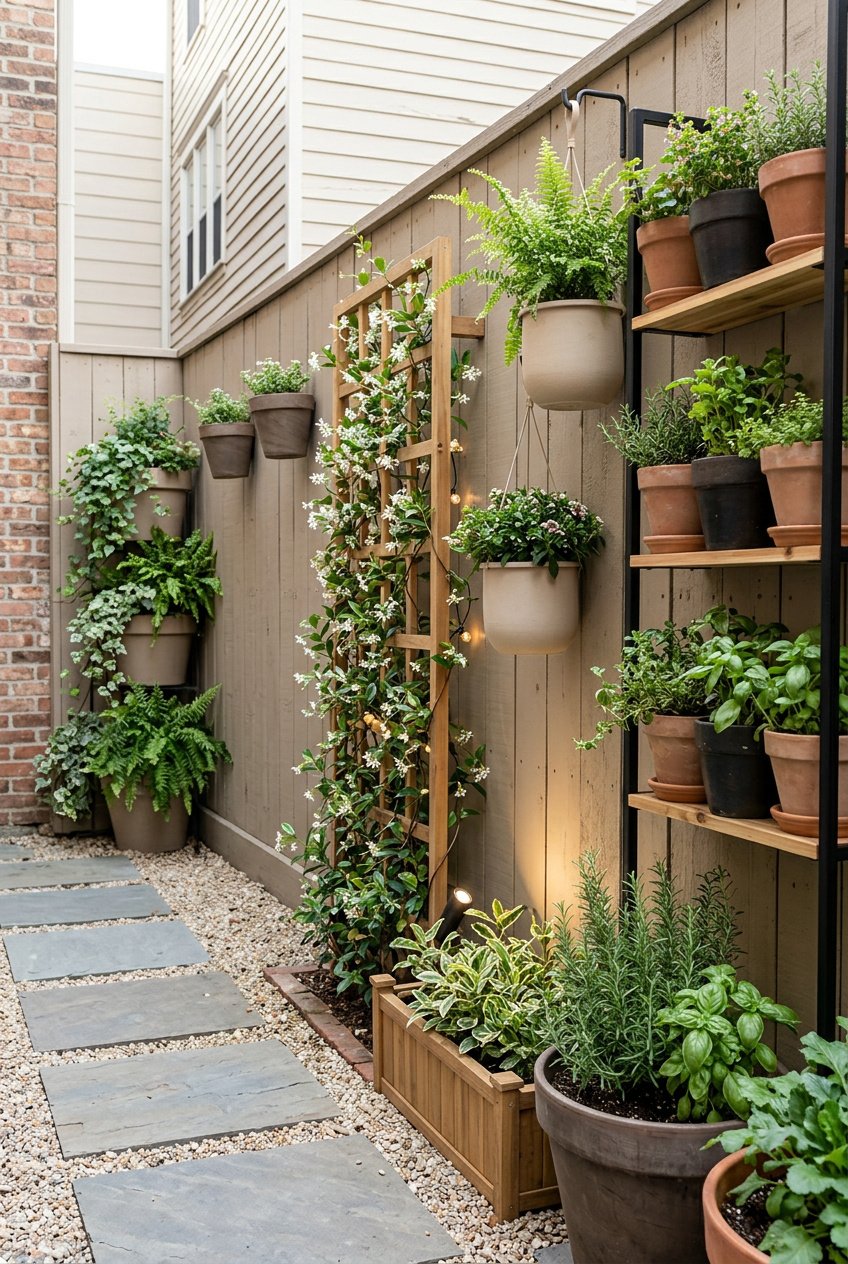
Most small backyards have one thing in common: there is far more open wall space than open ground. A trellis with climbing jasmine, wall pots filled with herbs, or stacked containers in a corner can turn bare vertical surfaces into living features. That shift gives you greenery where you need it most, without shrinking the walkway.
This idea works especially well in narrow yards. A fence covered with plants draws the eye upward, so the space feels taller and richer. You stop seeing just the width of the yard and start noticing layers, height, and movement.
Pick the Right Vertical Style
A trellis suits vining plants and creates a gentle, romantic look. Wall-mounted pots feel neat and structured, which fits modern spaces well. Tiered stands and stacked planters are easy to move, so they are great if you rent or like to change things seasonally.
Try to match the planter style to your backyard mood. Black metal and simple clay pots look crisp and current. White painted wood feels bright and cottage-like. Natural wood adds warmth, especially next to stone, gravel, or tan fencing. Those material choices shape the space more than people expect.
Plant choice matters just as much. Ferns, trailing ivy, pothos, strawberries, basil, and compact flowers all work well in vertical setups. In a sunny yard, petunias and rosemary can thrive. In shade, ferns and ivy often hold up better and still give you that full, lush look.
Keep It Full, Not Fussy
A vertical garden should make life easier, not harder. Group plants with similar light and water needs together so you are not constantly adjusting care. If the top row dries out faster, place drought-tolerant plants there and thirstier ones lower down where water can collect more easily.
I also like repeating one or two planter colors across the whole wall. That small choice keeps the setup from looking cluttered. In a tiny backyard, too many pot shapes and bright colors can feel busy fast, even if the plants are beautiful.
One Detail That Changes Everything
Leave breathing room around each planter. A packed wall can look heavy, but a little spacing lets each plant stand out and gives the whole display a cleaner shape. This is especially helpful if your fence already has strong lines or a bold stain color.
If you want the area to glow at night, weave small outdoor lights through a trellis or place an uplight at the base of a planted wall. The leaves catch the light, the shadows look soft, and the backyard feels far more finished after sunset.
3. Choose Slim, Space-Saving Furniture
Outdoor furniture can make a tiny yard feel welcoming, or it can swallow the whole space. Space-saving furniture gives you a place to relax without blocking paths, crowding plants, or making the backyard feel stiff and overfilled.
Keep Walkways Clear
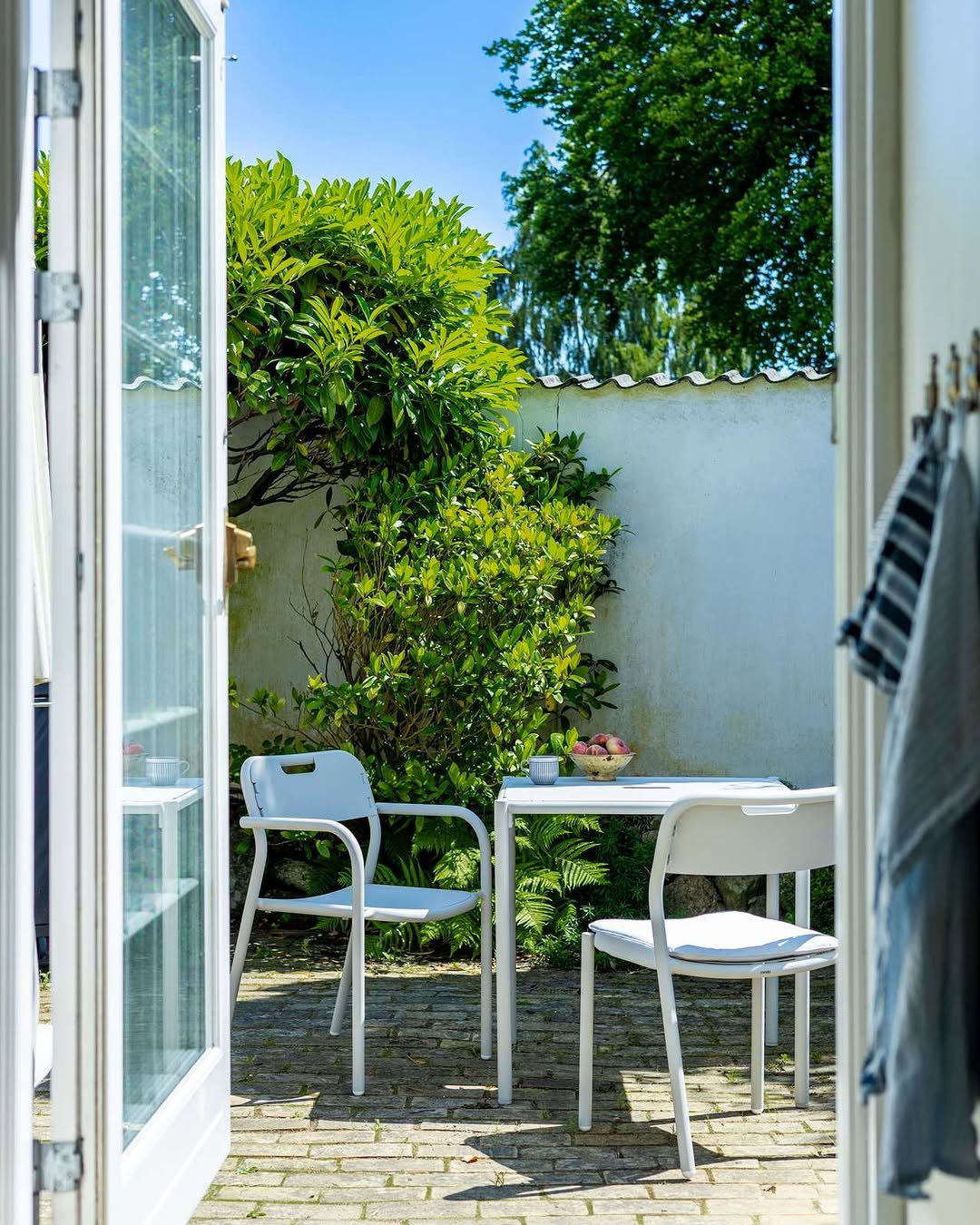
Furniture should fit your life, but it also has to fit the yard. In small outdoor spaces, chunky sectionals and wide tables often leave no room to move. Slim chairs, narrow benches, and folding café tables keep the layout open so you can still walk comfortably from one end of the yard to the other.
Measure first. Then measure again. A chair may look small online and still feel oversized once you place it next to a fence, planter, or grill. You want enough room to pull out a seat and pass by it without turning sideways.
Choose Pieces That Work Hard
The best small backyard furniture does more than one job. A bench with storage inside can hold cushions, hand tools, or kids’ toys. A folding bistro set can come out for dinner and tuck away when you want open floor space. Stools can act as side tables when guests visit.
This is where shape matters. Round tables often move better in tight corners because there are no sharp edges interrupting the path. Armless chairs usually take up less visual room than bulky armchairs, and they slide under tables more easily. Those little choices add up fast.
If your backyard feels plain, let the textiles add personality. A striped cushion, a sand-colored outdoor rug, or a soft green seat pad can bring color without making the area feel crowded. The furniture stays simple, but the space still feels styled.
Make It Look Light
Open-frame metal, slatted wood, and woven seats tend to look less heavy than solid, blocky furniture. That visual lightness matters. Even when two chairs are the same size, the one you can partly see through often feels smaller in the yard.
I usually tell people to pick fewer pieces and better shapes. One compact loveseat and a small round table can feel more generous than four mismatched chairs pushed into every corner. When each piece has enough breathing room, the whole backyard feels more restful.
Set Up for Real Life
Think about how you actually use the yard. If you read alone in the evenings, a single lounge chair and side table may serve you better than a dining set. If you host one or two friends, a bench with movable stools might be the smartest choice.
Place furniture with intention. Angle a chair toward the best planting bed, not toward a blank wall or trash bin area. If you can, keep the center of the yard a little open. That empty space helps the backyard feel larger, and it makes every seat easier to reach.
Credit to @mindo_moments
4. Layer Plants for Depth
A flat row of plants can make a small yard look smaller. Layering plants by height, shape, and texture adds depth, softness, and rhythm, which helps the space feel fuller and much more finished.
Build From Back to Front
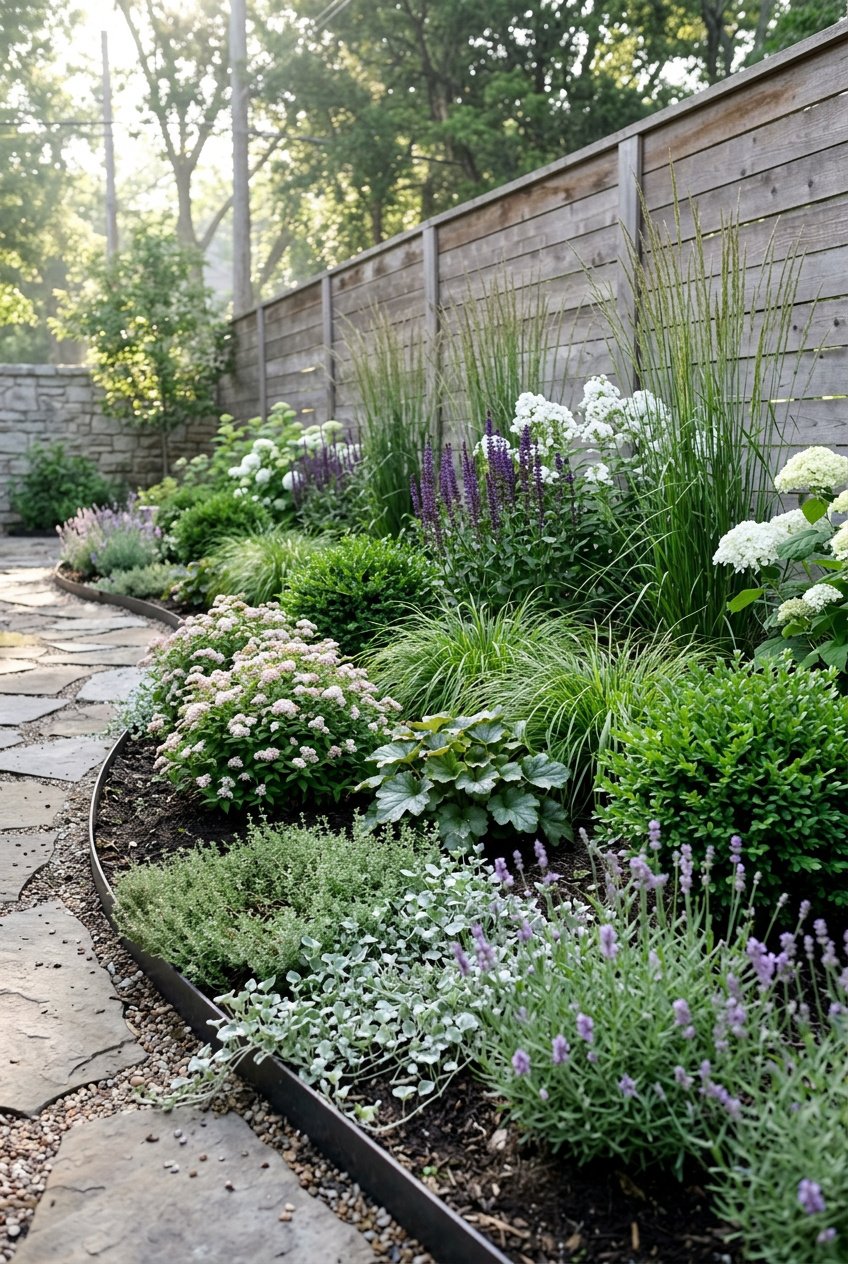
One of the easiest ways to create depth is to place taller plants at the back, medium plants in the middle, and low growers at the front. This simple planting pattern gives your eye places to travel, and that movement makes the yard feel less shallow. A fence line instantly looks more alive when it is backed by grasses, softened with shrubs, and edged with low flowers or trailing greenery.
You do not need dozens of varieties. In fact, fewer types often look better in a compact yard. Repeating the same grass, the same leafy shrub, or the same border plant gives the backyard a calm, pulled-together look that reads as intentional.
Mix Leaf Shape and Texture
Color helps, but texture often does more. Fine grasses next to broad hosta leaves, soft mounding plants beside upright spikes, or glossy foliage near matte silver leaves create contrast without chaos. Those pairings make a planting bed feel rich even when the footprint is small.
Try to avoid making every plant the same height and shape. If everything is round and green, the bed can blur into one heavy mass. Add one vertical plant, one airy plant, and one low spreader, and suddenly the whole area feels more alive.
I like this approach because it gives you interest in every season. Even when flowers fade, the leaves still carry the design. That matters in a backyard you see every day from the kitchen, patio door, or bedroom window.
Use Color With Restraint
Too many flower colors can make a tiny space feel busy. A tighter palette, such as white and green, purple and blue, or blush with soft yellow, usually feels calmer and more elegant. The texture does the heavy work, and the color adds mood.
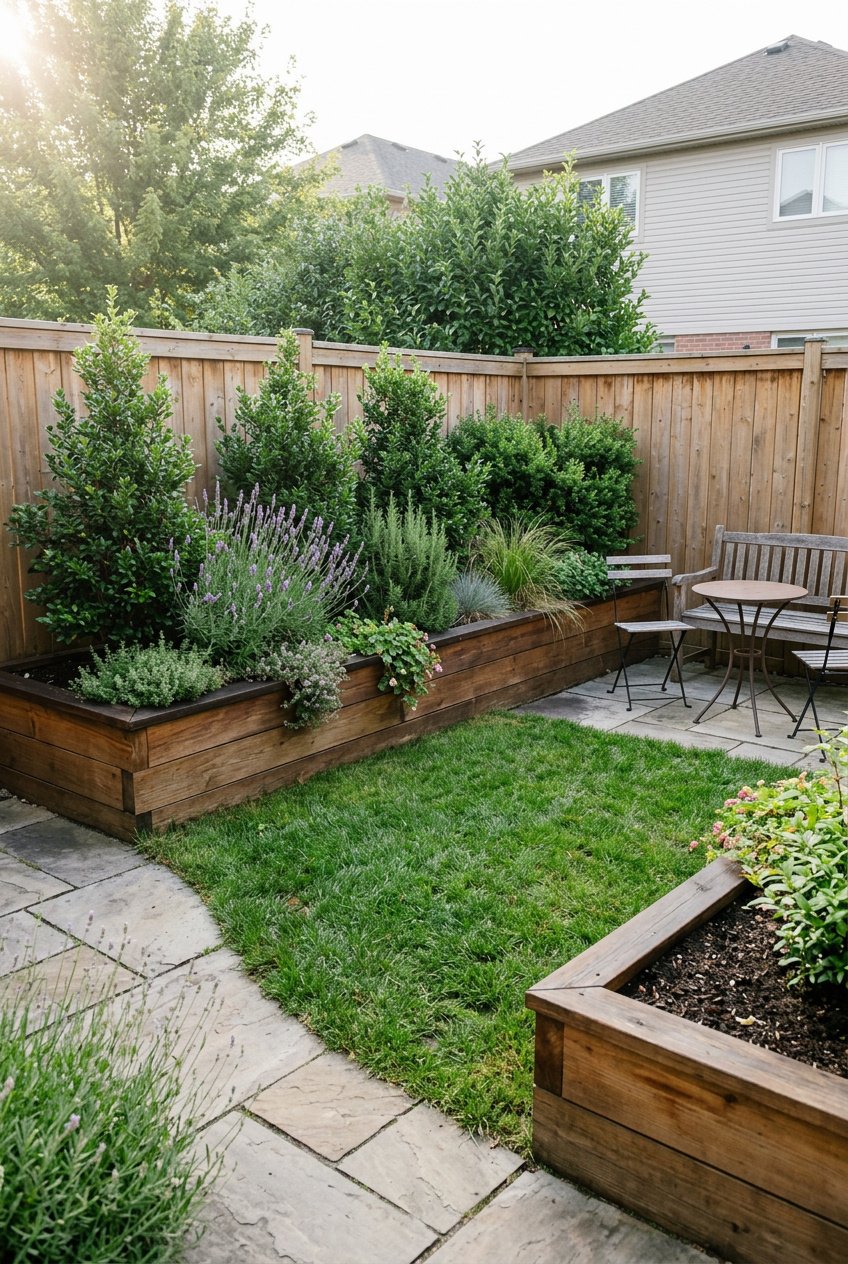
5. Use Raised Beds Along Edges
Raised beds around the edge of a small yard give the space shape right away, and they do it without eating up the middle. This idea works because it keeps planting tight to the border, where it adds color, texture, and even privacy, while the center stays open for walking, sitting, or kids at play. If you want a small backyard landscaping idea that looks neat and easy to manage, raised beds are one of the smartest places to start.
Why the border works harder
In a tiny yard, the center can get crowded fast. A raised bed along the fence or patio edge helps you avoid that problem because your plants have a clear home, and your open floor area stays useful. You also get a stronger visual outline, which makes the yard feel planned instead of random.
I like this approach because it creates order without much effort. A plain fence looks better when a narrow bed runs in front of it, and even a basic backyard starts to feel more finished. You can fill the bed with low shrubs, herbs, flowering plants, or a mix of all three, depending on how much upkeep you want.
What to plant in a small strip
The best plants for edge beds are the ones that stay in bounds. Compact grasses, lavender, rosemary, dwarf hydrangeas, and tidy evergreen shrubs all work well because they hold their shape and do not spill too far into the yard. If you want a softer look, add trailing plants at the front edge, but keep the back layer simple so the space does not look busy.
These beds can also do more than one job. A sunny edge can hold herbs for cooking, and a side border near a seating area can use taller plants to soften the view from next door. That mix of beauty and use matters a lot when you do not have room to waste.
Build it to match the yard
The material changes the mood. Wood feels warm and casual, stone feels grounded, and smooth concrete gives a cleaner, modern line. Keep the width narrow enough that you can still move around easily, but deep enough for roots to settle well and for plants to layer in a natural way.
One tip makes a big difference here. Match the height of the raised bed to something already in the yard, like the patio step, a bench seat, or the base of the fence. That small design move helps the whole backyard feel connected instead of pieced together.
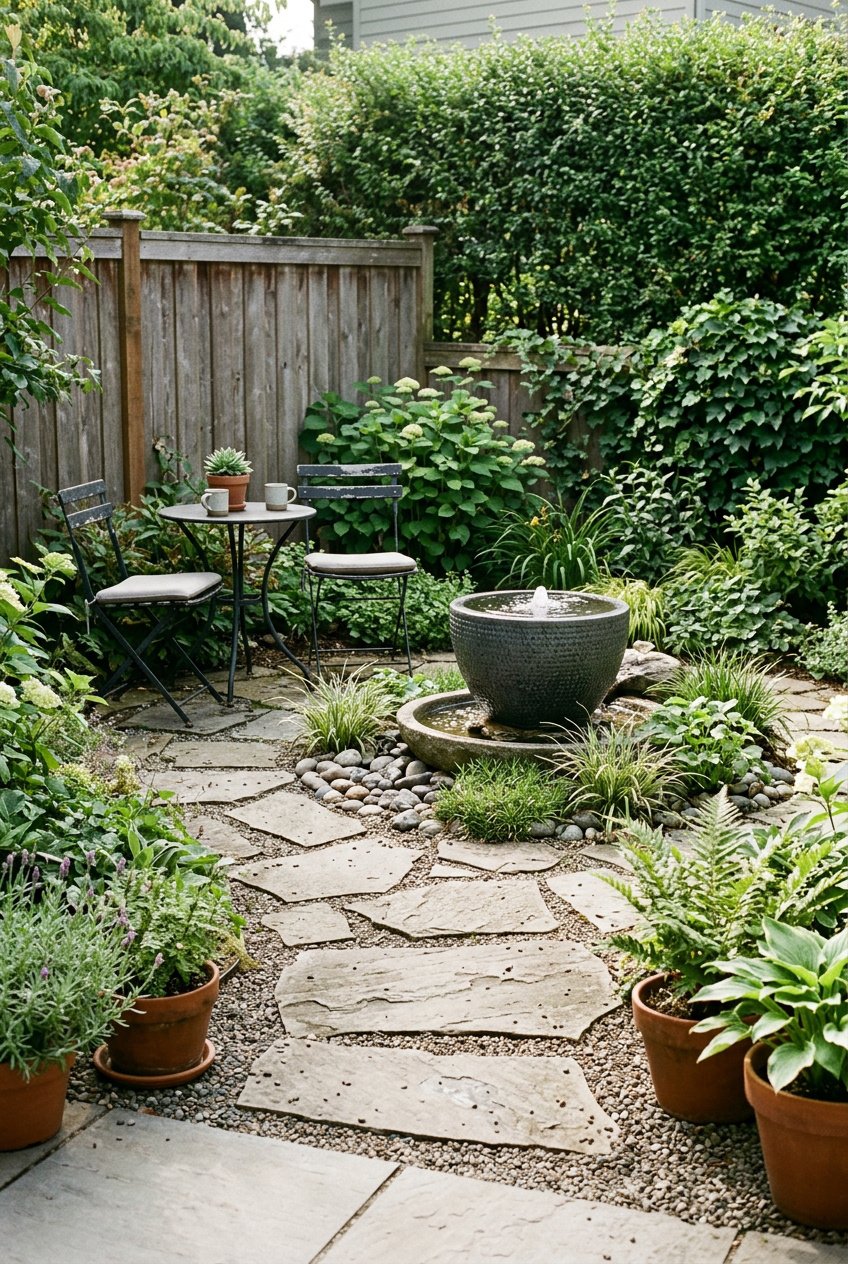
6. Add a Small Water Feature
A compact water feature can change the whole mood of a tiny backyard, even when it takes up very little room. The right fountain or bubbling bowl adds motion, soft sound, and a clear focal point, which helps a small outdoor space feel more calm and complete. If your yard feels flat or forgettable, a small water feature can give it real presence.
Sound changes the space
People often focus on what a backyard looks like, but sound matters too. In a small space, you hear neighbors, traffic, air units, and every little clang from nearby homes. A gentle fountain helps cover those sharp sounds with something softer, and that can make the whole yard feel more private.
You do not need a large pond or a dramatic waterfall. A small self-contained fountain, a wall-mounted spout, or a ceramic bowl with a bubbler can do the job well. The scale stays right for a tiny yard, and the upkeep stays much easier.
I have seen this work especially well in yards that already have a quiet seating spot. Put the water feature where you can hear it from a chair or bistro table, and the area starts to feel more intentional. That kind of focus is powerful in a tight layout.
Choosing the right size and style
Scale is everything here. A bulky fountain can make a tiny backyard feel cramped, so choose one with a small base and a clear shape. Round bowls work well in corners, and slim upright fountains fit nicely against a fence or wall where they do not interrupt movement.
The style should match the rest of the space. If your yard leans natural, stone or aged pottery looks relaxed and easy. If the yard has clean lines and simple furniture, dark concrete or a smooth metal finish will fit better and keep the look sharp.
Placement that feels natural
Set the feature where it draws your eye, but not where it blocks the yard. Near the end of a path, beside a small bench, or framed by potted plants all work well because the fountain feels like part of a scene instead of a loose object. Leave enough room around it so cleaning and refilling stay simple.
A smart move is to test the sound before you commit. Some water features are louder than expected, and in a tiny yard that matters. If you can, choose one with an adjustable pump so you can control the flow and get the peaceful sound you actually want.
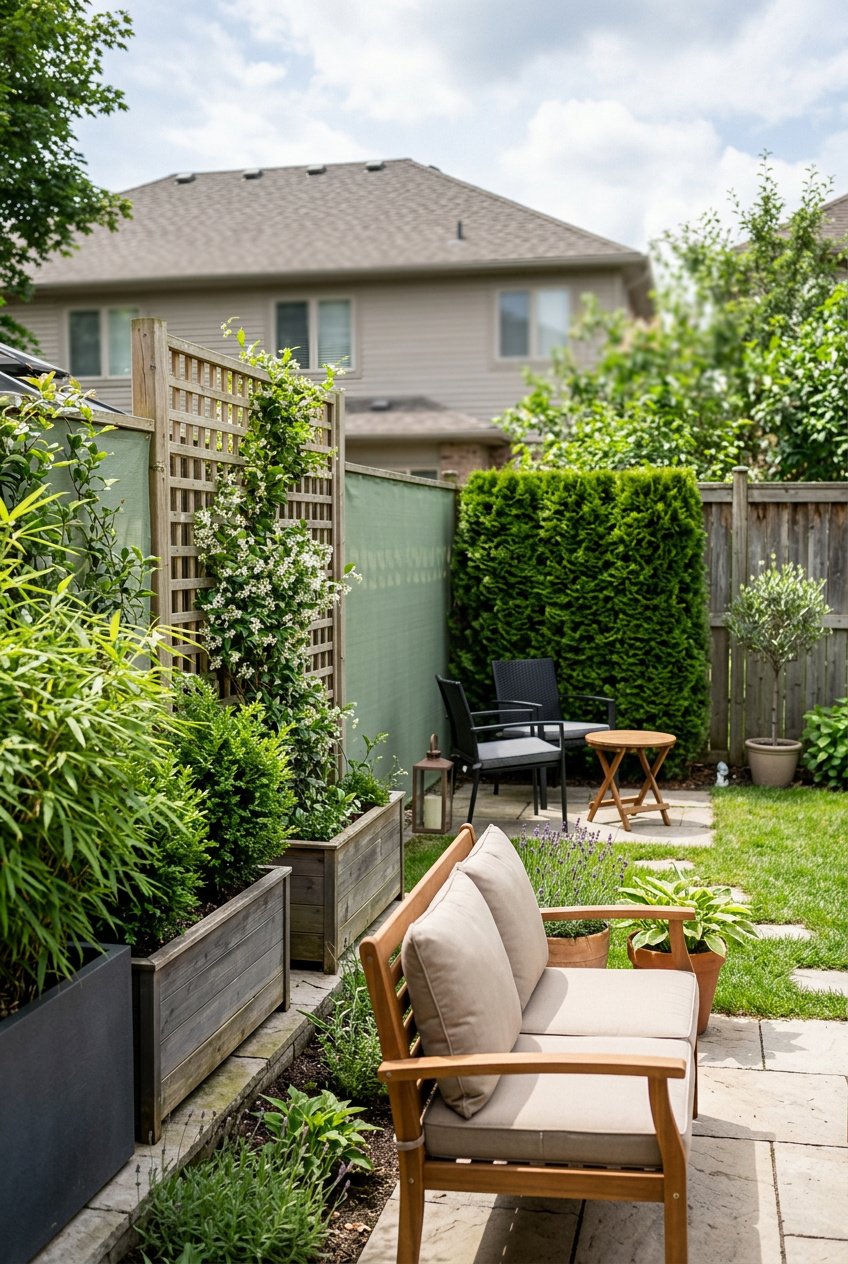
7. Create Privacy With Green Screens
Small backyards often feel exposed, especially when fences are low or neighbors sit close by. A green screen solves that problem in a softer way than a solid wall because it blocks views, filters noise, and still lets the yard breathe. For many homes, green screens are the difference between a backyard you look at and a backyard you actually use.
A softer answer than a tall fence
Hard barriers can make a tiny yard feel boxed in. Green screens do the opposite when they are planned well, because leaves and branches create cover without turning the space into a closed box. You still get privacy, but the yard keeps a lighter feel.
This is especially useful on the side where neighbors can see straight in. A narrow hedge, climbing vine on lattice, or row of tall planters with upright plants can break that direct line of sight. Even partial screening helps more than most people expect.
Plants that earn their spot
In a small backyard, every plant should do a job. Fast-growing climbers like star jasmine or clematis can cover a screen quickly, and slim evergreen shrubs give year-round structure when you want more lasting coverage. Bamboo can work too, but only the clumping kind, since running types can spread far beyond the bed and create a real headache later.
You can also mix materials for better results. A simple wood or metal lattice gives new plants time to grow, and it still looks clean on day one. Over time, the plants soften the structure and make the screen feel rooted in the yard.
I also like using tall planter boxes when digging is not possible. They raise the plant height right away, which helps you get privacy sooner. That trick works well on patios and rental properties where permanent changes are limited.
Keeping it airy, not crowded
The mistake many people make is choosing plants that get too wide. In a narrow space, width matters more than height, so look for upright forms that stay tidy. Trim lightly and often instead of cutting hard once a year, because soft shaping keeps the screen neat and less bulky.
Think about where privacy matters most. You may only need screening near a seating area or hot tub corner, not along the entire yard. If you focus on the spots where you spend time, you save money, reduce maintenance, and keep the rest of the space more open.
8. Light the Space Thoughtfully
Good lighting can make a small backyard feel warmer, deeper, and more useful after sunset. It also helps you enjoy the space longer, even when the yard is too small for big daytime features. In many cases, outdoor lighting does more for mood than any single plant or chair ever could.
Start with the mood you want
Light changes how a backyard feels at night, so begin there. Do you want the space to feel cozy for quiet evenings, or bright enough for outdoor dinners with friends. That answer will guide every choice that follows, from bulb warmth to fixture placement.
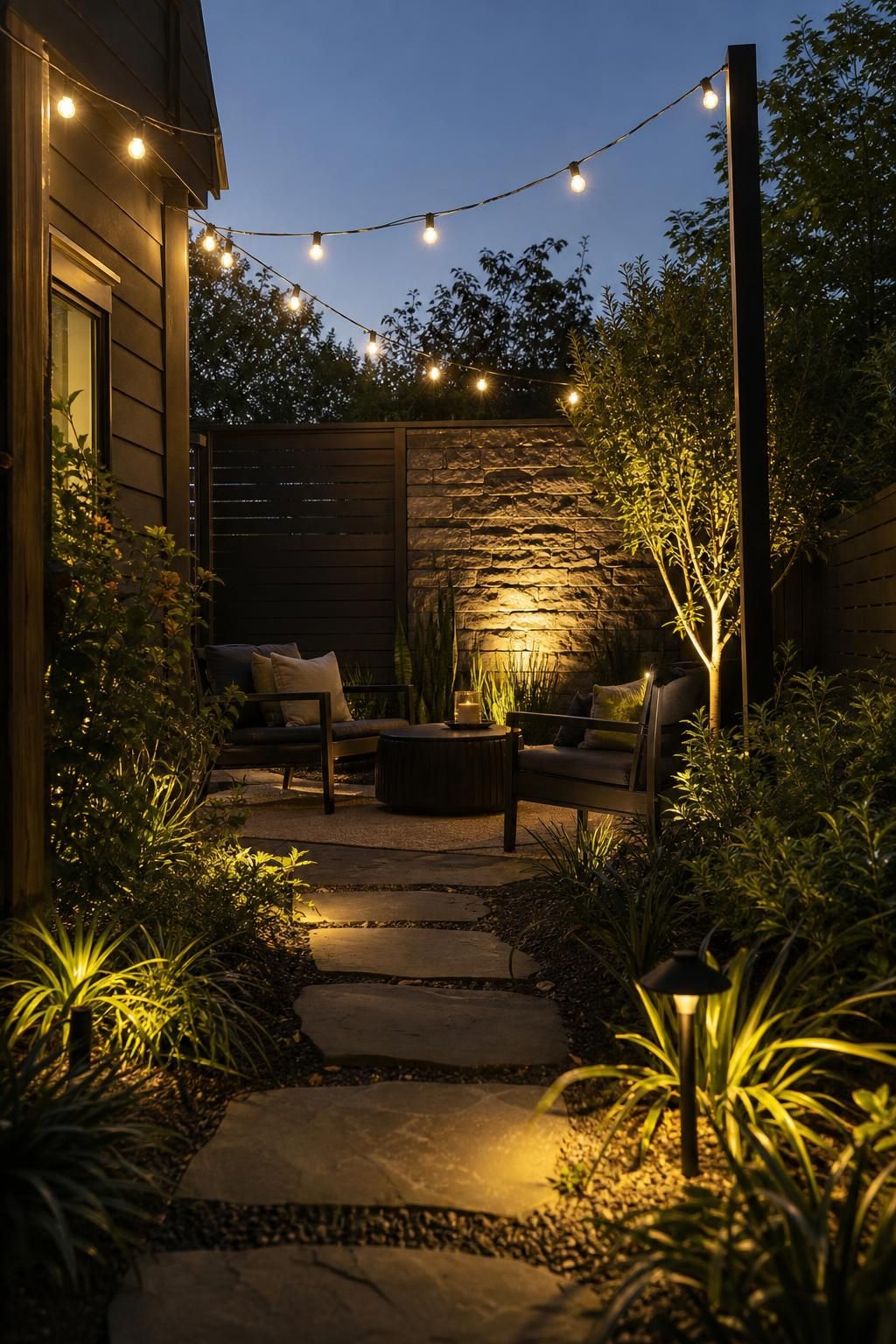
String lights are popular for good reason because they soften a small yard and pull your eye upward. That simple move can make the area seem taller and more open. Warm white bulbs usually feel best, since cool white light can look harsh in a compact space.
Use layers, not one bright source
One overhead light often flattens a backyard and makes it feel smaller. A better plan is to spread light across a few areas, such as a path, a seating corner, and one planting bed or tree. That creates depth, and depth helps tiny outdoor spaces feel larger than they are.
Low path lights help with safety, but they also guide movement in a subtle way. A small spotlight aimed at a textured wall, a sculptural plant, or the base of a tree gives the yard a strong nighttime focal point. You do not need many fixtures, just the right ones in the right places.
A practical plan that still feels pretty
Choose fixtures that can handle weather and that are easy to maintain. Solar lights can work well in sunny yards, but wired or plug-in lights often give more steady brightness, especially in shaded areas. If you use both, keep the color tone similar so the lighting feels consistent.
Try your lights in stages before you finish the setup. I like turning them on after dark, moving one or two fixtures, and then checking the space again from inside the house and from the main seat outside. That extra test often shows where the yard needs a softer glow, where glare is too strong, and where a little light can make the whole space feel inviting.
9. Swap Lawn for Easy Groundcovers
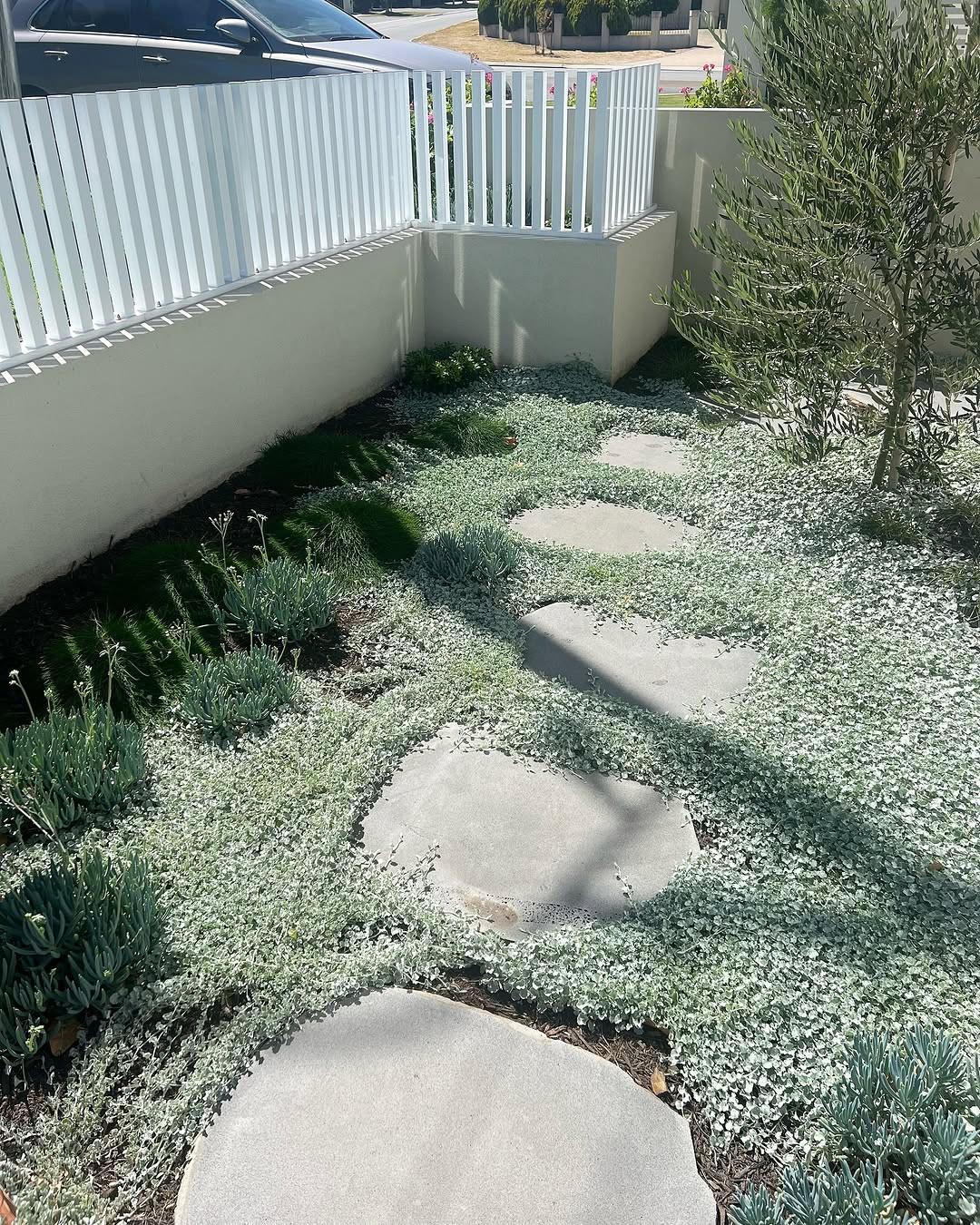
Easy groundcovers can replace fussy grass and make a small backyard look cleaner, softer, and easier to care for. In a tiny outdoor space, every inch counts, so a patchy lawn often creates more work than beauty.
Less mowing, more style
Grass sounds simple, but it often asks for more than a small yard can give. It needs water, regular cutting, edging, and repair when foot traffic wears it down. If your backyard gets too much sun in one spot and too much shade in another, lawn can look uneven fast. Replacing part or all of it with creeping thyme, clover, gravel, bark mulch, or decomposed granite can solve that problem in a much more attractive way.
The visual effect matters too. A small yard packed with several materials can feel busy, but one calm ground layer helps the whole design breathe. I have seen tiny backyards look twice as polished after the owner removed struggling turf and used a simple mix of gravel and stepping stones. That kind of change gives plants, seating, and decor more room to stand out.
Choose what fits your life
If you want a softer, greener look, low-growing plants like creeping Jenny or Irish moss can fill space with less work than grass. If you want a dry, modern finish, gravel or mulch can be the better fit. Homes with pets, kids, or frequent entertaining often do well with a mix, such as gravel paths with planted pockets around the edges. That keeps the yard practical without making it feel harsh.
This idea works best when you match the material to how you actually use the yard. A reading corner may need soft texture underfoot, but a grill area benefits from something firm and clean. Start small if you need to. Even replacing one awkward strip of lawn can make the whole backyard easier to manage and easier to enjoy.
Credit to @educatedexteriors
10. Make Storage Blend In
Hidden storage helps a small backyard stay neat without looking packed with stuff. In a tiny space, tools, pillows, hoses, and planters can quickly take over, so smart storage has to do its job quietly.
Furniture that works twice
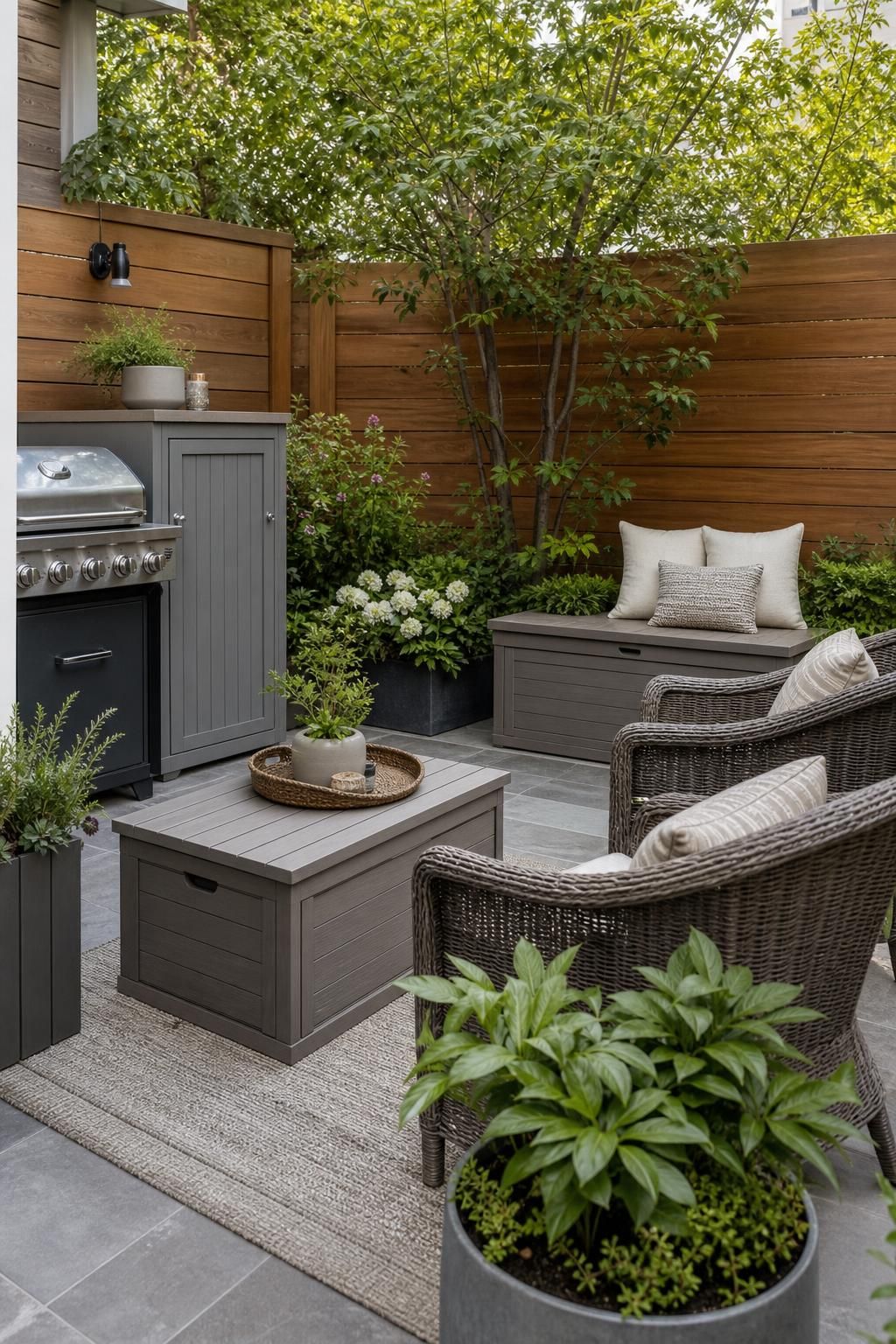
The best storage pieces in a small backyard do more than one thing. A bench with a lift-up seat can hold garden gloves, citronella candles, and chair cushions while still giving you a place to sit. A deck box can act as a side table near a seating area, especially if you choose one in a color that matches your fence or planters. That visual match matters because it helps storage fade into the background instead of calling attention to itself.
You do not need a huge piece, either. In fact, oversized storage can make a tiny yard feel tighter. Look for narrow benches, low boxes, or compact cabinets that fit against a wall or tuck into an unused corner. The goal is access without bulk.
Keep the mess close, but out of sight
Storage works best when it sits near the things you use. Put a small cabinet close to the grill for tongs and outdoor dishes. Keep a bench near the patio chairs so cushions can be put away fast before rain hits. A good setup saves steps, and that means you are more likely to keep the yard tidy from day to day.
I like backyard storage that feels built in, even when it is not. Slatted wood boxes, woven resin benches, and simple painted cabinets tend to blend better than shiny plastic bins. They look more like part of the design, which is exactly what a small backyard needs.
Let the yard stay the star
Storage should support the space, not take it over. If every item is visible, the yard feels crowded before anyone even sits down. Closed storage creates visual rest. That calm, uncluttered look can make even a narrow patio or tiny patch of yard feel more open.
A good rule is to edit what stays outside at all times. Store only what you use often and move the rest to a shed or garage if you have one. When each item has a home, your backyard starts to feel intentional instead of temporary, and that changes the whole mood of the space.
11. Anchor Everything With a Focal Point
A focal point gives a small backyard direction and helps every other choice feel connected. Without one, a tiny space can seem scattered, even when the plants and furniture look nice on their own.
A clear center changes the room
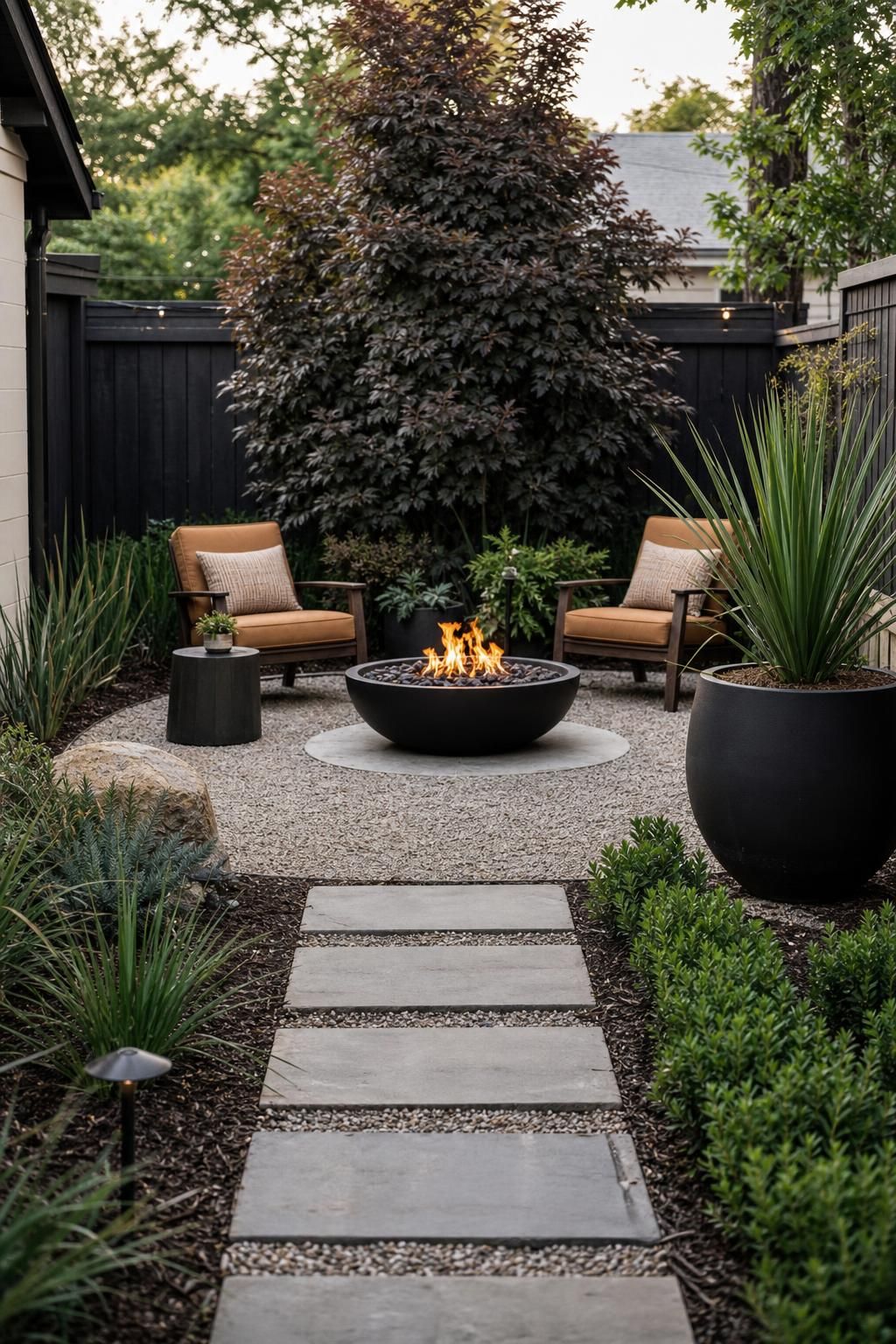
Your backyard works a lot like a small indoor room. If nothing catches the eye first, the space can feel unfinished. A fire bowl, a sculptural shrub, a large ceramic pot, or even a single striking chair can create that center. Once you choose it, the rest of the yard starts to make more sense because your eye has somewhere to land.
Pick one thing with presence
Scale matters here. In a tiny yard, the focal point should feel strong, but it should not swallow the space. A low fire bowl can ground a seating area without blocking views. A bold planter with dark foliage can add shape and color where the yard feels flat. If you love plants, one specimen plant often does more than five small forgettable ones.
Use it to guide the layout
After you place your focal point, let it shape the rest of the design. Angle chairs toward it. Frame it with simple planting. Keep nearby colors quieter so the main feature stands out. I have found that this one move often solves the common small-yard problem of trying to fit in too many ideas at once.
Finish with confidence
A focal point also gives your backyard a finished look, even if the budget is modest. You do not need many extras when one element carries the visual weight. That is why this idea works so well at the end of a makeover. It pulls scattered pieces into one story and makes the whole yard feel more settled, more useful, and far more memorable.
Conclusion
Small backyards respond well to simple choices. If you replace needy lawn, hide the clutter, and add one strong focal point, the whole space feels calmer and more complete. Start with the problem that bothers you most, then build from there. Maybe that means less mowing, maybe it means better storage, or maybe it means finally giving the yard a clear center. Save the ideas that fit your space now, and try one this weekend. A tiny outdoor area does not need much to feel beautiful. It just needs a plan that makes every inch count.