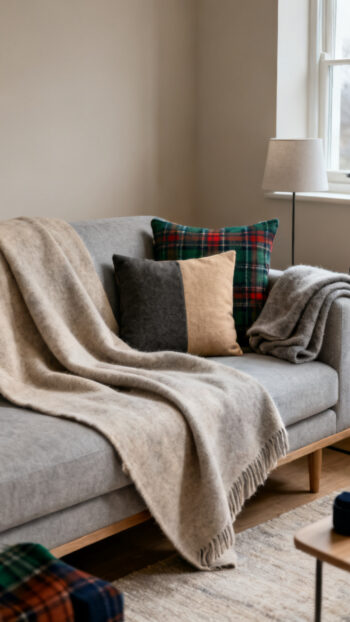
Your bedroom should feel warm the second you walk in. These Tartan Bedding Decor Ideas help you turn a plain space into a snug retreat with rich plaid, soft wool, weathered wood, and calm color.
Picture deep red checks against ivory walls, a folded throw at the foot of the bed, and lamplight catching dark timber at night. You get the charm of a Scottish lodge without making the room feel heavy, crowded, or old-fashioned.
These 8 ideas show you how to style tartan in a way that feels balanced, restful, and easy to live with. Small room, dark furniture, too many patterns, not enough texture, this guide helps you fix each one with confidence.
1. Anchor the Room With Classic Stewart Plaid
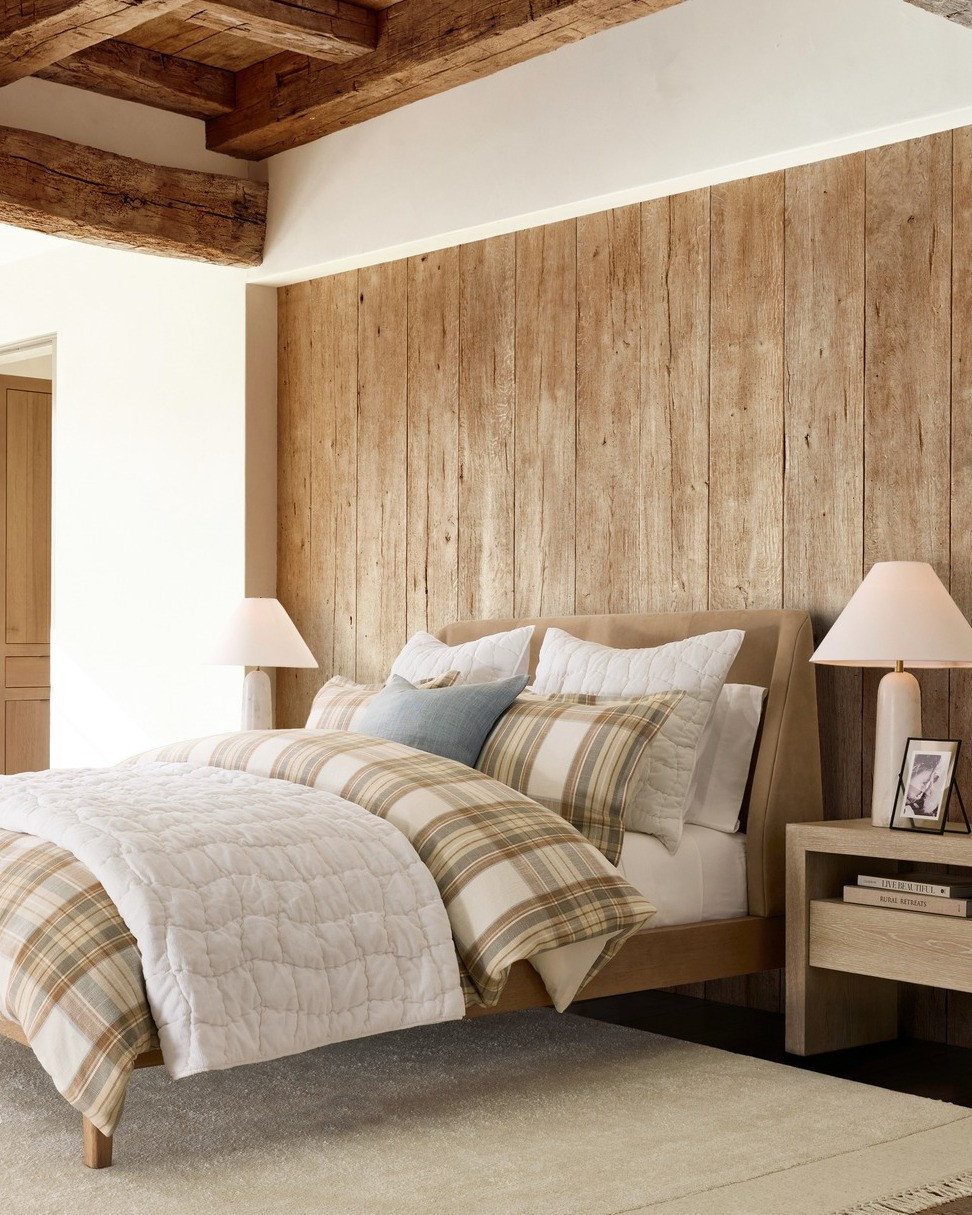
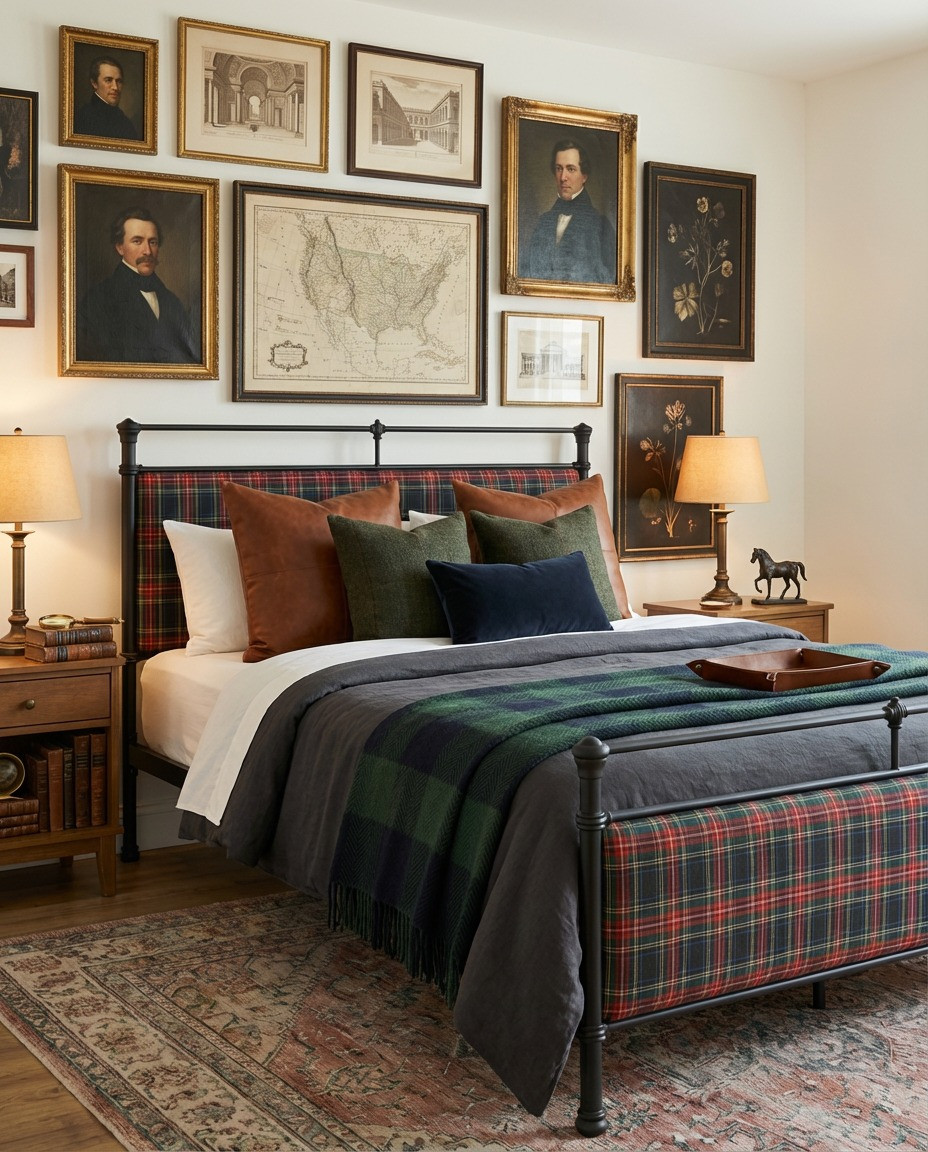
A red Stewart plaid duvet can do the hard work for you, because it gives the bedroom color, history, and focus in one move. When you treat the bed as the star, the rest of the room falls into place more easily and feels calm instead of crowded.
Make The Bed The Main View
A bold tartan pattern works best when you let it lead the room. The deep red, forest green, navy, and thin yellow lines in Stewart plaid already bring plenty of movement, so you do not need to repeat those colors all over the space. I find that the room feels much richer when the plaid sits front and center and everything around it stays quieter.
This is why ivory walls matter so much here. They soften the strong bedding and bounce light back into the room, which keeps the red from feeling too dark or heavy. Cream, warm white, or soft oatmeal paint all work well because they give the eye a place to rest.
Use Dark Wood With Restraint
Dark wood furniture gives tartan bedding a grounded, Highland feel. A walnut dresser, a stained oak bed frame, or a mahogany nightstand can all support the look, but you only need a few pieces. If every surface is dark, the room can start to feel closed in.
Keep the shapes simple. Clean-lined bedside tables or a classic chest with plain hardware will support the pattern better than carved, fussy furniture. The goal is a room that feels collected and steady, not like a themed set.
Pick One Accent Color
The smartest way to finish this look is to choose one secondary accent color and repeat it lightly. Deep green is a strong option because it pulls from the plaid without fighting it. Navy also works if you want a moodier bedroom, and black can feel sharper if the furniture is already very dark.
Use that accent color in small ways, such as a lumbar pillow, a lampshade trim, or a curtain band. You do not need more than that. Too many extra colors make the plaid look busy, and then the room loses the quiet comfort you wanted in the first place.
Keep The Rest Visually Quiet
If you love layered decor, this is the moment to hold back a little. Skip floral cushions, striped rugs, and bright artwork near the bed. A landscape print in muted tones, a simple wool rug, or a ceramic lamp will do more for the room than extra pattern ever could.
This idea works because Stewart plaid already has presence. Let it lead, frame it with light walls and dark wood, and your bedroom starts to feel like a cozy Scottish retreat instead of a room trying too hard.
Credit to @potterybarn
2. Layer Wool Throws for Highland Warmth
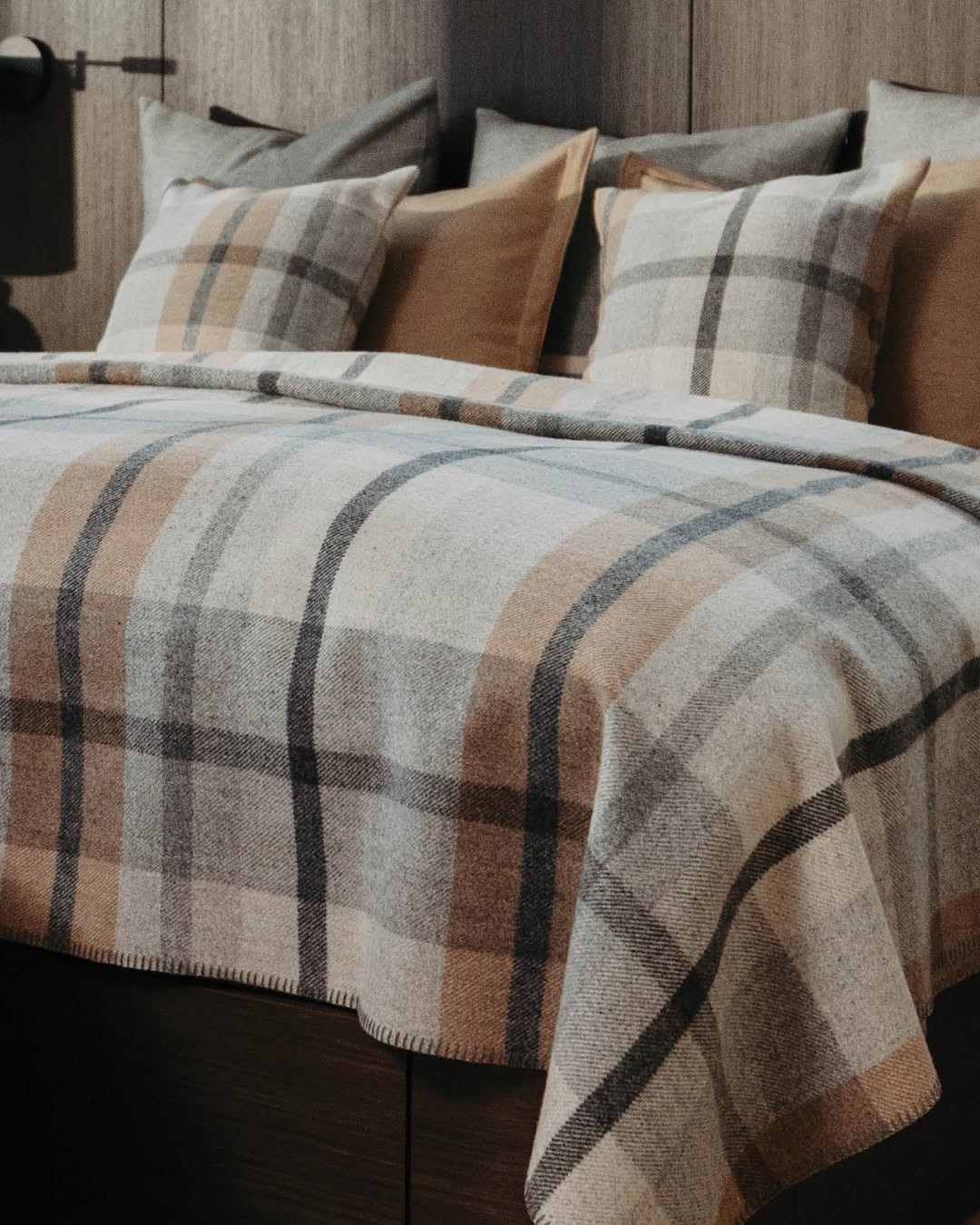
Tartan bedding can look crisp on its own, but texture is what makes it feel truly welcoming. A brushed wool throw adds that final layer of softness and gives the bed the relaxed, lived-in comfort people want in a retreat bedroom.
Why Texture Changes Everything
A bed with only a patterned duvet can look flat, even when the colors are beautiful. Once you add a wool throw, the room gets depth right away. The soft, fuzzy surface breaks up the sharper lines of plaid and makes the whole setup feel warmer before you even touch it.
This is especially useful if your tartan has strong contrast, like red and navy or black and cream. Wool softens that contrast. The bed still looks tailored, but it also feels inviting, which is exactly what you want at the end of a long day.
Place It Low, Not High
The easiest styling move is to fold the throw across the lower third of the bed. That placement keeps the tartan bedding visible and avoids covering the best part of the pattern. It also looks more relaxed than draping the throw near the pillows, where the bed can start to feel stiff or over-styled.
A slightly uneven fold often looks better than a sharp hotel fold. You want some softness here. Let the edges relax a bit, and the room will feel more natural and less formal.
Pair Wool With Linen Sheets
If you worry that tartan and wool together might feel too heavy, bring in linen sheets. Linen has a dry, airy look that balances the weight of the throw and keeps the bed from becoming visually dense. White, flax, soft grey, or muted cream linen all work beautifully with plaid.
I like this mix because it feels honest and comfortable. The brushed wool gives warmth, and the linen gives breathability in a visual sense, even though the room still feels cozy and layered. That contrast is what keeps the bedroom fresh instead of stuffy.
Choose a throw in a solid color if your duvet has a strong plaid pattern. Charcoal, heather grey, camel, or forest green all sit well with tartan bedding. The most memorable detail in this idea is wool layering, because it brings warmth, texture, and softness without asking you to buy a whole new bed set.
Credit to @faribaultmill
3. Choose a Muted Tartan for Small Bedrooms
A small bedroom needs tartan used with care. You can still get that Scottish retreat mood, but the scale and color of the plaid matter more in a tight room than they do in a spacious one.
Read The Room First
If your bedroom has low light, a narrow layout, or just enough floor space around the bed, oversized plaid can quickly take over. Large checks demand attention from every angle, and in a compact room they can make walls feel closer than they are. That does not mean you have to give up tartan. It means you need a gentler version of it.
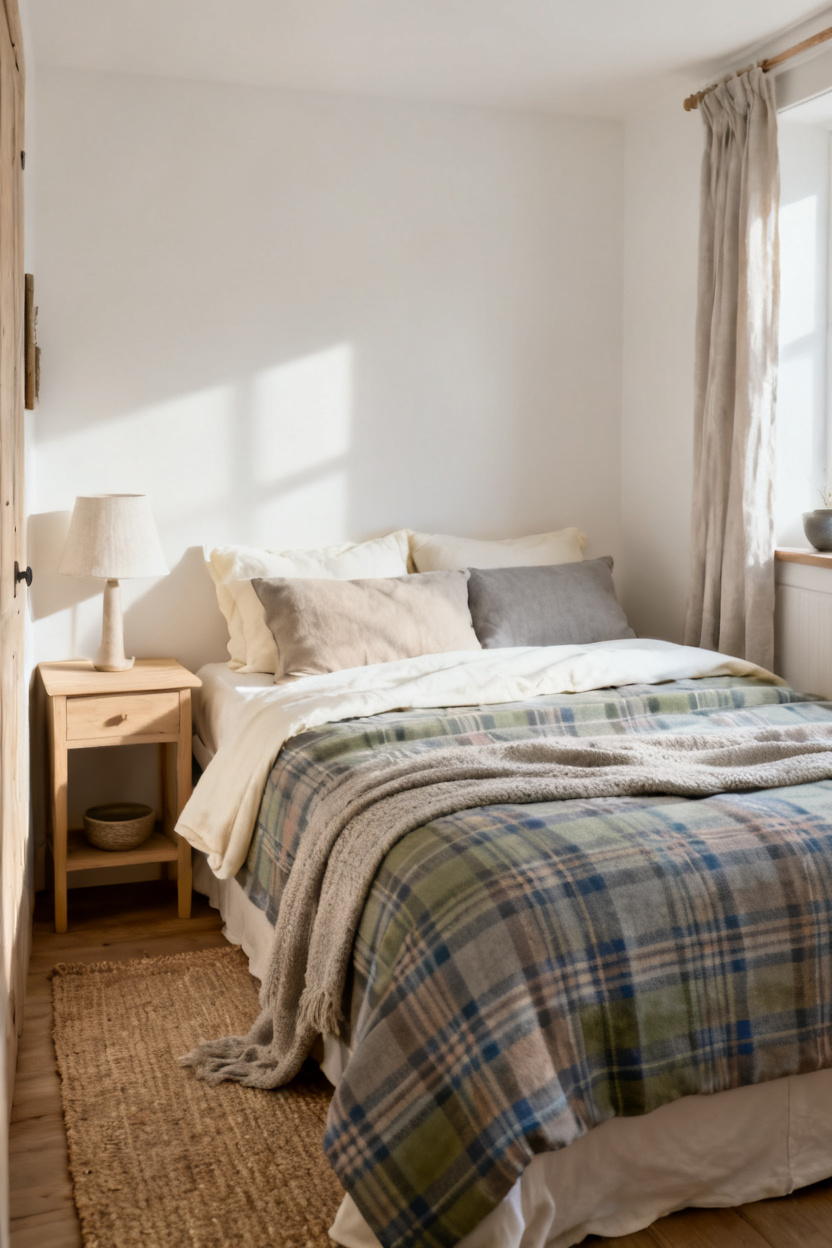
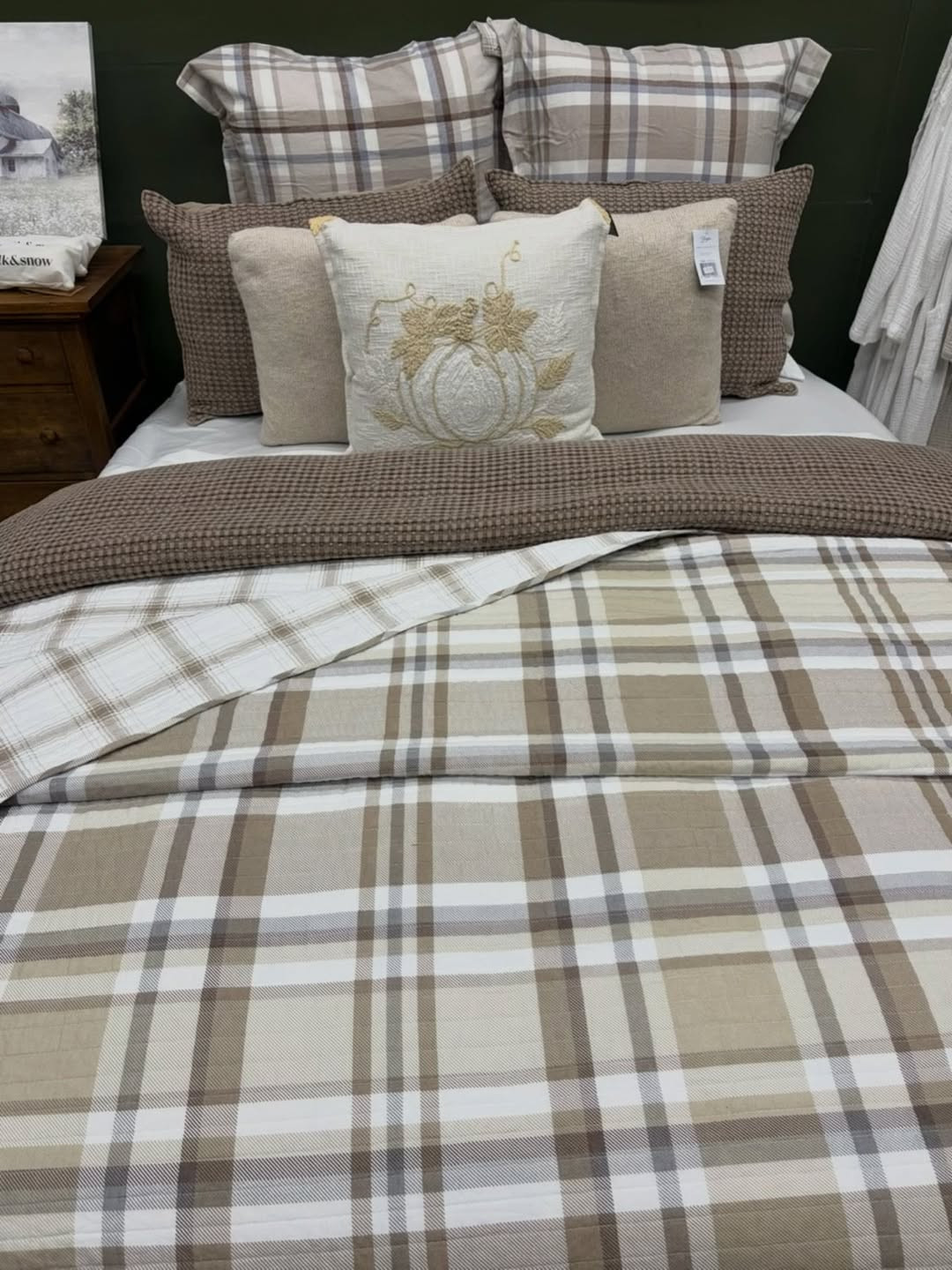
Muted tartan patterns in grey, sage, taupe, or faded blue give you the same heritage feel in a calmer way. They still add character, but they do not shout across the room. The mood becomes restful, which is what most small bedrooms need most.
Color Restraint Makes Space Feel Bigger
Soft colors help a room breathe. A grey tartan duvet with ivory sheets, a pale oak nightstand, and a warm white wall can make even a small bedroom feel open and composed. The pattern remains visible, yet it does not crowd the eye.
There is also a practical side to this choice. Muted plaid is easier to pair with simple curtains, plain rugs, and understated lamps. You get more freedom to finish the room without creating visual noise.
Watch The Scale Of The Check
Scale is the mistake many people miss. A large-set tartan can look dramatic online, but in a tight bedroom it often feels too loud and too wide for the space. Smaller or medium checks usually sit better because they read as texture first and pattern second.
If you are shopping in person, step back and look at the bedding from a distance. If the plaid seems to jump forward right away, it may be too strong for a smaller room. If it blends into the room and only shows its detail as you get closer, that is usually a better sign.
Let Light Finishes Support It
Muted tartan works best when the surrounding pieces stay simple and light. Soft painted walls, a natural rug, and a modest bedside lamp keep the room easy on the eyes. You can still add personality, but do it through texture and shape instead of more pattern.
For smaller spaces, the idea to remember is muted tartan. It gives you warmth, heritage, and comfort without shrinking the room or making the bed feel too dominant.
4. Mix Plaid Bedding With Weathered Wood
Plaid becomes more believable and more relaxed when you pair it with worn, natural-looking wood. This mix gives the bedroom a rustic edge that feels rooted and calm, which is perfect for a Scottish retreat look.
Choose Wood That Feels Lived-In
A reclaimed oak headboard is one of the strongest partners for tartan bedding. The grain, dents, and faded tone give the room age and texture, so the plaid looks at home instead of freshly staged. You do not need a full matching set to make this work.
Weathered bedside tables help in the same way. A slightly rough finish, softened corners, or a washed stain can add character that shiny furniture cannot match. I always think tartan looks better beside pieces with a little history in them, even if that history is simply a distressed finish done well.
Skip Shiny Finishes
Glossy surfaces often fight the mood you are trying to create. Mirrored nightstands, polished chrome, and lacquered furniture can make tartan feel too formal or too sharp. The room starts to lose that quiet cabin warmth and leans toward something much more polished.
Matte black hardware works better because it adds contrast without glare. Drawer pulls, lamp bases, and curtain rods in a flat black finish give definition to the space and pair beautifully with reclaimed wood. They look sturdy and understated, which is exactly the right mood here.
Balance Rustic Pieces With Soft Bedding
Rustic wood can feel heavy if every other surface in the room is rough or dark. Keep the bedding soft enough to balance it. A tartan duvet with cream sheets, a brushed throw, and maybe one faded velvet cushion can stop the room from feeling too hard.
Credit to @originalbeds_in
5. Add Accent Pillows Without Pattern Overload
Tartan bedding already brings strong shape and color to the room, so your accent pillows should support that look instead of fighting it. This part of Tartan Bedding Decor Ideas works best when you think in layers, not in piles. You want the bed to feel rich and finished, but still calm enough to rest in at night.
Start with quiet support
If your duvet or comforter carries a bold plaid, two or three pillows are usually enough. I find that a pair of solid pillows in forest green, cream, or deep charcoal gives the eye a place to land. Velvet works well when you want a softer glow, and cable knit adds a relaxed cottage feel that suits a Scottish retreat bedroom without copying the tartan itself.
Small-scale checks can also work, but only if they stay clearly different from the bedding pattern. A tiny black-and-cream check can sit nicely in front of a large red tartan because the scale changes the effect. The room feels layered, not crowded. That difference matters more than people think.
Know when the bed feels busy
Too many patterns create noise fast. If you add striped pillows, floral pillows, and another plaid, the tartan bedding loses its place as the star. You start seeing pieces instead of one inviting bed. That is usually the moment the room shifts from cozy to cluttered.
A simple test helps. Stand in the doorway and look at the bed for five seconds. If your eye jumps from pillow to pillow instead of settling on the full arrangement, pull one out. Edit first. Add later if needed.
Build a shaped, balanced stack
The easiest arrangement is large sleeping pillows at the back, then two medium accent pillows, then one smaller cushion in the center if the bed needs it. This keeps the shape clean. You get depth, but you do not bury the tartan under too much decoration.
Texture should do most of the extra work here. Let one pillow feel smooth, another nubby, and another softly knit. That way, the bed looks collected and warm even when the colors stay restrained. Your tartan still leads, and the pillows quietly finish the story.
Credit to @duchenepaintstore
6. Bring in Heritage Details Beyond the Bed
A Scottish retreat bedroom feels stronger when the tartan does not stop at the duvet. The room needs a few details that suggest age, place, and memory. You do not need a themed space. You need a room that feels grounded, with heritage details that echo the mood in a subtle way.
Give the room one rooted piece
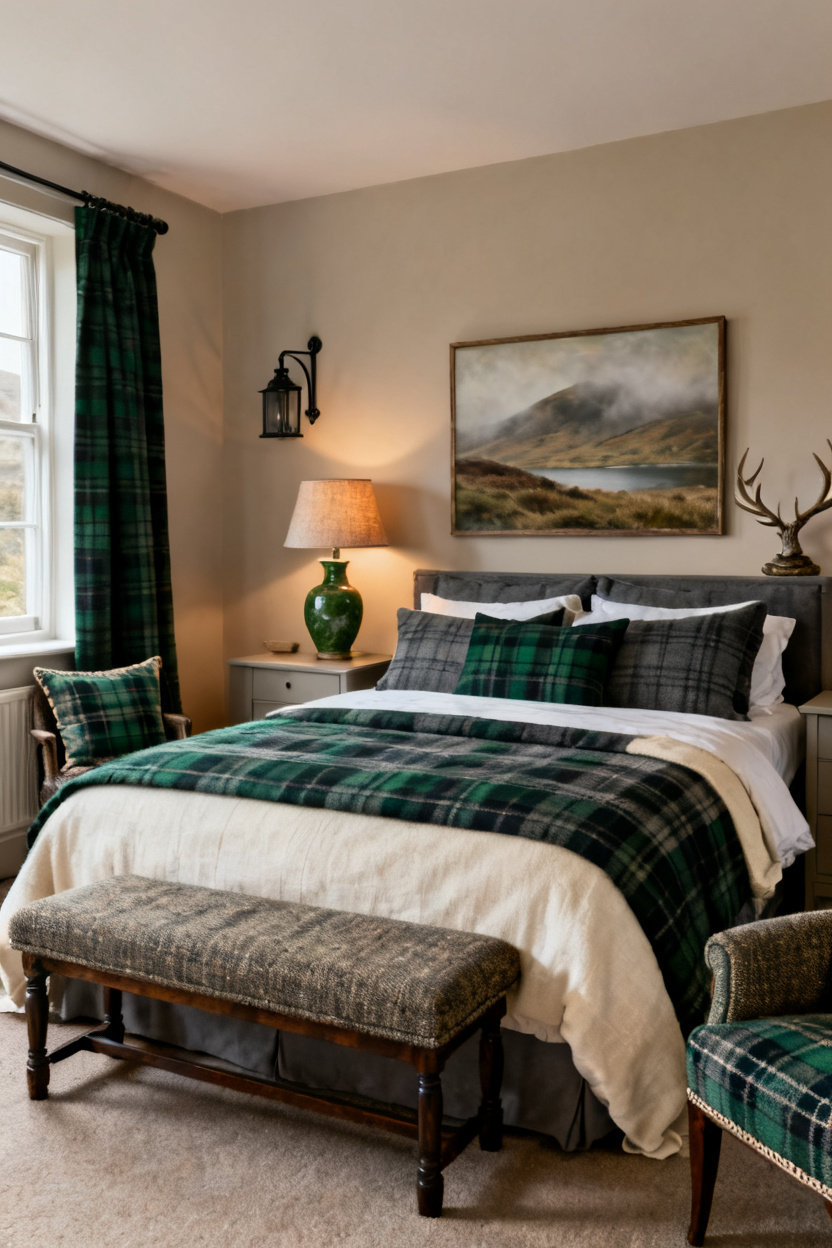
A tweed bench at the foot of the bed can do a lot of work. It brings another classic British texture into the room, and it also gives the bed area a finished edge. If a bench feels too large, an upholstered stool or a small chair in tweed can create the same effect with less bulk.
I like this approach because it shifts the tartan from looking like a single decorating choice to looking like part of a larger point of view. The bedroom starts to feel thoughtful. That is what makes it memorable.
Use lighting and art with restraint
An antler-inspired lamp base, a dark metal sconce, or a framed misty landscape can deepen the retreat mood without turning the space into a lodge set. Pick one or two of these elements and stop there. If every object tries to tell the same story, the room starts to feel staged.
Landscape art works especially well because it adds softness and distance. A moor, hillside, or loch scene brings in that Scottish feeling through color and atmosphere rather than through another pattern. It gives your eye a rest from the checks on the bed.
Repeat one tartan color elsewhere
This is where many rooms either click or fall apart. Pull one color from the bedding and repeat it in a smaller way somewhere else, such as a lamp shade trim, a ceramic vase, or the mat around a piece of art. One repeated tone can tie the room together far better than adding more plaid ever could.
Say your tartan has deep green running through it. Repeat that green once in a cushion on a chair or in the glazing of a bedside lamp. The effect feels quiet but smart. Your bedroom reads as whole, and every piece seems chosen on purpose.
That is the real strength of this idea. It takes the Scottish retreat mood beyond the bed and spreads it gently across the room, so the space feels settled from every angle.
7. Use Neutral Curtains to Calm Bold Checks
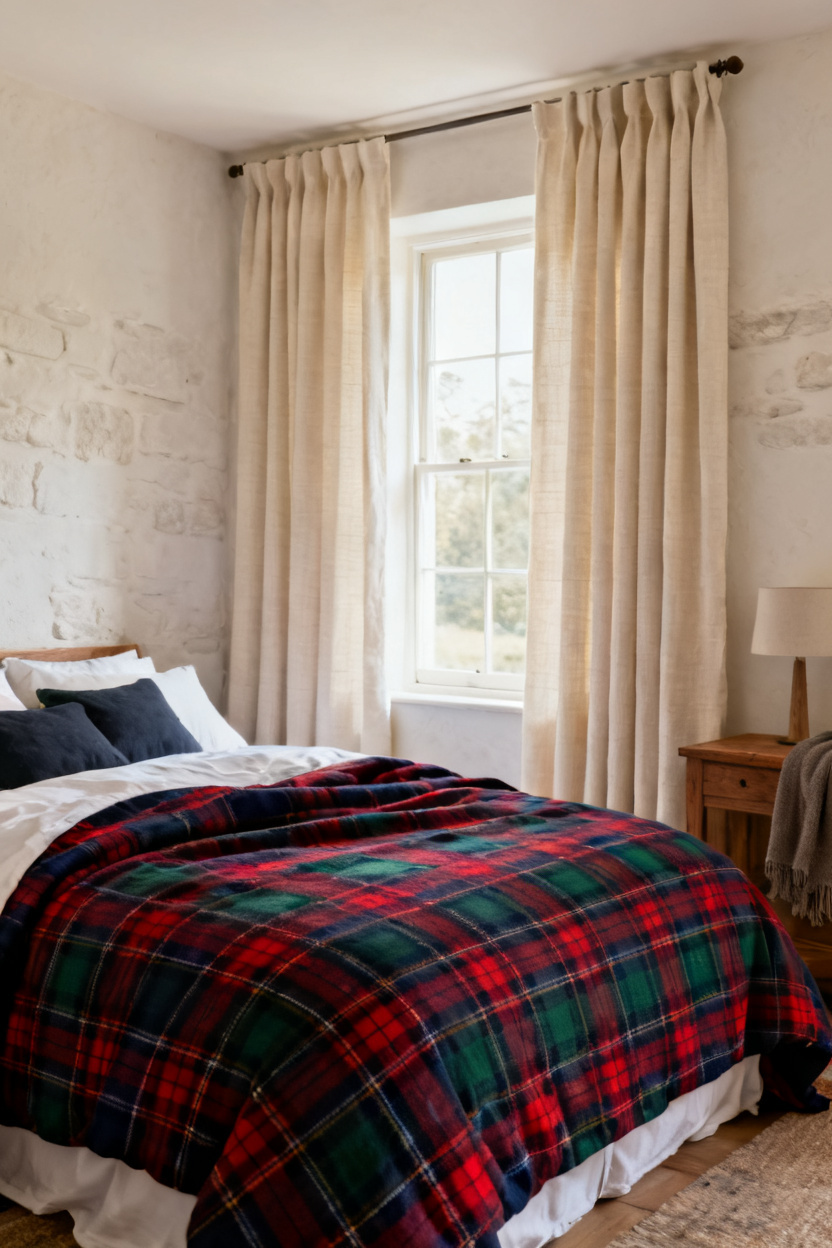
Bold tartan bedding carries enough movement on its own, so the windows should help the room breathe. Curtains are not just background. They shape the light, soften the walls, and control how busy the room feels. In many Tartan Bedding Decor Ideas, neutral curtains are what keep the bedroom restful instead of heavy.
Why plain curtains help
Oatmeal, flax, soft stone, and warm ivory all work beautifully with tartan. These shades calm strong checks because they do not compete for attention. They also bounce light around the room, which matters a lot if your bedding has deep reds, greens, or navy tones.
Fabric matters too. Cotton feels crisp and simple, which suits a cleaner cottage look. Linen or linen-look panels add a relaxed drape and a softer edge. I often prefer that slightly loose look because it makes a tartan bedroom feel lived in, not too polished.
Why matching plaid drapes can feel too much
It may seem smart to repeat the tartan on the windows, but that choice often closes the room in. Pattern on the bed plus pattern at full height on the walls can make the whole space feel boxed up. The eye keeps working, even when you are trying to rest.
This is even more obvious in bedrooms with lower ceilings or narrow walls. Matching plaid curtains can darken the room and flatten the contrast between surfaces. Instead of a cozy retreat, you get visual pressure. Neutral panels solve that problem without taking away the style.
Shape the window, not just the color
Hang the curtain rod a little higher and wider than the window frame so the panels fall with more ease. This trick gives the room extra height and lets more daylight in when the curtains are open. The tartan stays rich and dramatic, but the room still feels airy.
If you want a little extra depth, choose curtains with a subtle weave rather than a printed design. That texture shows up in evening light and keeps the window from looking flat. It is a small choice, but it makes the whole bedroom feel calmer and more finished.
Good balance is the point here. Let the tartan be the statement, and let the curtains do the quiet work around it.
8. Switch Bedding Weight With the Seasons
Tartan should not disappear when the weather changes. One of the smartest Tartan Bedding Decor Ideas is to keep the same pattern in the room all year and simply change the bedding weight. That way, your bedroom keeps its cozy Scottish character in July and in January, without feeling too hot or too heavy.
Keep the pattern, change the feel
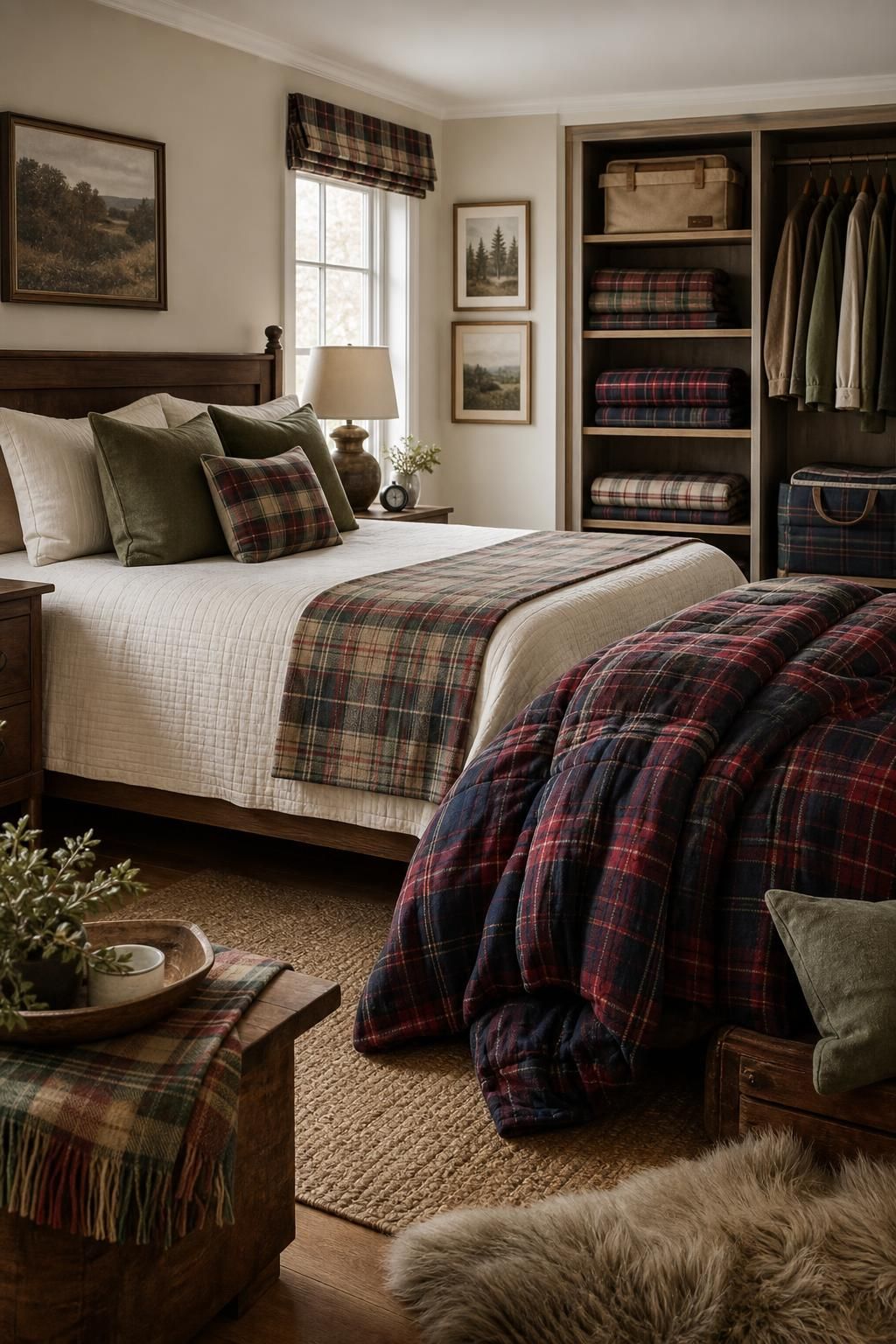
In warmer months, a quilted coverlet or lighter tartan bedspread gives you the look without the bulk. The bed still feels dressed, but it suits longer days and milder nights. You can fold it neatly at the foot of the bed during the day, and the room still looks complete.
Cold weather calls for more depth. A flannel duvet or thicker tartan comforter adds softness and warmth, and the plaid starts to feel richer when the room needs that extra comfort. I like this shift because it keeps the bedroom familiar while still responding to the season in a practical way.
Make storage and styling easier
This approach also saves you from rebuilding the whole room twice a year. Your wall color, wood furniture, and quiet accessories can stay exactly where they are. You are only swapping the weight and finish of the bedding, which is much simpler than packing away the pattern and starting over with a different look.
Keep the lighter set folded in a fabric storage bag or a clean closet shelf, and rotate in the heavier set when the temperature drops. If both versions share at least one color, the room will always feel consistent. The style stays steady, and the comfort changes with the season, which is exactly what a hard-working retreat bedroom should do.
Conclusion
A cozy Scottish bedroom works best when each choice supports the next one. Strong tartan can anchor the bed, but it feels even better when you soften it with simple pillows, quiet curtains, and a few heritage details that repeat color in smart ways. Then make it practical. Keep the plaid you love and switch only the bedding weight as the seasons change.
If you save any idea from this list, save that balance. Let tartan lead, then give it texture, breathing room, and a little restraint. That is how a bedroom starts to feel warm, personal, and easy to live in every day.