Your kitchen can look richer, warmer, and far more custom without moving a single wall. The right cabinet design changes the whole mood, from dark painted drama to airy glass fronts that catch the light.
These 14 ideas help you fix the flat, builder-grade look that makes many kitchens feel plain. Think soft shadow lines, deep green color, tall cabinets that pull the eye up, and mixed finishes that add balance and charm.
You will see simple ways to make the room feel brighter, smarter, and more polished. Some ideas add storage. Some add beauty. All 14 can bring you closer to that kitchen you keep saving over and over.
1. Swap Flat Doors for Shaker Frames
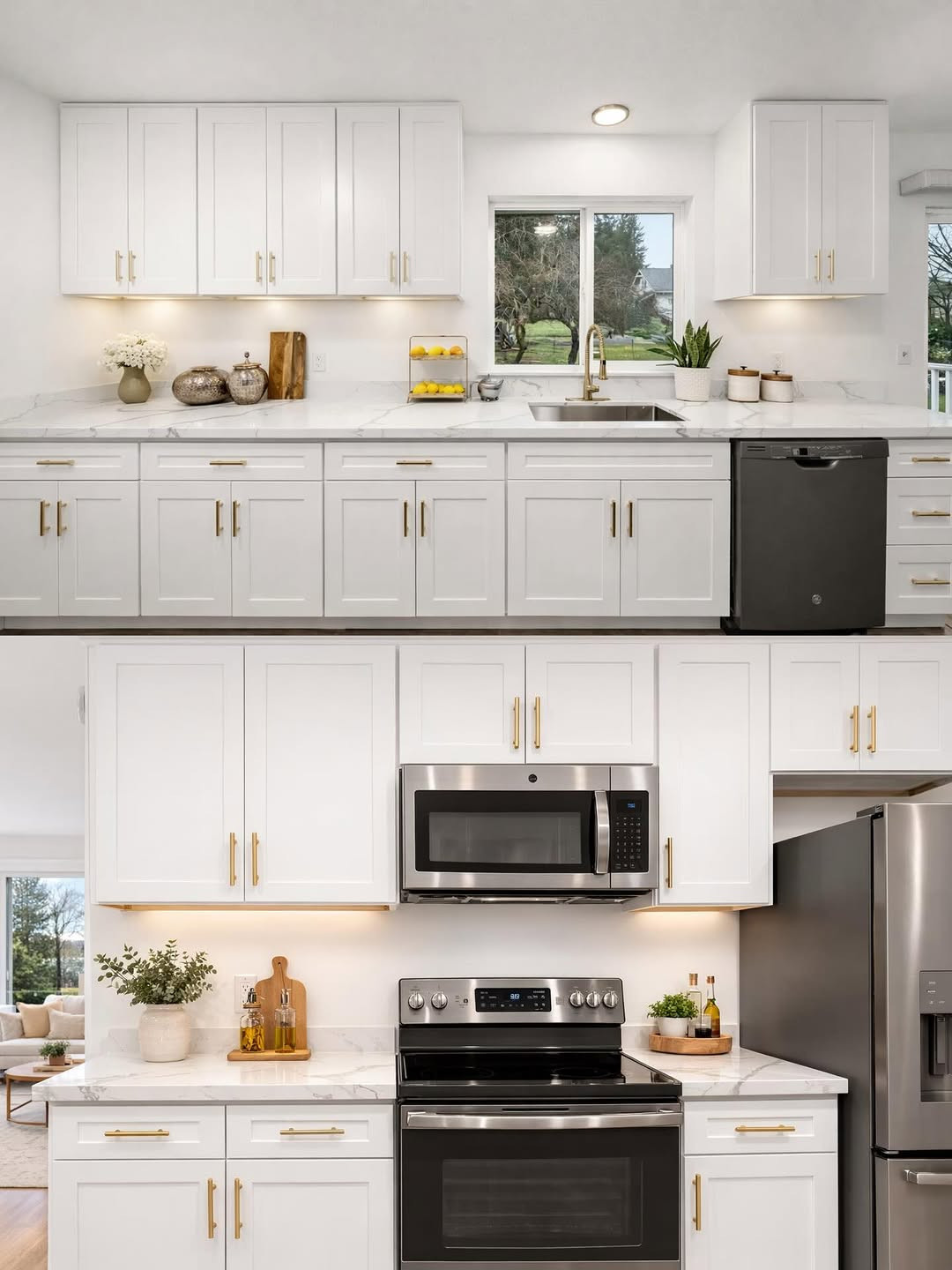
Flat cabinet fronts can make a kitchen feel plain, even when the layout is good and the counters are expensive. If you want a space that looks more finished and more thoughtful, Shaker frames are one of the fastest ways to get there because they add shape, shadow, and just enough detail to catch the eye without making the room feel busy.
Why this small change feels so big
A slab door gives you one flat surface from edge to edge. It looks clean, but it can also feel cold or unfinished, especially in a family kitchen where you want warmth. A Shaker door adds a simple frame around the center panel, and that frame creates depth the moment light hits it. You start to see soft lines and corners instead of one blank plane.
That extra depth matters more than many people expect. In a white kitchen, it keeps the cabinets from blending into the walls. In a darker kitchen, it helps painted doors look richer and more layered. I have seen kitchens go from basic to tailored just from this one switch, even when nothing else changed.
Where Shaker doors work best
This style fits almost any home because it sits in the middle. It is more detailed than a flat front, but it is still simple enough for modern spaces. You can pair it with brass pulls for a warm look, black hardware for contrast, or even small knobs for something softer and more classic.
If your kitchen already has good bones, this upgrade often makes more sense than a full remodel. It works well in older homes that need fresh structure, and it also helps newer homes lose that stock-cabinet feel. The design is calm, which means your counters, tile, and lighting still get room to shine.
Make the proportions look right
The frame width matters. Very wide rails can feel heavy in a small kitchen, and very thin ones can look weak from across the room. Ask for a medium frame size that suits the scale of your cabinet doors, especially on larger pantry fronts or wide drawers.
You should also match the style to your room trim. If your baseboards and window casings are sharp and simple, choose a crisp Shaker profile with clean inside corners. If the rest of your home feels softer, a slightly eased edge can make the kitchen feel more connected to the rooms around it.
Credit to @kraftersland
2. Paint Cabinets in Deep Green
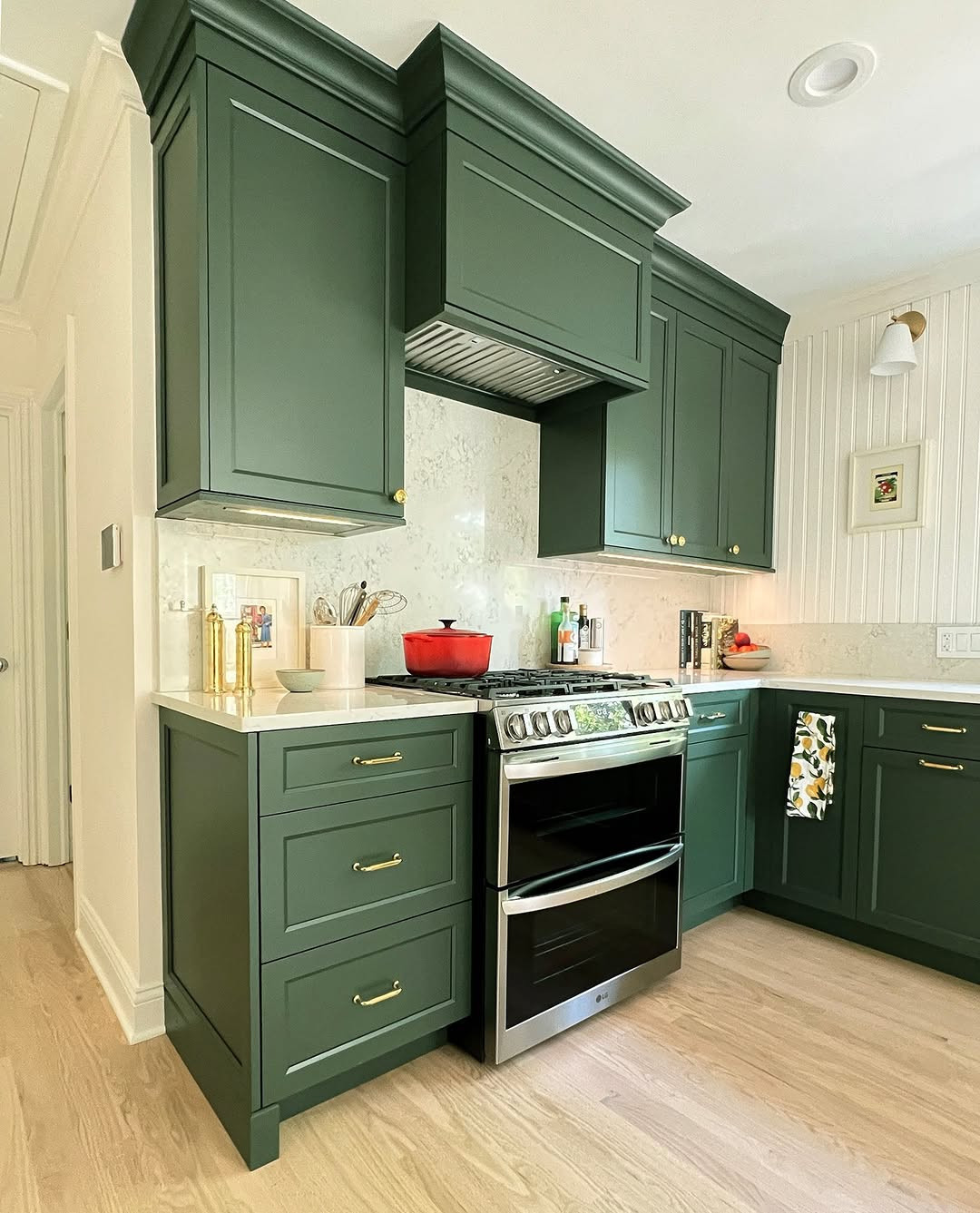
A safe cabinet color can keep a kitchen from reaching its full potential. Deep green changes that fast. It brings mood, warmth, and a strong point of focus, and it can make common materials like white quartz, oak floors, and brushed brass look more expensive.
The color that adds instant character
Deep green has a grounded, steady feel that many neutral kitchens lack. It can read earthy, classic, or even a little dramatic depending on the light in your room. In morning sun, it may look fresh and natural. At night, under warm pendants, it can feel rich and cocooning.
This color also has a rare talent for working with both cool and warm finishes. It looks sharp against white walls and marble veining, but it also sits beautifully beside wood stools, terracotta accents, and cream tile. That range gives you more freedom when you choose the rest of the room.
Choosing the right shade for your space
Not every green gives the same effect. A forest green feels classic and deep. An olive green feels softer and a little more relaxed. A green with blue undertones can feel more formal, especially with polished nickel or chrome. The best move is to test samples on different cabinet doors and watch them through the day.
Light matters a lot here. A north-facing kitchen can make green look cooler and darker, so you may want a shade with warmth. A bright south-facing kitchen can handle a moodier tone because natural light keeps it from looking too heavy. Paint chips alone never tell the whole story.
How to keep it beautiful, not overpowering
Balance is what makes this idea work. If all your surfaces are dark, the room can feel closed in. Pair green cabinets with lighter walls, a pale backsplash, or open counter space so your eye has somewhere to rest. Even simple white dishes on the counter can brighten the whole scene.
I also like a satin finish more than high gloss for this look. It reflects enough light to show the color well, but it does not turn every fingerprint into a problem. If you want the cabinets to feel timeless rather than trendy, keep the hardware simple and let the color do the talking.
Credit to @normandyremodeling
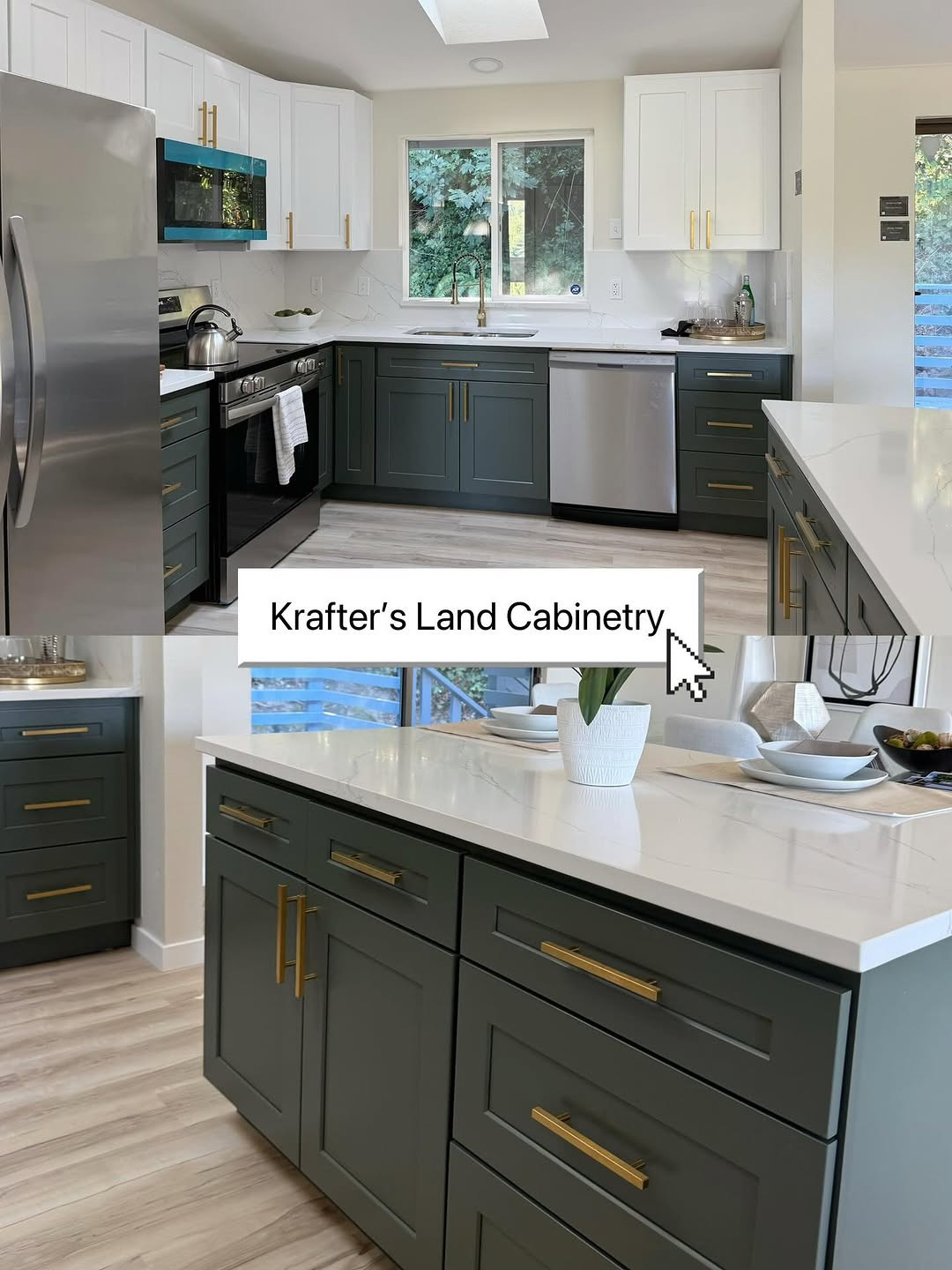
3. Use Two-Tone Upper and Lower Cabinets
One cabinet color from floor to ceiling can make a kitchen feel heavy or flat. A two-tone layout gives you contrast in a controlled way. It breaks up large runs of cabinetry, helps the room feel more custom, and lets you use bolder color without covering every surface in it.
Why the split works so well
Your lower cabinets carry visual weight because they sit under the counters and anchor the room. The uppers sit in your direct line of sight, so they affect how open or closed the kitchen feels. When you paint or finish them differently, you can shape the whole mood of the room with more control.
A common mix is darker lowers and lighter uppers. That pairing grounds the kitchen and keeps the top half airy. Navy or charcoal below with white above is popular for a reason, but softer combinations can be just as strong. Think warm gray and cream, sage and white oak, or greige and pale mushroom.
Color pairings that feel current but lasting
You do not need a loud contrast for this idea to work. Sometimes the best two-tone kitchen uses colors that sit close together, like soft taupe uppers with deeper clay lowers. The difference is subtle, yet the room feels more layered and less one-note. That quiet contrast often ages better than a hard black-and-white split.
Wood can also take the place of one paint color. White uppers with walnut lowers feel polished and warm. Painted lowers with natural oak uppers can feel lighter and more relaxed. If you already have wood floors, pull a tone from them so the whole kitchen feels tied together.
How to avoid a chopped-up look
The line between upper and lower cabinets should feel intentional. A backsplash that runs cleanly through the middle helps unite both halves. So does using the same hardware finish on all doors and drawers. Repeating one detail across both colors tells the eye that this is one design, not two random choices.
You should also think about where tall cabinets fit in. A full-height pantry can match the lowers to keep the base strong, or match the uppers if you want it to recede. I usually decide based on size. If the pantry is huge, a lighter color can help it sit more gently in the room.
Credit to @kraftersland
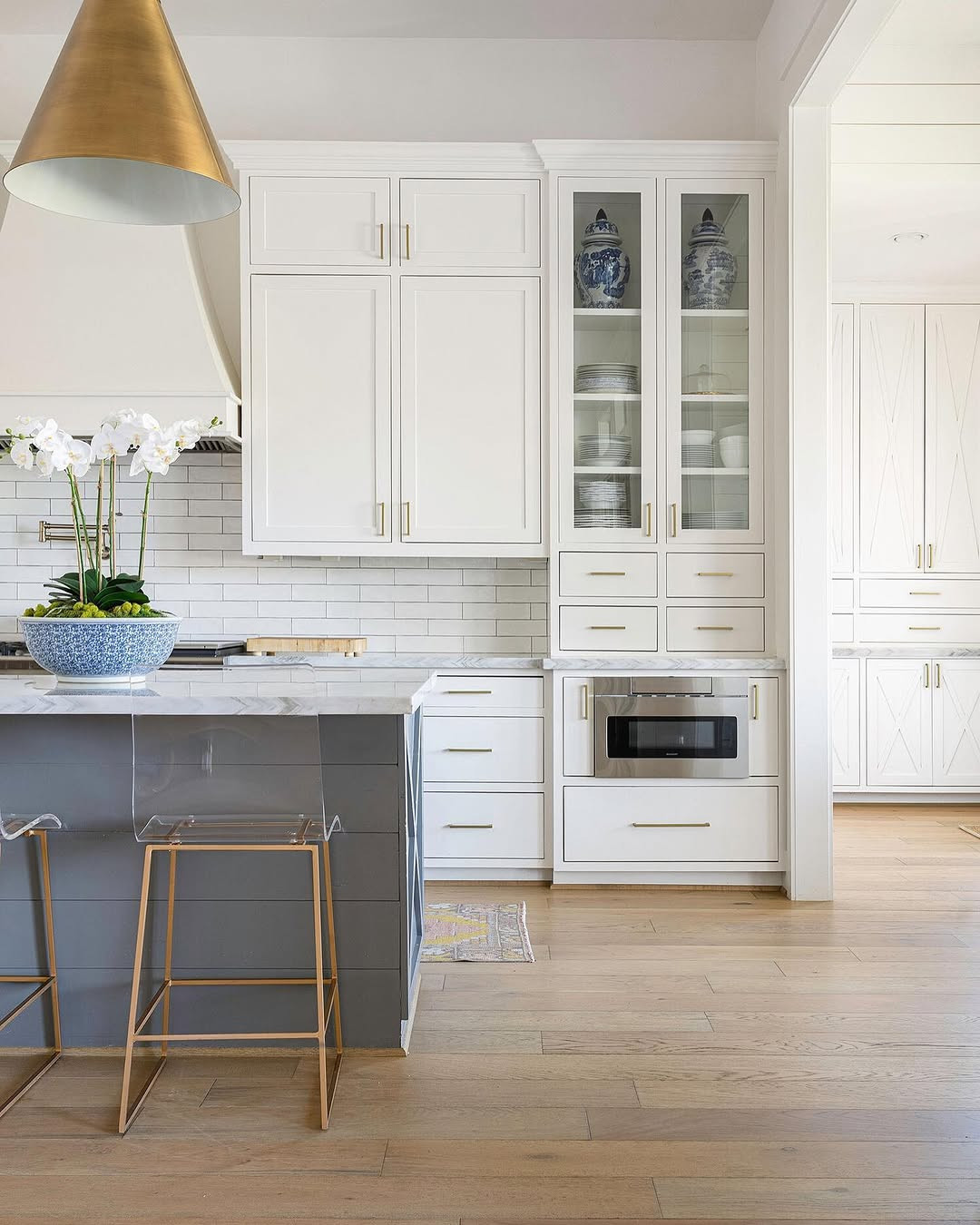
4. Extend Cabinets to the Ceiling
That empty strip above standard cabinets often collects dust and makes the whole kitchen look shorter. Extending cabinets up creates a taller, cleaner silhouette, and it adds storage where you need it most. The result feels more built-in, more architectural, and far less like an afterthought.
The visual payoff of going taller
Ceiling-height cabinets pull your eye upward, which makes the room feel larger even if the floor plan stays exactly the same. That vertical line gives the kitchen a finished look, almost like custom furniture fitted to the room. In homes with average ceilings, the effect is still strong. In homes with high ceilings, it can be dramatic.
The old gap above cabinets often breaks the room in an awkward place. It leaves you with a hard ledge, uneven shadows, and items you cannot easily reach or clean. Once the cabinetry fills that space, the wall looks calmer and the whole room feels more deliberate.
Storage that actually helps
The top cabinets are perfect for things you do not need every day. Holiday platters, extra paper goods, vases, and backup pantry items all fit well up there. That frees your lower cabinets for daily dishes, cookware, and food, which makes your kitchen easier to use.
You can also split the upper section in smart ways. Some people add shorter stacked cabinets with lift-up doors. Others keep one tall door for a cleaner face. The better option depends on your ceiling height and how often you plan to open those upper spaces.
If your ceilings are very tall, think about access early. A small rolling ladder is beautiful in some kitchens, but a simple foldable step stool stored nearby is often enough. Practical choices keep this idea useful, not just pretty.
Design details that make it look custom
Crown molding can help the cabinets meet the ceiling with a more classic feel. A flat top line with no trim looks sharper and more modern. Both can work, but the choice should match your doors, hardware, and the rest of your home. Mixed styles can make the kitchen feel confused.
I also suggest planning your lighting around the taller run. Pendants, sconces, and even under-cabinet lights look better when they relate to the new cabinet height. A little measuring now saves you from crowded sightlines later, especially around windows and range hoods.
Credit to @oystercreekstudios
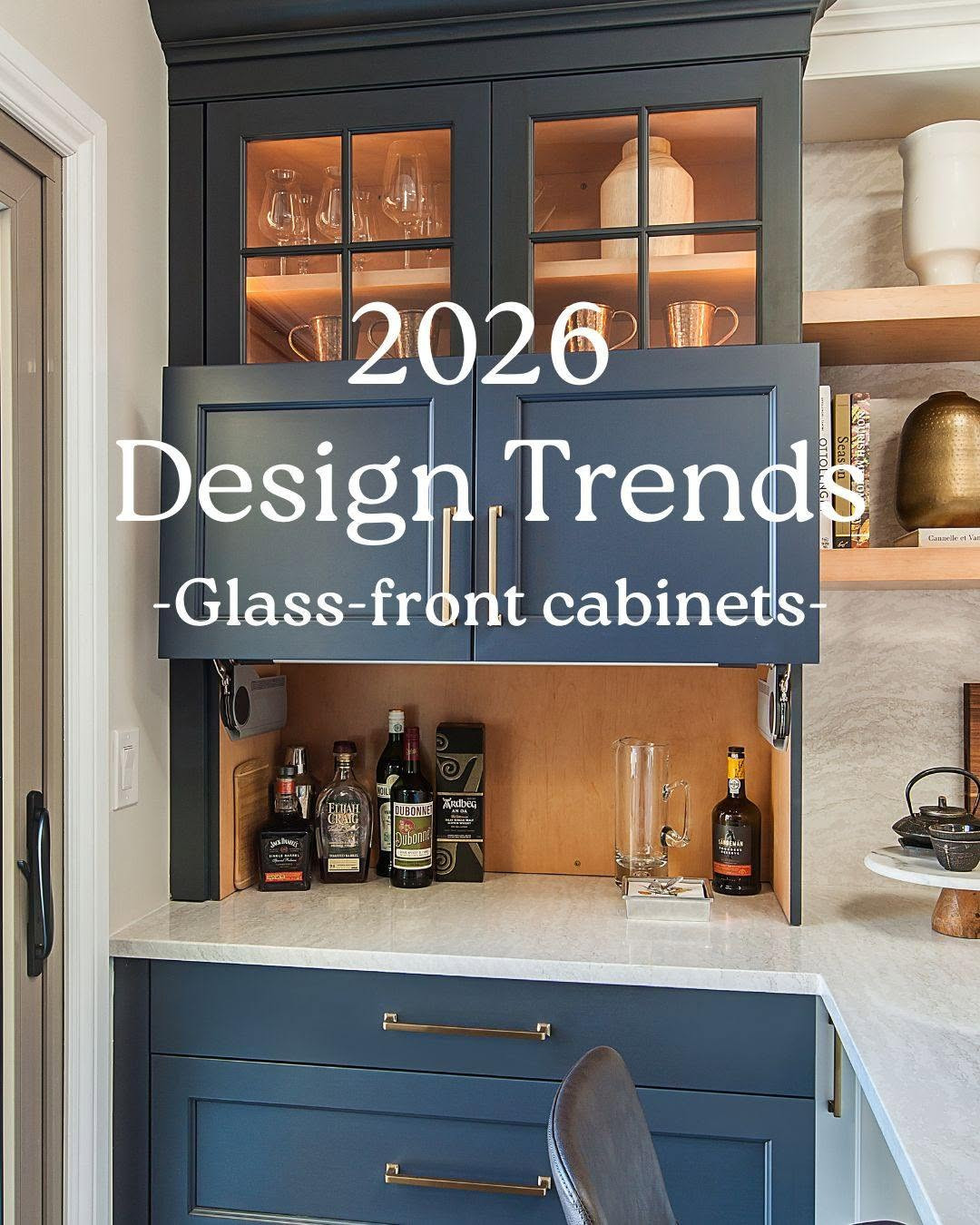
5. Add Glass-Front Display Doors
Solid cabinet walls can feel heavy, especially in smaller kitchens or rooms with limited light. Glass-front doors break up that weight and add a lighter, more open look. They also give you a place to show dishes, glassware, and a few beautiful objects that deserve more than a dark shelf.
How glass changes the mood
A row of glass doors catches light in a way solid paint never can. Reflections shift through the day, and the cabinet run feels less blocky. Even one small section near a window or sink can make the kitchen feel more layered and alive.
This idea works because it mixes function with display. Your everyday bowls, stacked plates, or clear drinking glasses become part of the design. That small bit of visibility can make the room feel more personal, like a lived-in kitchen with style instead of a sealed wall of storage.
What to place behind the doors
The best displays are simple. Repeating colors helps a lot, such as all-white dishes, amber glassware, or a mix of stoneware in soft earth tones. Too many colors or packed shelves can create visual noise fast. Give each item a little breathing room.
You do not need perfect styling either. Real life can still look beautiful. I like to group practical pieces by type so the shelves stay useful. Dinner plates on one shelf, bowls on another, and glasses together often look better than highly staged arrangements that are hard to keep up.
Pick the right type of glass
Clear glass gives the brightest, most open feel, but it also shows everything. If your shelves tend to get crowded, fluted or seeded glass can soften the view and hide minor mess. Frosted glass gives even more privacy, though it loses some of that crisp display effect.
Credit to @authentickitchendesign
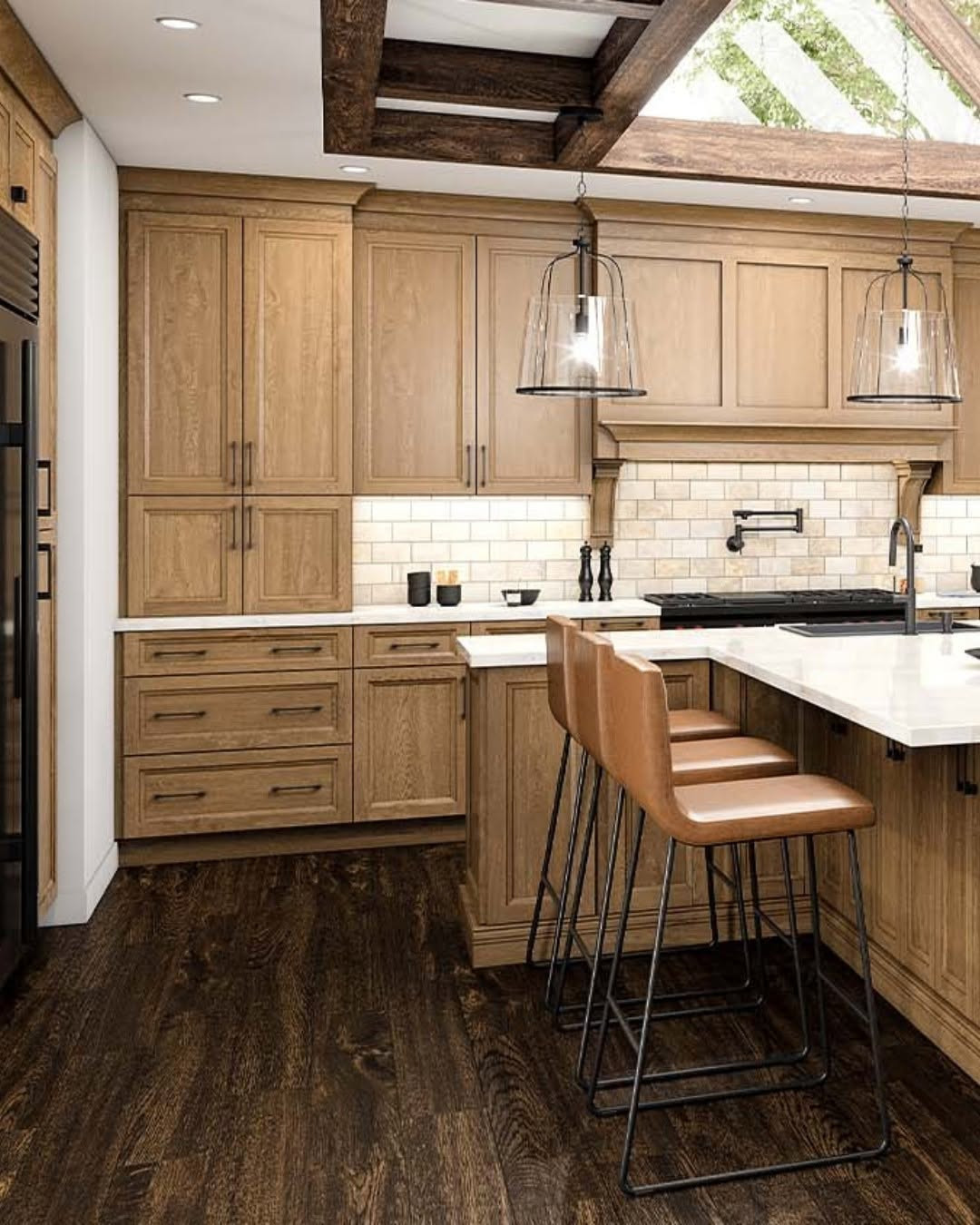
6. Choose Warm Natural Wood Finishes
Warm natural wood finishes bring depth, grain, and a softer mood that painted cabinets often miss. They help a kitchen feel lived-in and current at the same time, which is why this look keeps showing up in homes that feel both polished and easy.
Wood also ages with more grace than many trend colors. If you want a kitchen cabinet design idea that still looks good years from now, this one gives you a lot of room to grow.
Why wood changes the mood
A kitchen with natural wood cabinets feels grounded right away. Oak, walnut, white oak, and ash all add quiet texture, and that texture matters because flat color can sometimes make a room feel harder or colder than you planned. You notice the grain even from across the room, and that small detail makes the whole space feel more thoughtful.
This idea works especially well if your kitchen has lots of hard surfaces, such as stone counters, tile backsplashes, and metal fixtures. Wood helps balance all of that. I have seen plain kitchens feel more inviting the second wood tones came in, even when nothing else changed.
Picking the right tone
Not every wood finish gives the same effect. Pale wood feels airy and modern, medium honey tones feel relaxed and classic, and deeper brown shades feel rich and tailored. If your kitchen gets little natural light, a lighter wood finish can keep the room from looking heavy.
You should also pay attention to undertones. Some woods lean yellow, some lean red, and some lean gray. That matters next to your floor, countertop, and wall color. If the undertones fight each other, the room can look off even when each piece is beautiful on its own.
Matte and low-sheen finishes usually look more current than glossy ones. They let the grain do the work. That gives your cabinets a calmer look and keeps fingerprints from becoming the first thing you notice.
Where this idea works best
Warm wood cabinets are a strong choice if you want a kitchen that feels less tied to one trend. They fit modern homes, farmhouse kitchens, and simple traditional spaces with very little effort. You can pair them with black hardware for contrast, brass for warmth, or even no upper cabinets if you want a lighter wall line.
If you are nervous about using wood on every cabinet, start with the base cabinets or the island. That smaller move still gives you the warmth and texture, but it feels safer. In many kitchens, that is enough to change the entire look.
Credit to @wholesalecabinets
7. Replace Basic Hardware with Statement Pulls
Statement pulls can shift the style of your cabinets faster than almost anything else. They are small, but they sit right at eye level and get touched every day, so they shape both the look and feel of the kitchen.
If your cabinets seem bland, this is often the first place to look. A simple door can feel modern, vintage, or more high-end just by changing the hardware.
The fastest style upgrade
Basic hardware tends to disappear, and sometimes that is exactly the problem. If your kitchen cabinets have clean lines but still feel unfinished, bold pulls can give them a clear point of view. Long bar pulls feel sharp and modern, cup pulls lean classic, and unlacquered brass or aged bronze can make stock cabinets look more custom.
The scale matters as much as the finish. Small knobs on large drawers can look weak and awkward, while oversized pulls can make plain cabinet fronts feel more intentional. You want the hardware to look like it belongs to the cabinet, not like an afterthought.
Shape, finish, and feel
Think beyond color alone. The shape of the hardware changes the mood of the room in a big way. Rounded pulls feel softer, square-edge pulls feel crisp, and slim backplates can make simple cabinets look more formal. Even a black pull can read very differently depending on its shape.
Finish matters too, but it should connect to other parts of the kitchen. If your faucet is warm brass, matching exactly is not always necessary, though the tones should feel related. Mixed metals can work well when the mix looks planned and repeated in more than one spot.
Touch matters more than many people expect. If you cook often, choose pulls that feel comfortable in your hand and are easy to clean. A beautiful pull loses its charm fast if grease collects in every corner.
A smart way to test the look
Before you drill new holes, tape a few sample sizes onto your cabinets and step back. Look at them in daylight and at night. Cabinet hardware can seem perfect in a showroom, then look too tiny or too flashy once it is in your actual kitchen.
If your current holes do not match the new hardware size, you may need a plate or light repair work. That extra step is still far cheaper than replacing cabinets. For a kitchen cabinet design update with real visual impact, few changes give you this much for so little disruption.
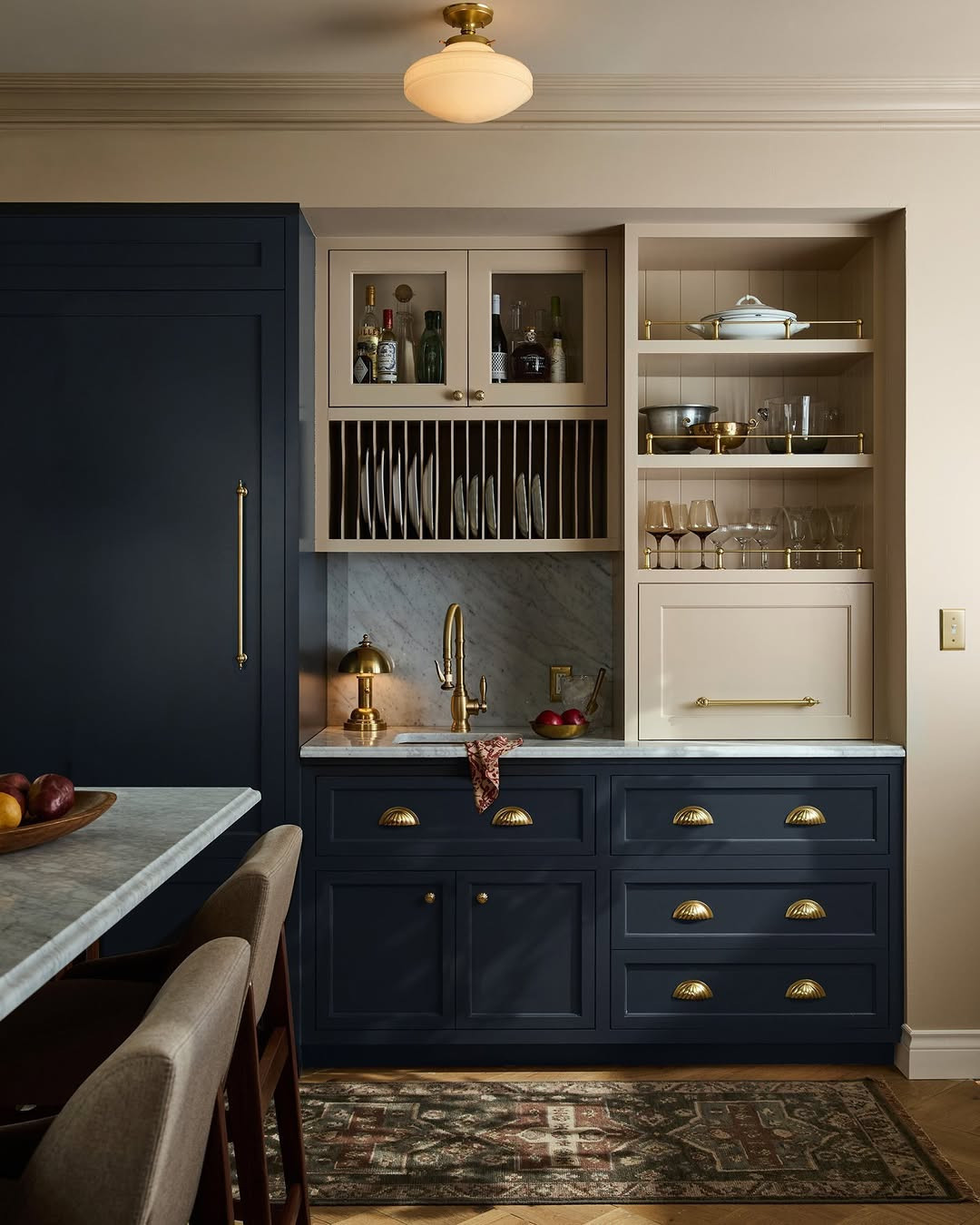
Credit to @rejuvenation
8. Mix Open Shelving with Closed Storage
Open shelving breaks up a wall of cabinets and makes the room feel lighter. Closed storage still does the hard work, so you get the best of both ideas: display where it helps, concealment where you need it.
This mix is one of the smartest ways to refresh a kitchen cabinet design without losing function. You keep the everyday mess behind doors and let a few well-chosen pieces shape the style of the room.
How to keep it practical
Open shelves look beautiful in photos, but they work best when you stay realistic about what belongs there. Daily dishes, mugs, glassware, and a few serving pieces make sense because you use them often and can keep them moving. Random clutter does not. If you load the shelves with things you never touch, they become dust collectors instead of helpful storage.
Closed cabinets should hold the less attractive items, including plastic containers, small appliances, bulk food, and cleaning supplies. That split keeps your kitchen looking edited. You are not giving up storage, you are just choosing what deserves to be seen.
Placement is a big deal. A short run of shelves near a window, over a coffee station, or beside a range hood often feels more natural than replacing every upper cabinet. Small moves tend to look more polished because they leave enough hidden storage in place.
Making shelves look intentional
The best open shelving has rhythm. Stack plates, mix in a few bowls, add one or two pieces with height, and leave some empty space. That empty space is what keeps the shelf from looking crowded. Many people skip it, and the whole wall starts to feel busy.
Color helps here. If your dishes share a simple palette, the shelves look calm even with everyday items on display. Wood shelves can warm up painted cabinets, and painted shelves can disappear into the wall for a cleaner look.
Who should try this idea
This approach works well if your kitchen feels boxed in by upper cabinets. It can also help if you want a more personal look without giving up order. I like it most in kitchens that need visual relief, especially narrow rooms where a solid line of cabinetry feels too heavy.
You do need some discipline to keep shelves looking good, but not perfection. If you already reach for the same plates and mugs every day, you are probably a good fit for this setup. Keep the shelf area limited, and it stays useful instead of becoming a chore.
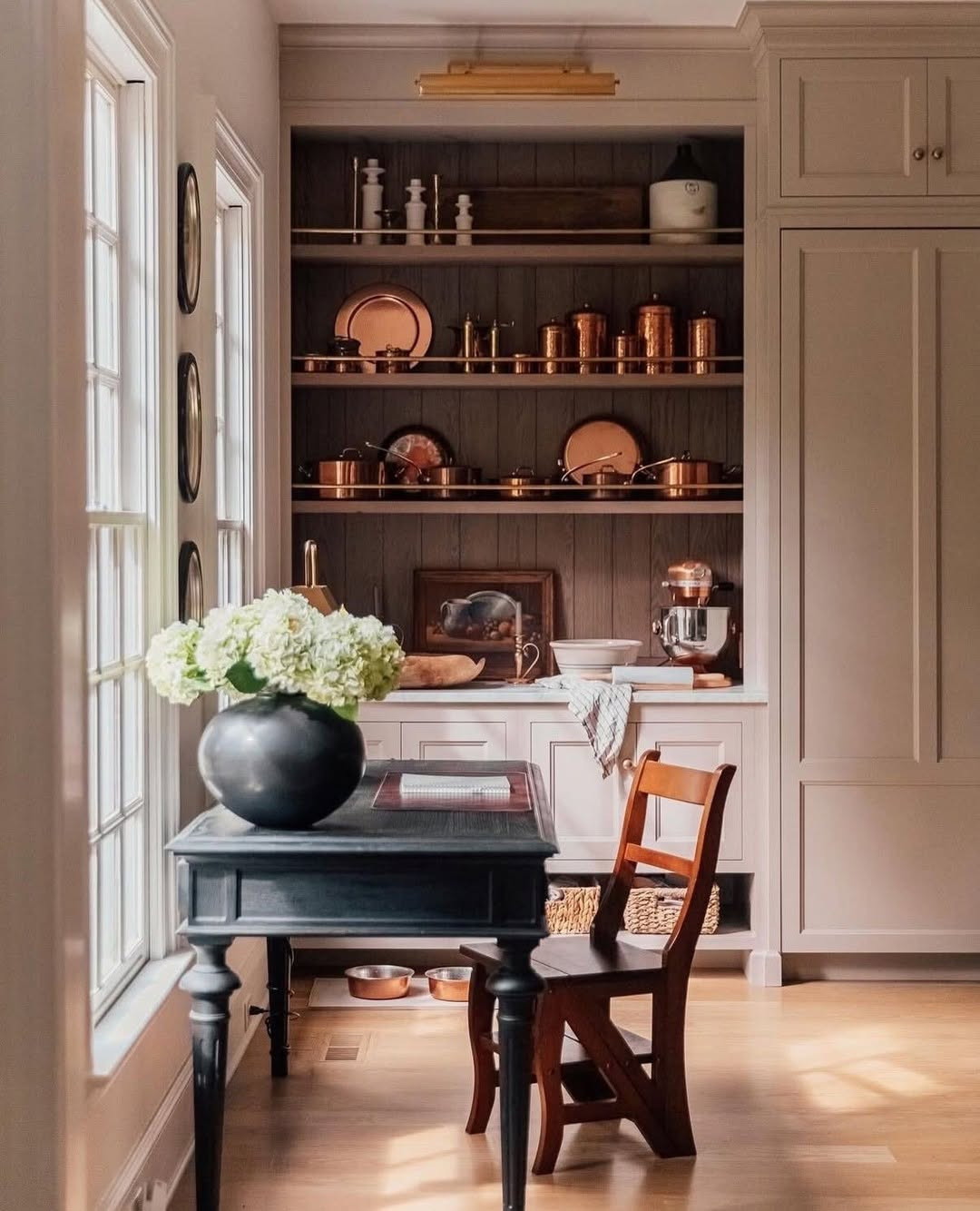
Credit to @stofferhomecabinetry
9. Introduce Fluted or Reeded Cabinet Fronts
Fluted cabinet fronts add texture in a quiet, refined way. They create movement across the surface, so even simple cabinetry feels more layered and custom.
This is a strong choice if you want your kitchen to stand out without using loud color or ornate trim. The detail is subtle, but the effect is memorable.
Texture that does the styling for you
Flat cabinet fronts can look clean, though they sometimes feel a little plain in a large kitchen. Fluted or reeded panels solve that by adding shadow lines and depth. As light moves across the ridges, the cabinets change through the day, and that gives the room more life.
The detail can read modern, artful, or softly classic depending on the rest of the space. Pair it with slab doors and slim hardware for a cleaner look, or use it with warmer metals and stone for something with more softness. You get personality without needing bold paint or heavy decoration.
Where to use it without overdoing it
You do not need fluting on every cabinet. In fact, it often looks better in small doses. An island front, a pantry bank, or a single section of lower cabinets can carry the texture beautifully. That focused use keeps the design special and stops the room from feeling too busy.
This idea shines in kitchens that already have simple shapes. If your backsplash is very patterned or your counters have strong movement, too much cabinet texture may compete with them. In a calmer kitchen, reeded fronts become the detail that pulls everything together.
The materials and upkeep question
Wood fluting feels warm and high-end, especially in natural oak or walnut tones. Painted fluted fronts look cleaner and more sculptural, which suits modern kitchens. You can also find this detail in MDF, laminate, and custom millwork, so the cost range is wider than many people think.
Cleaning is the first concern most people have, and it is a fair one. Grooves do collect dust and grease more easily than flat doors, especially near the stove. A soft brush attachment and regular wipe-downs usually handle it well, but you should know that this detail asks for a little more care.
If you want a kitchen cabinet design idea that feels designer-led without being flashy, this is one of the strongest options right now. It catches the eye for the right reason. The cabinets still feel calm, just far more considered.
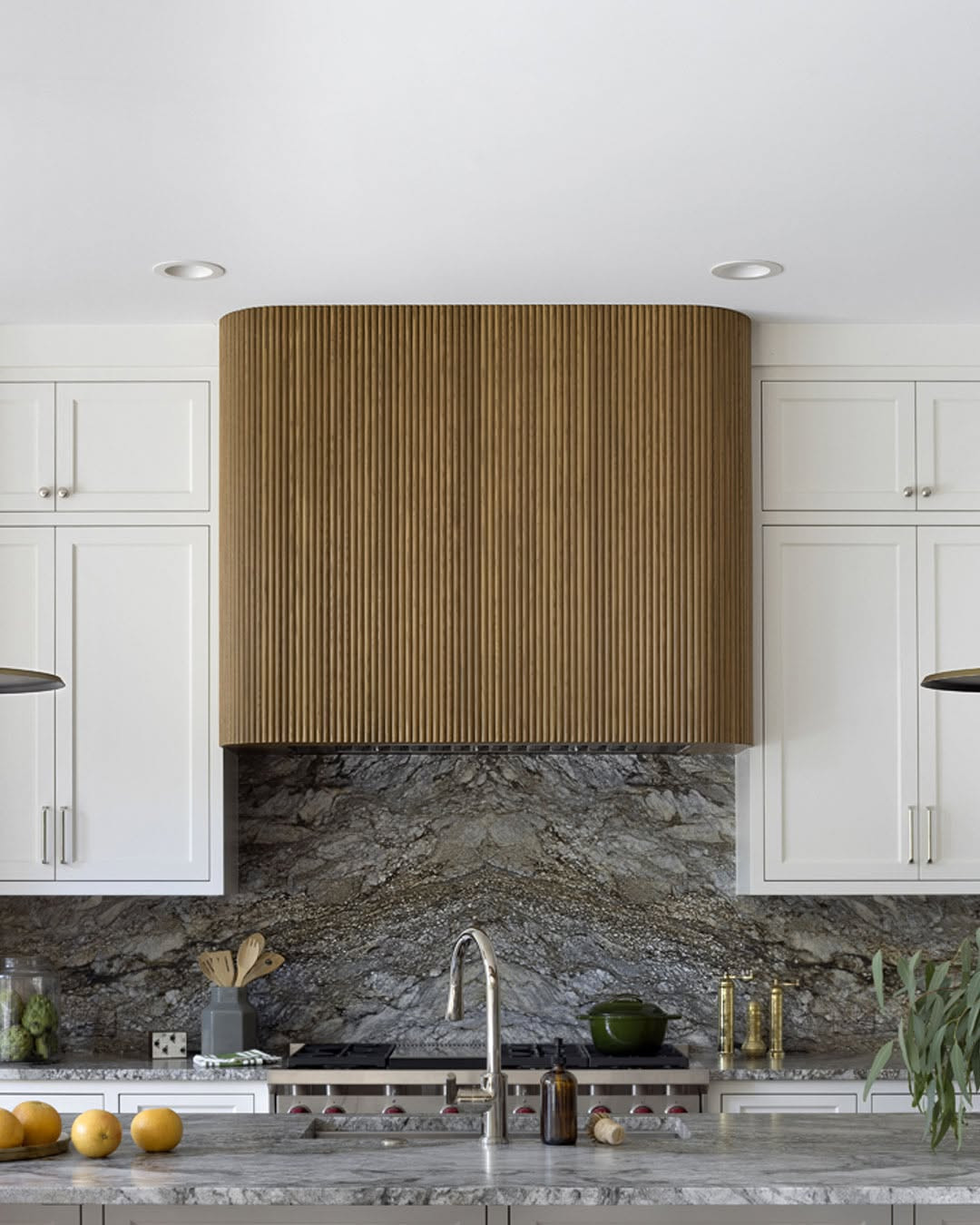
Credit to @distinctivecabinetrydesigns
10. Build an Island in a Contrasting Finish
A contrasting island finish turns the center of the kitchen into a feature instead of letting it disappear into the perimeter cabinets. That contrast can come from color, wood tone, paint depth, or even a change in texture.
This move gives the room more shape. It helps the island feel like furniture, and that one difference can make the whole kitchen look more custom.
Why contrast works so well
When every cabinet matches, the kitchen can look clean but flat. A different island finish breaks that up. It gives your eye a place to land, which makes the room feel more designed. Navy against white cabinets, stained wood against painted walls, or charcoal against pale oak all create that effect in different ways.
This choice also helps define the island as its own zone for prep, seating, or serving. In open-plan homes, that matters even more because the island is often visible from the dining and living areas. You want it to hold the room, not fade into it.
Choosing a finish that still feels connected
Contrast should look intentional, not random. The island can be darker, warmer, or richer than the perimeter cabinets, but it still needs a link to the rest of the room. That link might come from the countertop, the floor tone, the hardware, or the wood accents elsewhere in the kitchen.
I often think of the island like a statement piece in a simple outfit. It can stand out, but it should still belong. If the perimeter cabinets are very cool-toned, a warm wood island may need another warm element nearby, such as stools or open shelves, to make the mix feel settled.
Color, wood, or both
Painted islands are popular because they add contrast with little risk. Deep blue, muted green, soft black, and warm gray all work well. A wood island feels even richer and can make the room look less formulaic, especially if the perimeter cabinets are painted in a lighter shade.
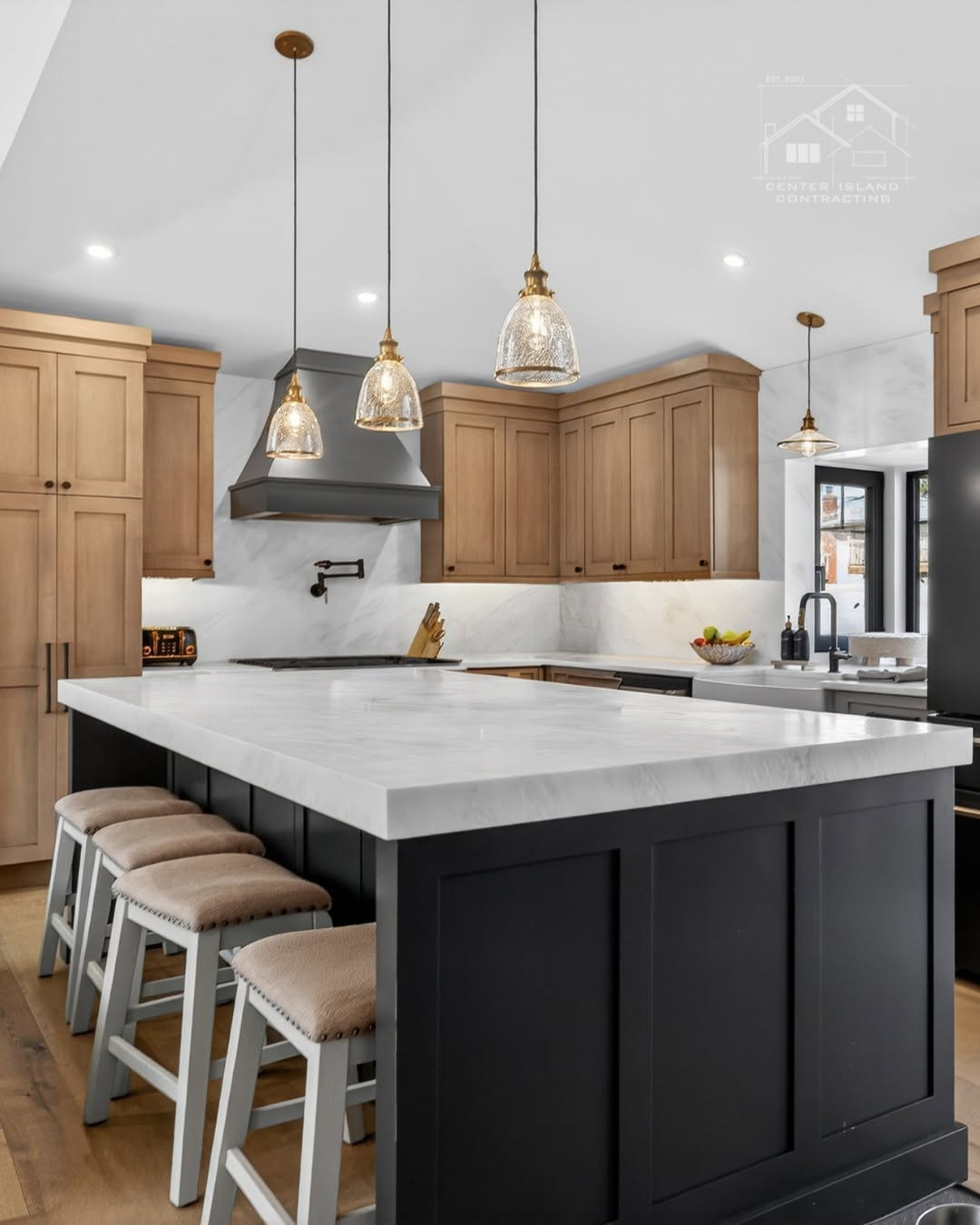
Credit to @centerislandcontracting
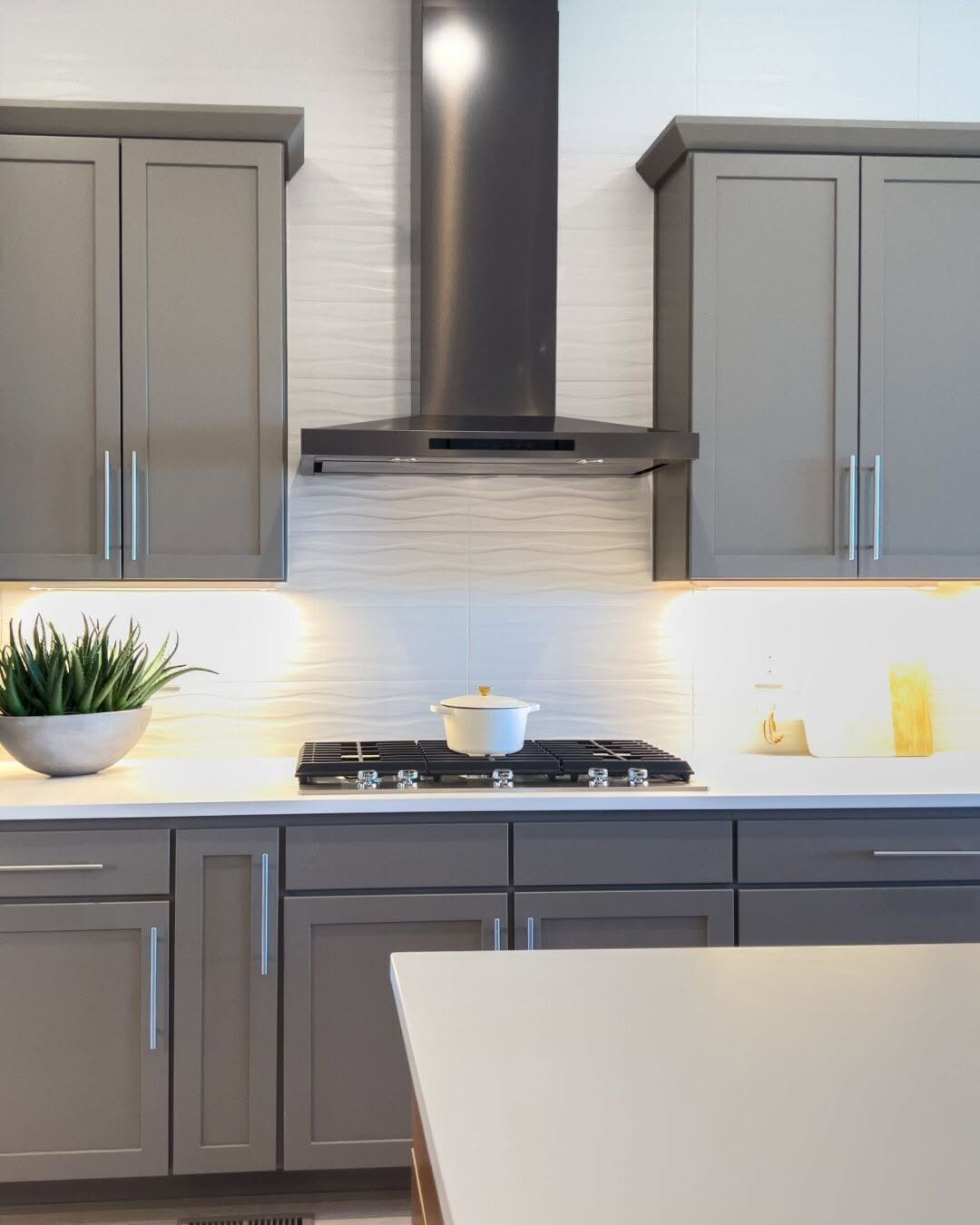
11. Frame Cabinets with Underlighting
Under-cabinet lighting adds a soft band of light below your cabinets, which makes the room look cleaner and more finished. It also turns plain cabinetry into a feature, especially at night, when shadows can make a kitchen feel flat and heavy.
A softer glow, a sharper kitchen
One of the fastest ways to change the look of kitchen cabinet design is to light the cabinets from below. That small glow brings out the shape of the doors, the color of the backsplash, and the texture of stone or tile. Your eye reads the whole space as more polished because the edges are easier to see. Even simple white cabinets look richer with a warm wash of light under them.
This idea also helps with daily use. Chopping, reading labels, and wiping counters all get easier when the work surface is lit well. Ceiling lights often throw shadows from your body onto the counter, but underlighting fixes that problem. You get light exactly where you need it.
Why it feels more expensive
Lighting changes how materials look. Matte paint feels deeper, wood grain looks warmer, and glossy tile reflects a soft shine that makes the kitchen feel layered. That is why many high-end kitchens use built-in lighting as part of the cabinet plan rather than as an afterthought. The cabinets stop looking like boxes on a wall and start looking like furniture.
I also like how this detail works in both modern and classic kitchens. In a shaker kitchen, it adds quiet drama. In a sleek kitchen, it sharpens the clean lines. You do not need a large space either. A small kitchen often gains the most because the extra glow makes it feel open after dark.
How to get it right
Pick a warm white LED strip instead of a cold blue light. Around 2700K to 3000K usually looks best in a home kitchen because it feels inviting and still bright enough for tasks. Hide the strip behind the cabinet lip or a slim trim piece so you see the glow, not the bulb dots.
If you want the best result, put the lights on a dimmer. Bright light helps when cooking, but a lower setting looks beautiful in the evening. That one change gives your cabinets two moods, practical by day and calm by night.
Credit to @_refaceful_
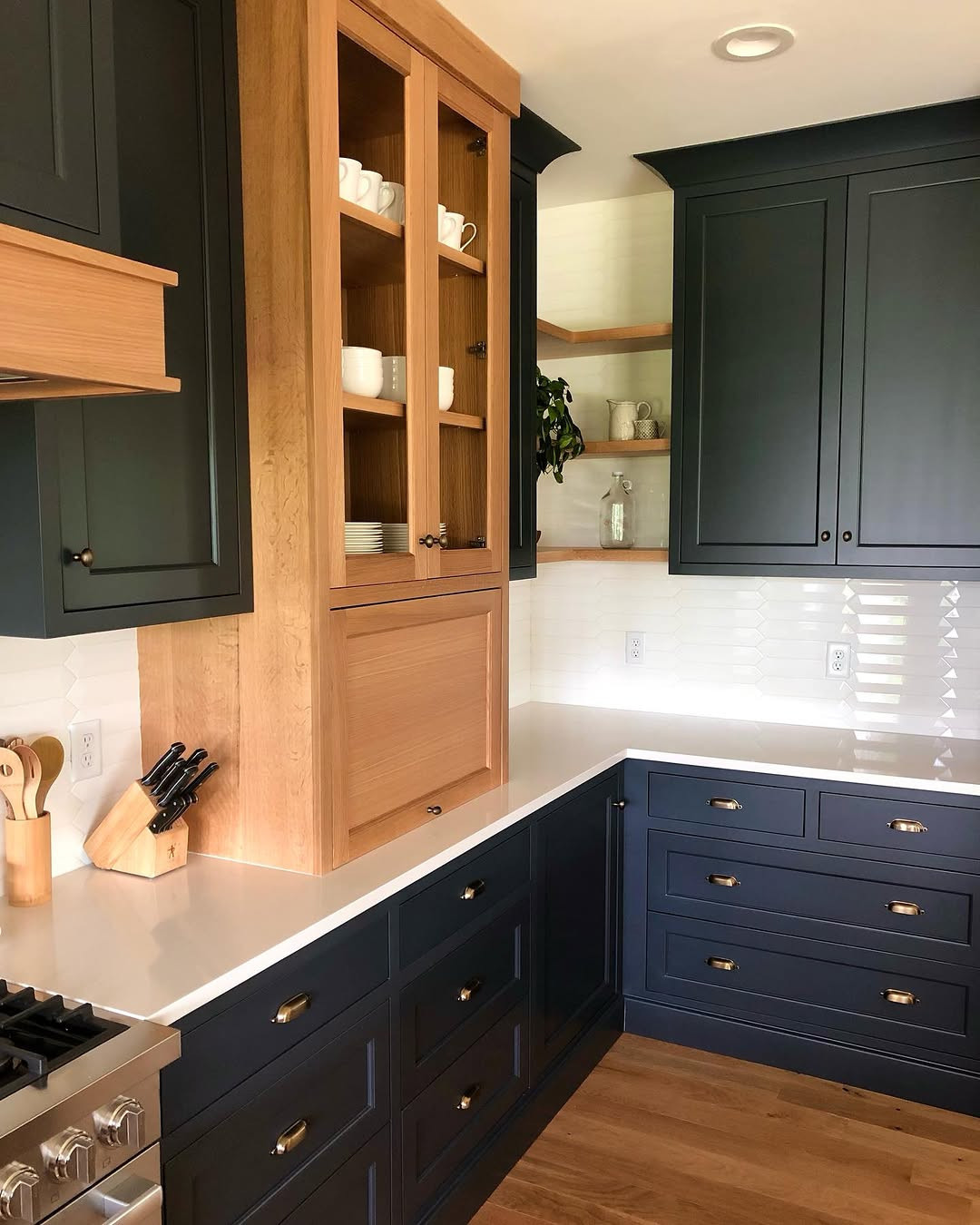
12. Incorporate Appliance Garage Storage
Appliance garage storage is a cabinet section that hides small machines like toasters, coffee makers, or blenders behind doors. It keeps the counter clear, which instantly makes the kitchen look more ordered and far less busy.
The calm counter effect
Many kitchens do not actually lack storage. They lack visual quiet. When your coffee machine, mixer, grinder, and toaster all sit out at once, the room starts to feel crowded even if the cabinets are beautiful. An appliance garage gives those items a home without forcing you to haul them from a deep pantry every day.
This matters more than people think. Kitchen cabinet design is not only about door style or paint color. It is also about what the cabinets hide. A clean counter lets the cabinet lines stand out, and that makes the whole room feel more intentional.
Best places to build one
A good appliance garage should sit where you already work. A coffee station near the fridge works well in busy homes because it creates a simple morning zone. A mixer garage near your main prep area makes sense if you bake often. If the storage is too far from where you use the item, you will leave the appliance out, and the idea loses its value.
The door style matters too. A flip-up door looks sleek and modern. Pocket doors that slide back into the cabinet feel custom and save swing space. A tambour door has a vintage feel and works well if you want texture without using glass. The right choice depends on your kitchen, but the goal stays the same: easy access, quick hideaway.
Details that make it work
Add an outlet inside the cabinet if you can. That lets you use a coffee maker or toaster without moving it each time. It sounds small, but it changes the habit. People actually use storage that feels easy.
Think about depth and height before you build. Measure your tallest appliance with the lid open, then allow a little extra room for air and movement. I have seen beautiful cabinets fail because the blender only fit when tilted sideways. Smart storage should lower friction, not create it. When done well, an appliance garage makes your kitchen look calmer every single day.
Credit to @northcoastmodern
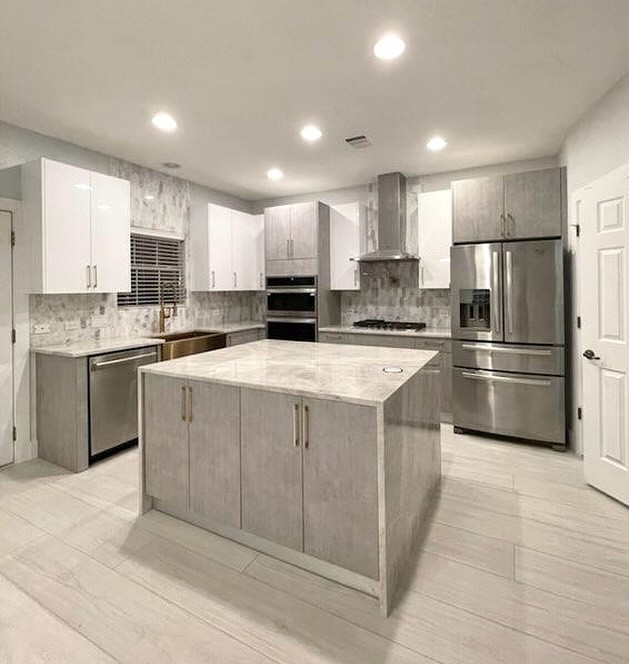
13. Try Slim Modern European Profiles
European-style cabinet profiles use thin lines, flat surfaces, and very little visual weight. They can make an older kitchen feel current because the look is crisp, quiet, and easy on the eye.
Why thinner lines feel newer
Some cabinet styles ask for attention. Slim European profiles do the opposite. They remove bulk, reduce shadows, and create a cleaner outline across the whole wall. If your kitchen feels dated because the cabinetry looks heavy, this change can shift the room fast.
Thin rails and narrow frames help the doors feel lighter. In some kitchens, that means slab fronts with almost no frame at all. In others, it means a very fine border that gives just enough detail without looking ornate. The result is modern, but not cold when the color and finish are chosen well.
Where this style works best
This look is strong in small kitchens because it cuts down visual noise. Fewer grooves and less trim mean your eye moves smoothly from one cabinet to the next. That simple flow can make a tight kitchen feel wider. It also works well in open-plan homes where the kitchen is always visible from the living area. The cleaner the cabinet face, the easier it blends into the larger room.
You can soften the style with warm paint, pale oak, or a muted stone backsplash. That keeps the kitchen from feeling too stark. I often think this is the sweet spot for people who want a fresh kitchen but do not want it to look severe or flashy.
Hardware, finish, and proportion
Handle choice matters here. Oversized traditional pulls can fight the look, so many homeowners choose edge pulls, slim bar pulls, or push-latch doors. Each option keeps the profile neat. If you want visible hardware, keep it narrow and simple so the cabinet shape stays in charge.
Pay attention to finish as well. A smooth matte surface usually looks stronger than a busy grain or a high-gloss sheen in everyday family kitchens. Proportion is the last piece. Thin cabinet details look best when the reveals are even and the spacing is precise. That neat rhythm is what gives this style its appeal. It feels deliberate, and that confidence shows across the whole kitchen.
Credit to @beyond_kitchencabinet
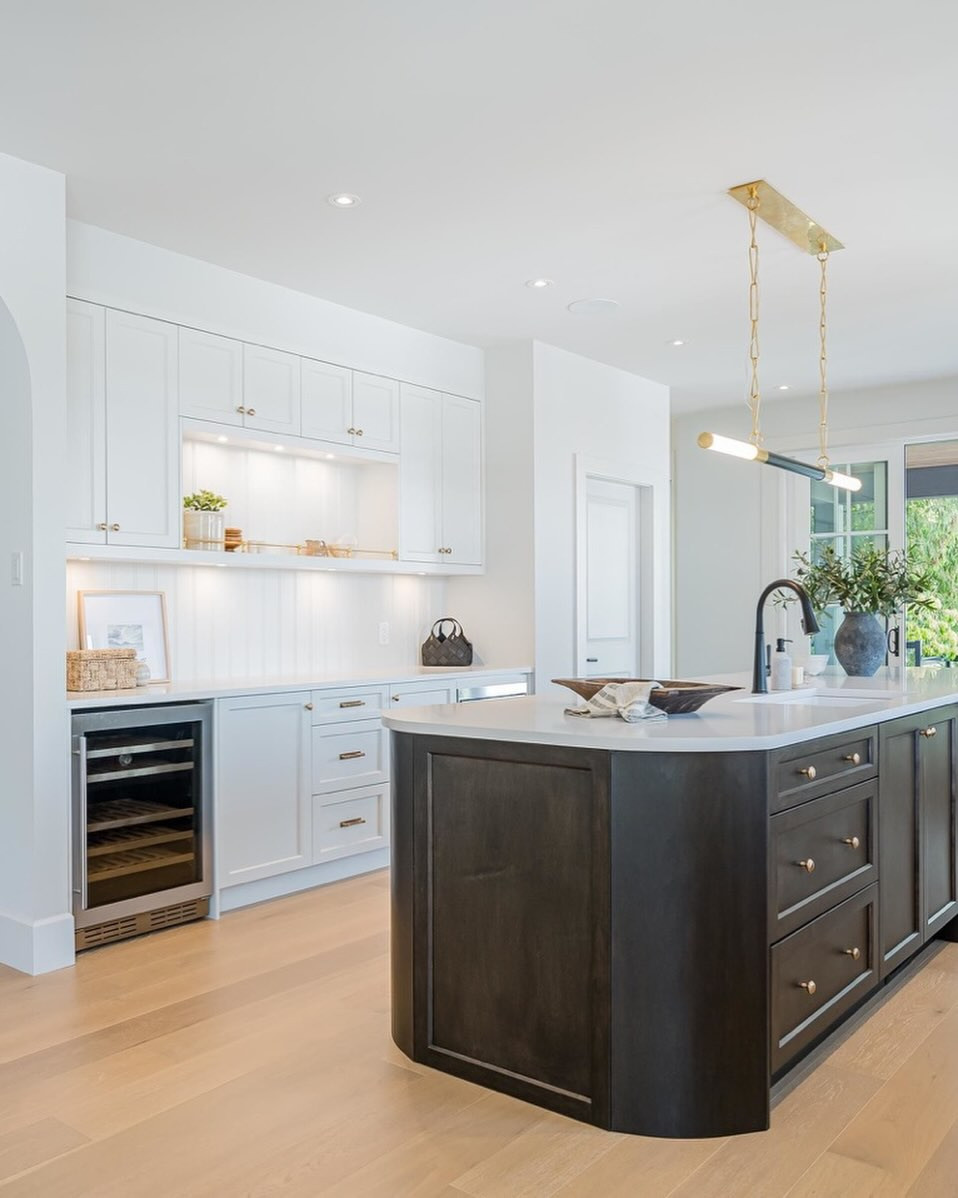
14. Highlight Corners with Curved Cabinetry
Curved cabinetry softens hard kitchen corners with rounded edges, bent end panels, or gently shaped cabinet fronts. It changes the feel of the room in a quiet way, making the layout look more custom and less boxy.
Less sharp, more inviting
Most kitchens are full of straight lines. That can look neat, but it can also feel stiff, especially in a room with many upper cabinets and a tight walkway. Curved corner cabinetry breaks that pattern. A rounded end cabinet or soft corner detail adds movement, and your eye notices the change right away.
This is one of those kitchen cabinet design ideas that looks subtle in photos but strong in person. The room feels easier to move through because the edges are gentler. In homes with children or narrow paths, that softer corner can also feel more comfortable in daily life.
Where curves make the biggest difference
Curves work especially well at the end of a cabinet run, near a kitchen island, or where the cabinetry turns a corner. Those are the spots where hard edges often stick out the most. A curved section smooths the transition and gives the kitchen a built-in look that standard box cabinets often miss.
You do not need many curved pieces to make the idea work. One rounded open end shelf, one bent island corner, or one soft upper cabinet can be enough. Too many curves can feel fussy, but one or two well-placed shapes bring balance. That is often all the room needs.
How to keep the look timeless
Use curves as an accent, not a theme. Pair them with simple cabinet doors so the shape stands out without competing with heavy trim or busy hardware. A painted finish usually shows the curve best, though some wood finishes can look beautiful when the grain wraps around the form.
Ask your cabinet maker how the corner will function before you commit. Some curved pieces are decorative, while others add useful shelves or better flow around a tight turn. I like designs that do both. When the shape solves a problem and adds beauty, it earns its place. That is what makes curved cabinetry feel special instead of trendy.
Credit to @sunshinecabinets
Conclusion
The best cabinet updates do more than change color or style. They change how your kitchen feels when you walk into it. Light can make cabinets glow, hidden storage can calm the room, slim profiles can freshen old layouts, and curved corners can soften the whole space.
You do not need to use all four ideas at once. Start with the one that fixes the biggest issue in your kitchen, then build from there. Save the ideas that match your space, compare them with your daily habits, and choose the detail that will keep looking good long after the project is done.