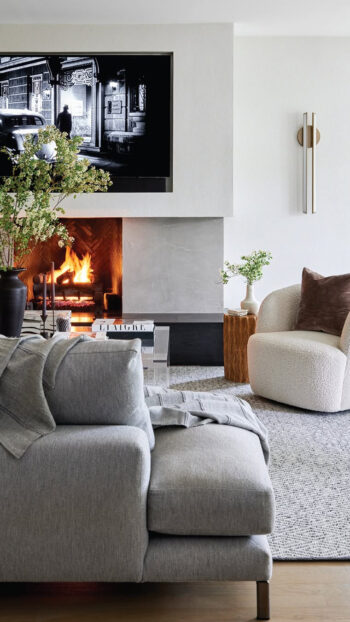
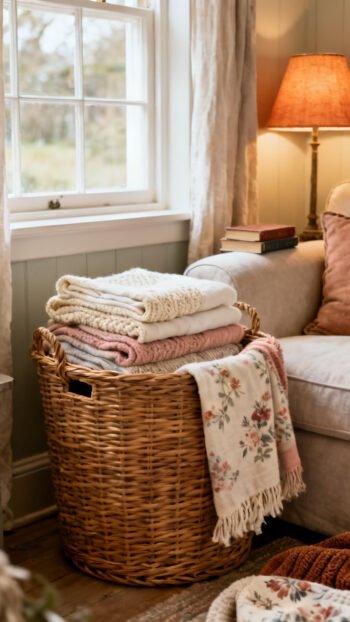
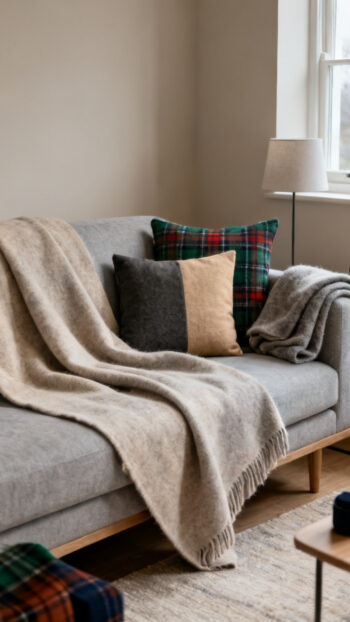
The best fireplace hearth depends on how you use the fireplace. Painted brick and tile give a warm refresh for the least work, limestone, marble, and soapstone suit a quieter and longer-lasting look, and concrete or river rock bring texture to simpler rooms. Whatever you choose, a hearth has to stay noncombustible and meet the size rules in your local building code.
The 12 fireplace hearth ideas below run from painted brick to zellige tile, then cover seating height, mantel pairing, and styling. Each one includes its drawbacks, so you can judge what a finish will ask of you after installation as well as how it looks on day one.
- Refreshing on a budget? Painted brick and checkerboard tile change the look without rebuilding the fireplace.
- Want a calm, lasting surface? Limestone, marble, and soapstone age well, though limestone and marble etch when acids touch them.
- Planning a seat? Aim for a top 17 to 19 inches high, the bench range in the ADA Standards, and keep a screen in front of the fire.
- Check the size rules first. The International Residential Code asks for a hearth extension at least 16 inches deep for openings under 6 square feet, and 20 inches for larger ones. Confirm with your local building department.
- Style with space. NFPA advises keeping anything that can burn at least 3 feet from a fireplace, and candle flames at least 12 inches from combustibles.
1. Painted Brick for Storybook Warmth
Painted brick is one of the lowest-cost ways to lighten a heavy fireplace, and the result depends mostly on preparation. The mortar joints stay visible, so the texture that makes brick feel grounded survives while the dark red-brown weight fades.
Why paint changes the mood
Raw red brick and soot-stained brick absorb light, which can make a living room feel darker than it is. A pale coat returns more window light and firelight to the room and turns the hearth into a quiet backdrop, leaving the rug, mantel, and furniture to carry the color.
The trade-off is permanence. Paint soaks into porous brick, and stripping it later is slow, messy work, so treat the choice as close to final. Test a small patch on a low, hidden brick first and look at it in both morning and evening light.
Choosing the paint color
Warm whites such as Sherwin-Williams Alabaster (SW 7008) or Benjamin Moore White Dove (OC-17) suit oak floors, creamy walls, and brass accents. A warm mushroom gray such as Farrow & Ball Mouse's Back (No. 40) is moodier and hides soot better, which helps where the fireplace burns wood often. Masonry paint can usually be tinted to match a swatch of these shades. On the brick closest to the firebox opening, use a paint labeled for high heat, because ordinary wall paint is not made for that exposure.
Prep that decides the result
Skipped prep is the usual reason painted brick looks patchy or shows stains through two coats. Work in this order:
- Dust it off. Brush and vacuum loose soot from the brick faces and mortar joints.
- Scrub it clean. Use a masonry-safe degreaser or a trisodium phosphate (TSP) substitute with a stiff nylon brush, wear gloves and eye protection, then rinse with clean water.
- Let it dry fully. Brick is porous, so allow a day or more and follow the paint maker's moisture guidance.
- Prime the surface. Apply a masonry primer made for porous materials and work it into the mortar lines with a brush.
- Paint two coats. Use a thick-nap roller (about 3/4 inch or more) for the faces and a brush for the joints, letting each coat dry as the label directs.

2. Limestone Slab With Old-World Calm
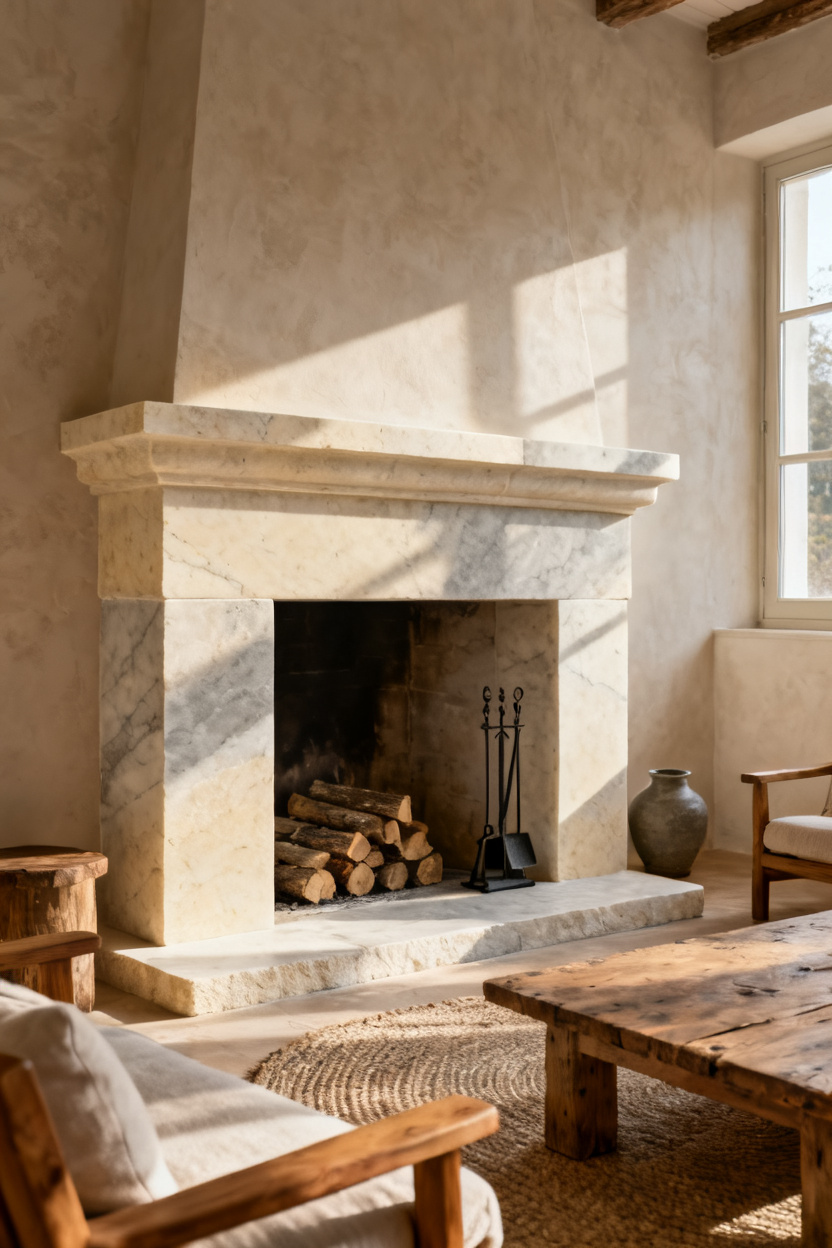
Limestone gives a hearth a muted, settled look in the cream-to-pale-gray range, so it pairs easily with natural wood, woven textures, and plaster walls. It looks architectural without calling attention to itself.
Its color also shifts with the light: pale and warm in the morning, deeper in evening shadow. That slow change gives a limestone hearth an old-house feel that flat, uniform materials rarely match.
Honed or polished?
Honed limestone has a matte, velvety surface and suits relaxed rooms. Polished limestone reflects more light and looks dressier, but it shows scratches and dull spots more clearly. Limestone is mostly calcium carbonate, so acids such as vinegar, lemon juice, and many bathroom cleaners can etch it. Wipe spills quickly and clean with a pH-neutral stone cleaner.
Slab edge or tile layout
A thick slab edge looks solid and gives a plain room a strong focal point, with fewer joints to clean. Thinner tiles lighten the look and usually cost less to buy and set, but they add joints, and joints collect ash. In a room already busy with beams or stone walls, tile keeps the hearth from feeling heavy. Either way, a penetrating sealer slows soot and oil stains on this relatively soft, porous stone, though it will not stop etching.
3. Checkerboard Tile That Feels Playful
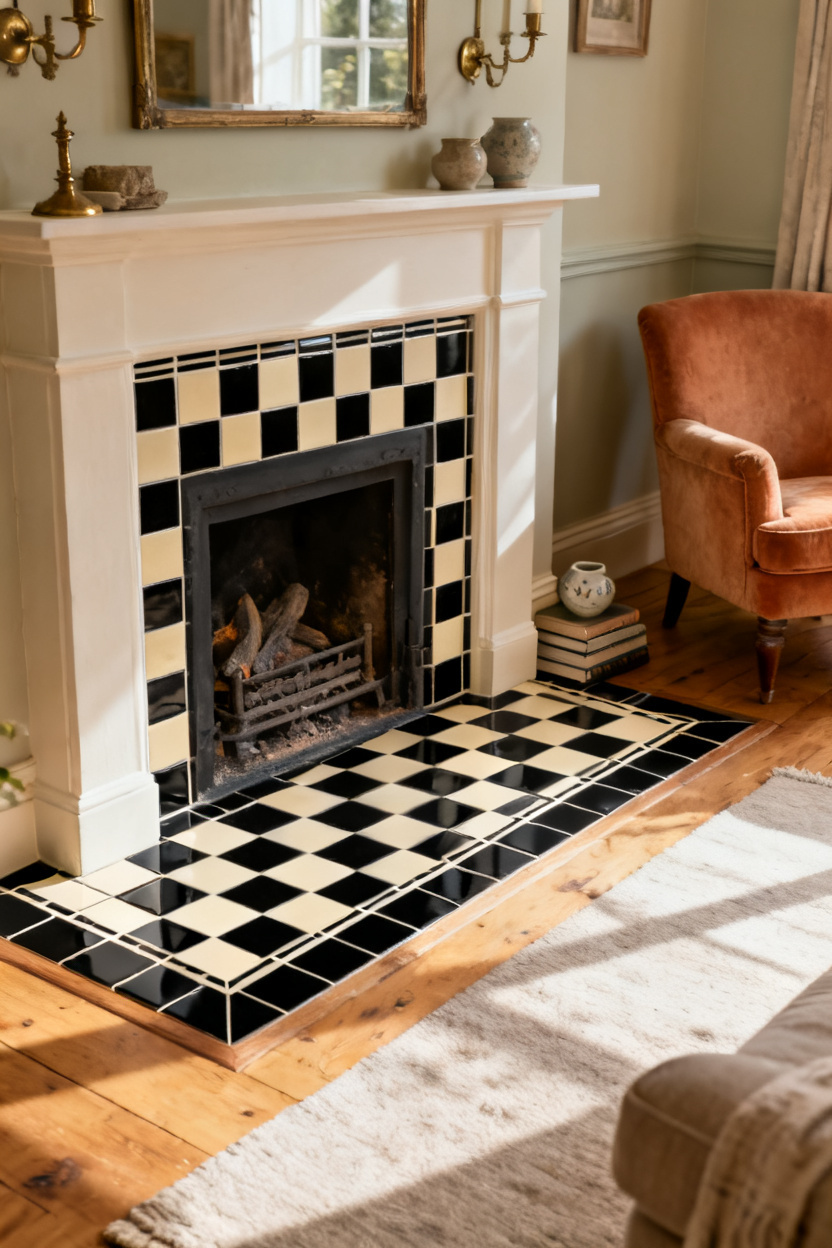
A checkerboard hearth works best when the squares are small enough to fit in whole rows. That detail matters more than the color pair, because cut tiles along an edge are what make a checkerboard look improvised.
Picking the color pair
Black and cream gives the strongest contrast and a crisp, graphic look. Terracotta and ivory is warmer and sits more comfortably with natural wood and antiques. Both suit cottages and older homes, but they set different moods: one sharp and tailored, the other soft and sunlit.
Getting the scale right
In a compact room, tiles in the 4- to 8-inch range keep the pattern readable, while oversized squares make the hearth loud and disconnected from the rest of the space. A practical example: the International Residential Code asks for a hearth extension at least 16 inches deep in front of many fireplace openings, and two rows of 8-inch tiles with narrow joints meet that depth with no cutting. Confirm the required depth with your local building department first.
Choose floor-rated porcelain or ceramic, and have it set in cement-based thinset rather than organic mastic, which can break down under heat. The trade-off is upkeep: grout lines catch soot, and light grout shows it fast. A mid-gray grout hides it better.
4. Zellige Surfaces With Candlelit Texture
Zellige is a handmade glazed terracotta tile with roots in Moroccan craft, and its appeal is variation: each tile takes light a little differently. The result is a surface that shimmers unevenly, especially under candles or firelight, and it adds interest to simple walls and furniture without becoming busy.
Where it works, and where it does not
Zellige suits vertical surfaces best: the surround, the wall above, or the fireplace face. Many makers sell it as a wall tile and limit floor use, so check the maker's rating before laying it on a hearth floor. The glaze can also chip at the edges, which is part of the look but worth knowing. If the hearth floor has to handle boots and logs, pair zellige on the surround with floor-rated stone or porcelain at the base.
Shape, shade, and grout
Square tiles keep the layout classic and let the glaze variation do the decorating. Lighter shades such as soft white, pale sand, or muted sage show the shifting glaze most clearly in a small room, while darker blues and greens read richer but flatten the variation. Because the edges are irregular, many zellige suppliers recommend narrow joints, roughly 1/16 to 1/8 inch, so the surface reads as one glowing field instead of a grid of patches. Expect slight color differences between boxes and order the full quantity at once.

5. Raised Hearth for Fireside Seating
A raised hearth works as seating when its top sits 17 to 19 inches above the floor. That is the bench-seat range in the ADA Standards (section 903.4), which is written for public spaces but makes a useful ergonomic benchmark at home. Lower than that and the hearth feels like a step; higher and feet dangle.
For a seat deep enough to hold a mug or a book, the same standard points to 20 to 24 inches of depth (section 903.3). Many fireplace walls cannot spare that much, and a shallower ledge still works for short sits.
Edges, caps, and surfaces
Brick caps add rough texture that suits cottages, farmhouses, and older homes. Smooth stone reads cleaner beside simple trim. Whichever material you use, ask for a slightly eased front edge: a sharp 90-degree corner is hard on the backs of legs and easy for children to bump.
Heat and layout trade-offs
Hearth surfaces stay warm while a fire burns and for a while afterward, so a raised hearth is best used as a seat when the fire is low or out, or from a comfortable distance. NFPA recommends a sturdy metal or heat-tempered glass screen in front of an open fireplace, and that screen also marks where seating should stop.
The idea also solves awkward layouts. A gap beside the fireplace becomes a perch, a low side table within reach turns it into a reading spot, and tools tucked to one side keep the seat clear.

6. River Rock for Woodland Charm
River rock works on a hearth when the stones vary only moderately in size. Two or three sizes create movement, while a single uniform size looks stiff and wild variation looks messy and traps debris.
Rounded or flat stones
Rounded stones give the strongest woodland mood: soft curves, deep shadow between them, and a relaxed cabin feel. Flat-topped stones make a steadier surface for kneeling and setting down a log carrier, so they suit busy rooms. A careful mix puts flatter pieces along the outer edge, where people stand and kneel, and rounder ones closer to the firebox.
Keeping ash out of the gaps
Cleaning is the main drawback. Deep joints trap ash and soot, so ask the mason for tight, nearly flush mortar joints and a surface that brushes clean. Sweep or vacuum ash dry, because wet wood ash can form a caustic alkaline paste and a damp mop makes the problem worse. Let ash cool fully first, since fire agencies warn that embers can stay hot for days, and use an ash-rated vacuum rather than a household one.

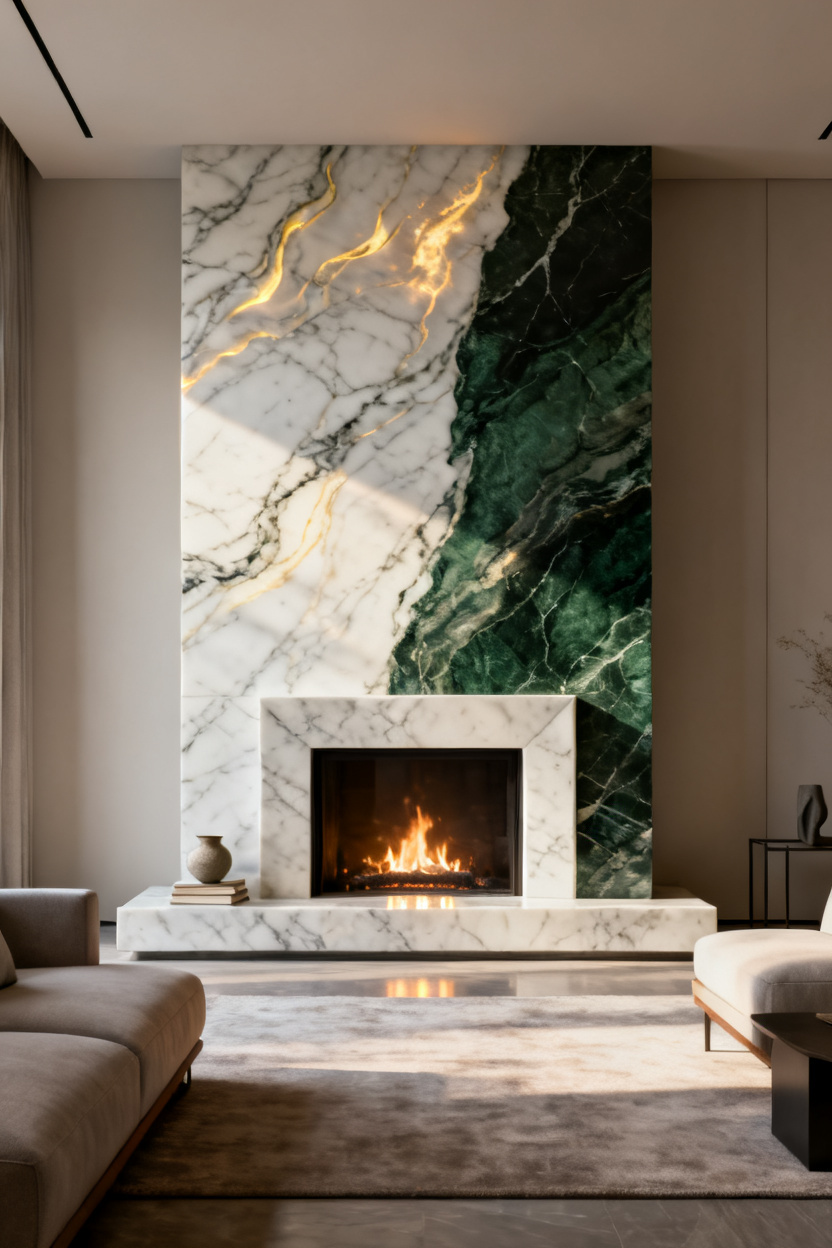
7. Marble Surround With Subtle Drama
Marble suits a hearth if you accept that it will change over time. It brings polish and veining, but it is calcium carbonate, so acids such as wine, citrus, and vinegar leave dull etch marks on the surface.
Light marble for an airy look
White marble with strong veining, such as Calacatta, reads bright and open, while Carrara has softer gray veining and a quieter feel. Both reflect firelight well in the evening and help a dark or crowded room breathe. Keep neighboring patterns calm so they do not compete with the stone.
Dark marble for a richer mood
Dark green marble, sold under names such as Verde Alpi, suits a library, sitting room, or older home with deep wood tones. It gives the firebox a strong frame without extra ornament, and it hides soot better than white stone.
Protecting the surface
The Marble Institute of America notes that sealers help resist staining but do not prevent etching. Honed marble hides etch marks better than polished marble, which makes it the easier choice for a hearth that sees ash and spills. Keep marble to the surround and hearth extension rather than the firebox interior, since direct flame can discolor or crack it.
8. Terracotta Tile With Rustic Glow
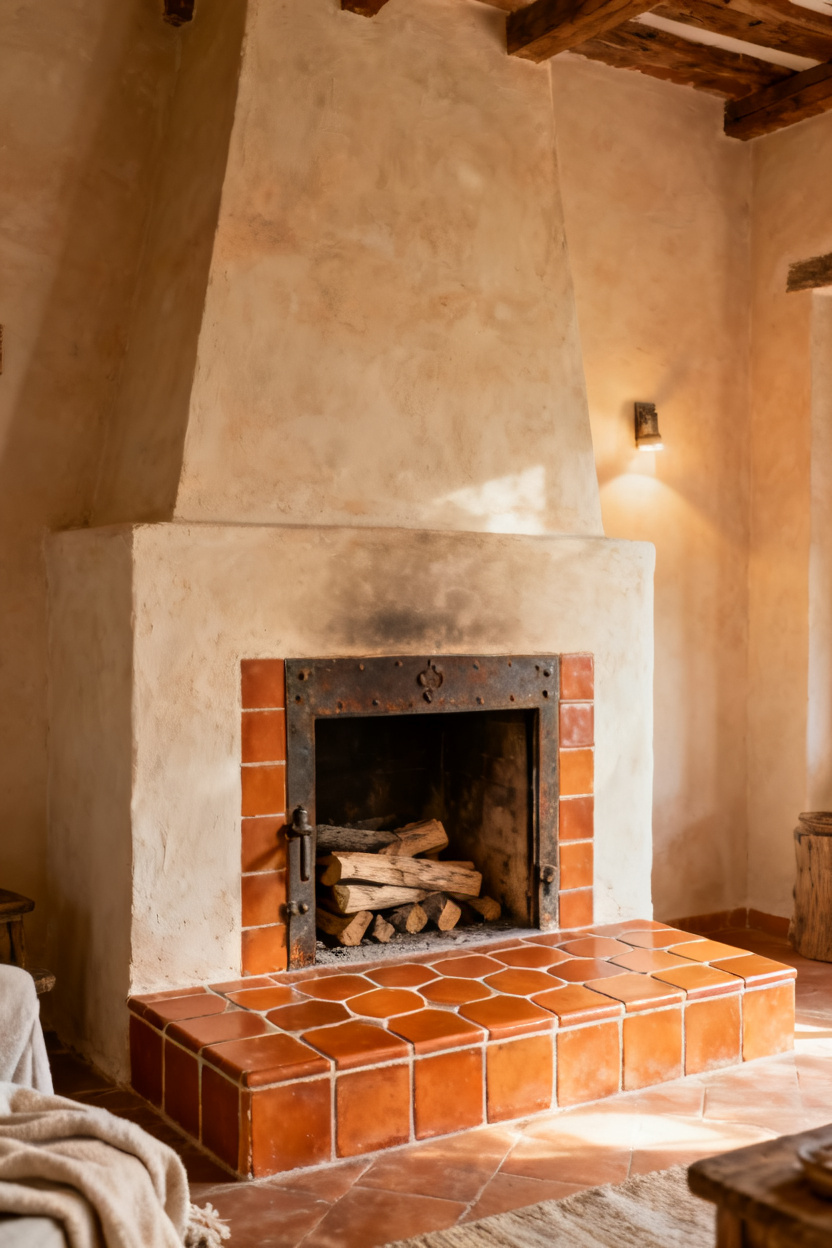
Unsealed terracotta tile absorbs ash, soot, and oils quickly, so sealing is the main task. Once protected, its clay tones carry natural warmth even when the fire is out and pair easily with wood, linen, plaster, and aged metal.
Shape and grout
Square tiles, including Saltillo-style pieces, feel classic and suit traditional or Spanish-style rooms. Hex tiles are more decorative and give a plain fireplace wall movement without a bold pattern. Grout color steers the effect: a close match keeps the surface calm, while a deeper line makes each tile stand out. Terracotta varies from batch to batch, so installers commonly advise ordering about 10 percent extra and buying it all at once.
A matte sealer that works hard
Terracotta is porous, so a penetrating sealer with a matte finish protects it without turning it glossy. Reapply the sealer when water stops beading on the surface. Expect some edge chipping over time, since terracotta is softer than porcelain. That wear is part of its character, and a rounded edge trim reduces it.
9. Mosaic Insets for Tiny Sparks
A mosaic inset can be as small as a single band. Because a hearth is a small surface, a narrow border or a panel just in front of the firebox adds detail without pulling attention from the fire.
Where the inset goes
A border tends to look neat and tailored, while a center panel feels more decorative, almost like a rug made of tile. A band about 2 to 4 inches wide, set a few inches in from the hearth edge, is a workable starting point because it reads as a frame. Where the surround already has pattern or strong color, keep to a slim band.
Patterns and colors that read well
The ceramic tile standard ANSI A137.1 generally defines mosaics as tiles with a face area under 6 square inches, so even 2-inch pieces qualify and small-scale patterns suit them: tiny stars, simple grids, diamonds, and soft geometric florals. Limit the palette to two or three tones, with one echoing the mantel, wall, or rug. Charcoal, warm cream, faded blue, muted green, and clay all work.
The mistake to avoid
Asking the inset to do too much is the common error. A loud pattern, five accent shades, and a bold surround chop the hearth into pieces. Mosaics also bring a practical trade-off: the small joints multiply, and they collect soot, so a mid-tone grout keeps them looking clean longer. Keep the surrounding material calm and let the mosaic act as the accent.

10. Concrete Hearth With Soft Minimalism
A concrete hearth stays calm and warm when three things are right: the finish, the edges, and the wall behind it.
Troweled or cast?
Troweled concrete is finished by hand, so it shows gentle movement and a softer, less perfect surface that sits well with old wood and woven textures. Cast concrete is smoother and more exact, which suits sharp lines and architectural rooms but reads cooler. Concrete is porous, so both finishes need a sealer to resist stains, and hairline cracks can appear over time. Treat them as part of the material rather than a defect.
Rounded edges and weight
Softening the corners changes the mood at once. Square, hard-cornered slabs look heavy at floor level, while eased or rounded edges look quieter and are kinder to anyone walking close to the fireplace. Weight is a practical issue too. Normal-weight concrete runs about 150 pounds per cubic foot, so a 2-inch-thick slab measuring 16 by 48 inches weighs roughly 130 pounds. That calls for a second pair of hands and a check that the floor structure can carry it.
Warming it up with the wall
A limewash wall behind the fireplace adds cloudy depth that keeps concrete from looking flat and cold. Limewash is made from slaked lime and bonds best to porous mineral surfaces such as brick, plaster, and unpainted concrete; it does not hold well over glossy paint without preparation. Warm gray, greige, mushroom, and chalky beige keep the hearth feeling settled, and a pale limewash bounces firelight softly at night.

11. Woodland Mantel Pairing and Hearth Balance
A hearth and mantel look right together when their visual weight is roughly equal. A thick rustic beam over a thin polished hearth looks top-heavy, and a massive stone slab under a slender mantel looks awkward. Matching tone, weight, and texture matters more than matching the material itself.
A natural pairing: soapstone and oak
Soapstone under a reclaimed oak beam shows how contrast can stay quiet. Soapstone is dense and non-porous, so it resists stains and acids, and its soft matte surface anchors the fireplace at floor level. The weathered oak above brings grain and age and draws the eye upward. The combination settles well into rooms with linen, leather, old brass, and muted paint colors.
High contrast or tone on tone
High contrast, such as a deep slate hearth under a pale mantel or light stone under a dark stained beam, turns the fireplace into a focal point. Tone on tone, such as sandy stone with a warm wood mantel in a close shade, blends the fireplace into the room and feels calmer.
Check the code, then check the balance
Mantels are subject to clearance rules. The International Residential Code (Chapter 10, Masonry Fireplaces) prohibits combustible material within 6 inches of a fireplace opening, and combustible trim within 12 inches of the opening may project no more than 1/8 inch for each inch of distance from it. A combustible mantel shelf 12 inches above the opening, for example, can project at most 1 1/2 inches. Factory-built fireplaces follow the manufacturer's listing, and local codes vary, so confirm with the building department or a certified chimney professional.
For a quick balance test, photograph the fireplace and switch the image to black and white. If one half looks much darker or heavier than the other, adjust the finish or proportion of whichever piece dominates.

12. Layered Styling Around the Hearth
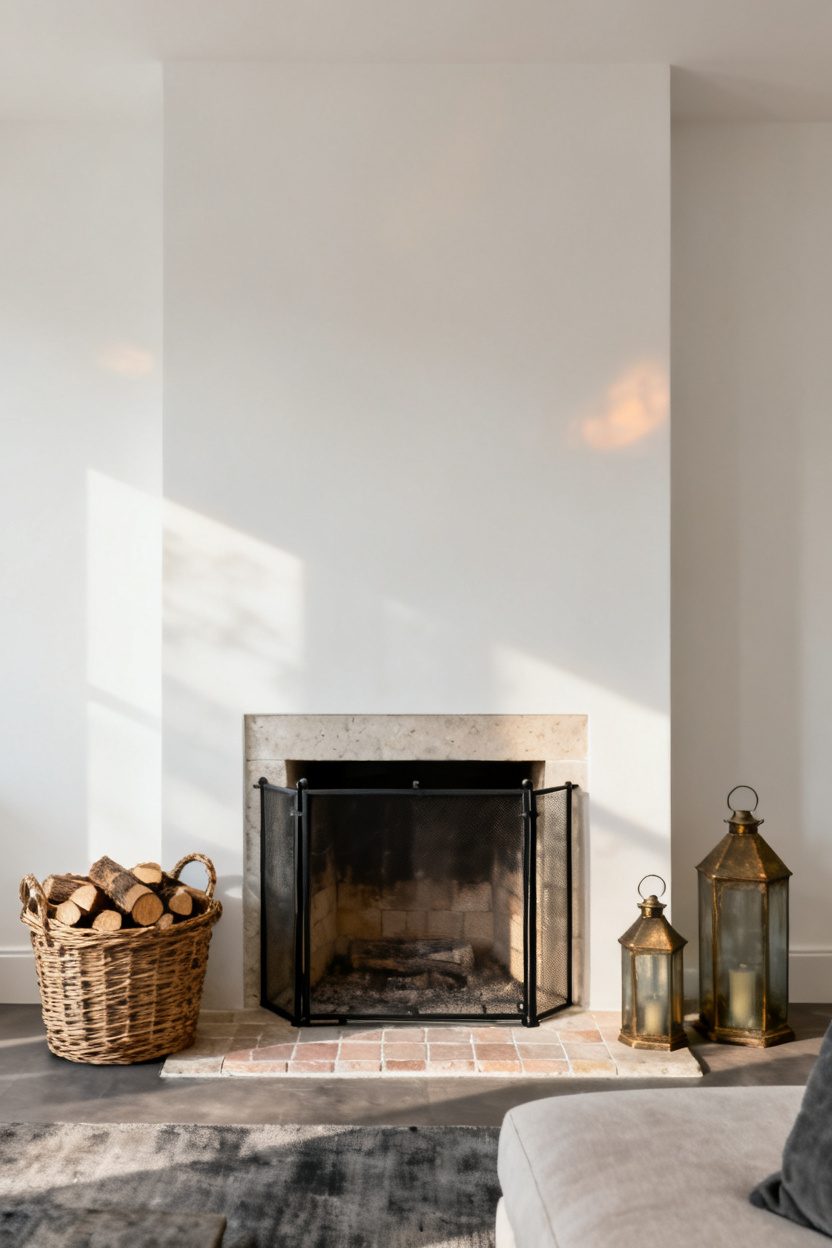
Style a hearth with three pieces and plenty of space: a firewood basket, a pair of lanterns, and a fireplace screen. That trio adds texture, height, and structure without hiding the material underneath.
Placement and safety
Set the basket on one side and group the lanterns on the other so each side reads as one unit. The screen sits close to the firebox and should be wider and taller than the opening. NFPA advises keeping anything that can burn at least 3 feet from a fireplace, so a basket of wood, dried branches, and fabric belongs beyond that line while a fire burns. Candle flames should stay at least 12 inches from anything combustible, and flameless LED candles in the lanterns avoid the question near a hot hearth.
Avoiding clutter
Crowding is the most common error. Objects pressed against each other and against the opening make the hearth look cramped, especially when it is shallow. Leave a few inches between pieces so the hearth surface stays visible. Scale matters as well: a large basket beside tiny lanterns looks awkward, and several small accessories look fussier than one or two strong ones. Fewer, larger items keep the arrangement calm.
Finishes that echo the room
Black iron, warm wicker, aged brass, and smoky glass add depth without competing. If the hearth already has pattern or strong color, simplify the styling further. The goal is a hearth that looks complete with the fire off and attractive with it on.
Fireplace Hearth FAQ
How deep should a fireplace hearth be?
For a masonry fireplace, the International Residential Code (Chapter 10) requires a noncombustible hearth extension at least 16 inches in front of the opening and 8 inches beyond each side when the opening is under 6 square feet. For openings of 6 square feet or more, the minimums rise to 20 inches in front and 12 inches at each side. Factory-built fireplaces follow the manufacturer's listing, and local codes can differ, so confirm with your building department before ordering material.
Can you paint a brick hearth?
Yes, with preparation. Remove soot, apply a masonry primer, and use paint labeled for high heat close to the firebox opening. Painting brick is hard to reverse, so test a small patch first.
Which hearth material is easiest to keep clean?
Glazed porcelain or ceramic tile and sealed concrete wipe clean most easily, although grout lines still collect soot. Terracotta, limestone, marble, and rough river rock need more care because they absorb stains, etch under acids, or trap ash in gaps.
What height works for a seating hearth?
A top height of 17 to 19 inches matches the bench-seat range in the ADA Standards (section 903.4). Surfaces near an active fire stay warm, so use a screen and keep children and pets back until the fire has died down and the hearth has cooled.
How close can decor sit to a fireplace?
NFPA advises keeping anything that can burn at least 3 feet from a fireplace and other heating equipment, and candle flames at least 12 inches from combustible items. Use a sturdy metal or heat-tempered glass screen in front of an open fire.
How often should a fireplace be inspected?
NFPA 211, the standard for chimneys, fireplaces, and vents, calls for an inspection at least once a year. A certified chimney professional can also tell you whether a planned hearth change affects clearances or the firebox.
Conclusion
The best hearth is the one that fits how the fireplace is used and how much upkeep you will accept. Painted brick and checkerboard tile suit a low-effort refresh. Limestone, marble, and soapstone suit a long-lasting calm, with acid care in mind. Concrete, river rock, and mosaics bring texture, provided you plan for sealing, weight, and cleaning.
Before choosing, check three things: the hearth size and clearances in your local code, the maker's heat and floor ratings for the material, and the scale of any pattern against your room. Then change one detail first, such as the finish, the edge, or the styling, and judge the effect in both daylight and firelight.