You do not need years of practice to make crochet pieces that look polished, giftable, and honestly a little impressive. These 10 ideas help you skip the flat, awkward beginner stage and start with projects that feel soft, useful, and pretty from the first few rows.
Think creamy cotton dishcloths with crisp edges, thick scarves that drape like something from a cozy winter shop, and simple beanies that look neat in wooly oatmeal, charcoal, or dusty rose. The stitches stay easy, but the finished look feels richer, fuller, and far more skilled.
That is the fun of this list. You get 10 beginner-friendly patterns that build confidence fast, use simple shapes, and still give you that satisfying “I made this?” feeling with every project.
1. Straight-Line Scarves for Fast Wins
Why this project feels so rewarding
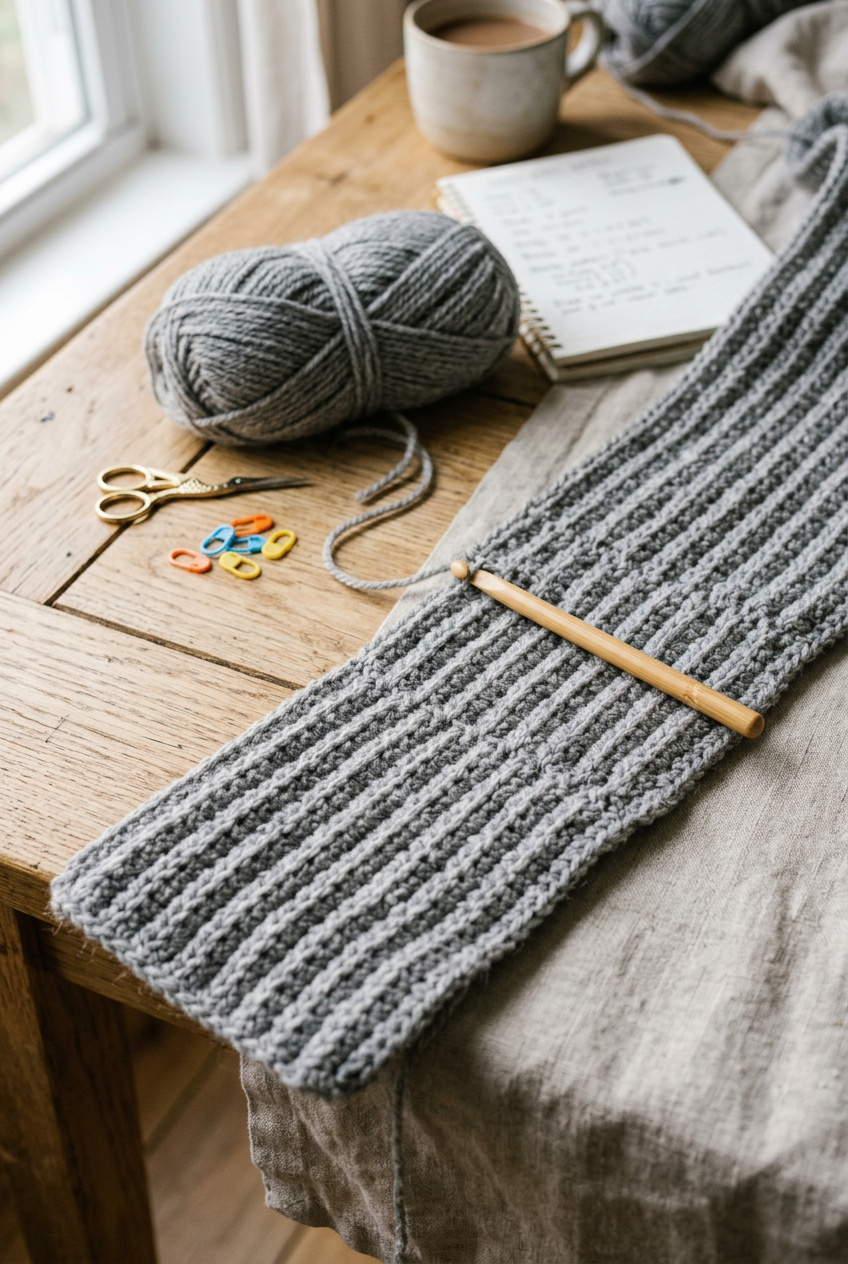
A straight scarf is one of the best places to start because the shape stays simple and the rhythm is easy to follow. You work in rows, you see your progress fast, and you do not have to fight with shaping, tricky counting, or confusing construction. That steady pace matters when you are new. It gives you room to focus on holding the yarn, keeping your stitches even, and learning how a pattern repeats. A beginner scarf can still look refined, especially when you pick a stitch with gentle texture, such as half double crochet or a simple ribbed pattern made by working into the back loop. The result looks far more detailed than the skill it asks from you.
Scarves hold the first spot on my list for a practical reason: they are forgiving. If your edges wobble a little at first, soft yarn and a light block can smooth out much of the look. You also get a piece you will actually use. A long scarf in cream, forest green, or heather gray feels classic, and it can look shop-bought when the stitch pattern stays clean and the yarn has a bit of loft. That early win builds real confidence.
Simple stitches that look polished
The smartest beginner patterns use repetition in a way that creates texture without extra stress. A row of single crochet followed by a row of half double crochet can make a subtle striped surface that catches the light and looks planned. Ribbing made with back-loop stitches gives a scarf that cozy, folded look people often think takes advanced skill. It does not. You are repeating the same motion and letting the yarn do part of the visual work.
Color choice helps just as much as stitch choice. Solid shades often show texture better than loud prints, so your scarf looks neater and more intentional. If you want more interest, a soft variegated yarn can add depth without asking you to change colors by hand. Keep your starting chain a little looser than you think you need, count every few rows, and let the pattern settle into your hands. Soon your straight-row scarf will look calm, even, and much more advanced than your first project has any right to be.
2. Dishcloths With Boutique Texture
A practical square that never looks plain
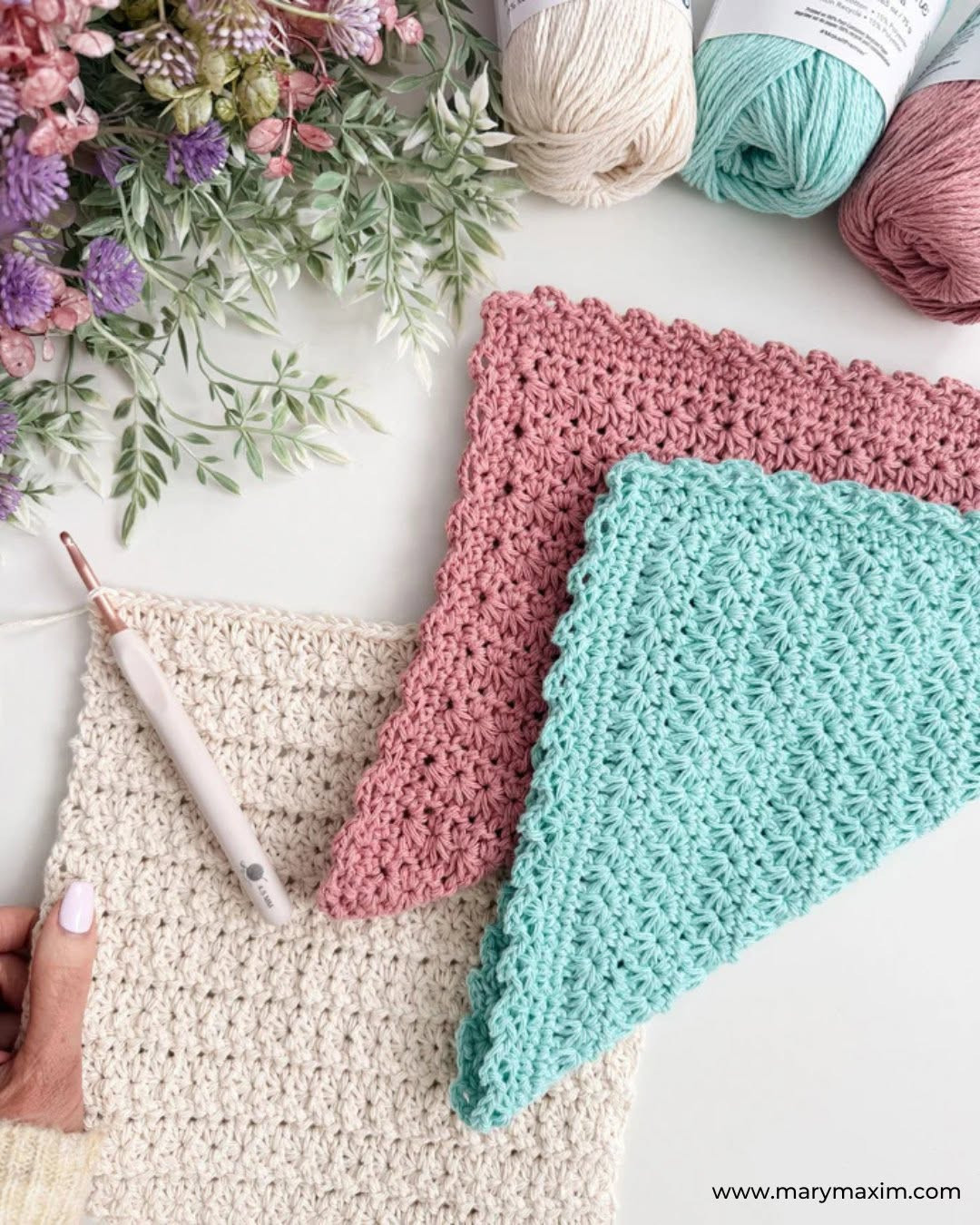
Dishcloths sound simple, and that is exactly why they work so well for beginners. The shape is just a square, the size is small enough to finish quickly, and the yarn is often affordable cotton that shows each stitch clearly. Yet a basic square does not have to look plain. With smart stitch placement, a dishcloth can look neat, thick, and expensive in the best way. A lightly textured pattern in soft white, sage, or muted blue has that clean kitchen feel people save on Pinterest all the time.
Because the project is small, you get to practice consistency without committing to a huge amount of yarn or time. That matters when you are still learning tension. If one cloth turns out a little tight and the next one feels smoother, you have learned something without wasting a week. The short finish time also gives you a fast sense of progress, and that is often what keeps a new crocheter going.
How texture does the heavy lifting
Many beginner dishcloth patterns lean on front-loop or back-loop work, simple clusters, or alternating rows to create raised lines and a soft waffle effect. These details sound fancy when you see the finished piece folded beside a sink or stacked in a gift basket, but the making stays approachable. Repetition is your friend here. Once you understand the rhythm, your hands settle in and the pattern almost memorizes itself.
The yarn choice changes the whole feel. Cotton has a crisp, matte look that makes edges appear sharper and stitch definition clearer. That is why even a modest pattern can come across as boutique. Add a very simple border, maybe one round of single crochet, and the cloth looks finished instead of rushed. Those little touches matter.
The small finish that changes everything
If you want a beginner project that teaches useful habits, a dishcloth does that quietly. You learn to count corners, keep sides straight, and notice when a stitch has gone missing. You also end up with something useful, and useful projects often feel more satisfying than decorative ones when you are starting out. A neat stack of finished cloths tends to feel more rewarding to a beginner than a half-finished complicated piece, because every completed square is visible proof of progress.
The real charm of textured dishcloths is that they look thoughtful with very little fuss. Tie two or three with ribbon, and they become an easy gift. Leave one by the sink, and your kitchen suddenly feels more cared for. That is a lot of payoff from a square.
3. Chunky Scarves That Look Intricate
Why bulky yarn makes beginners look skilled
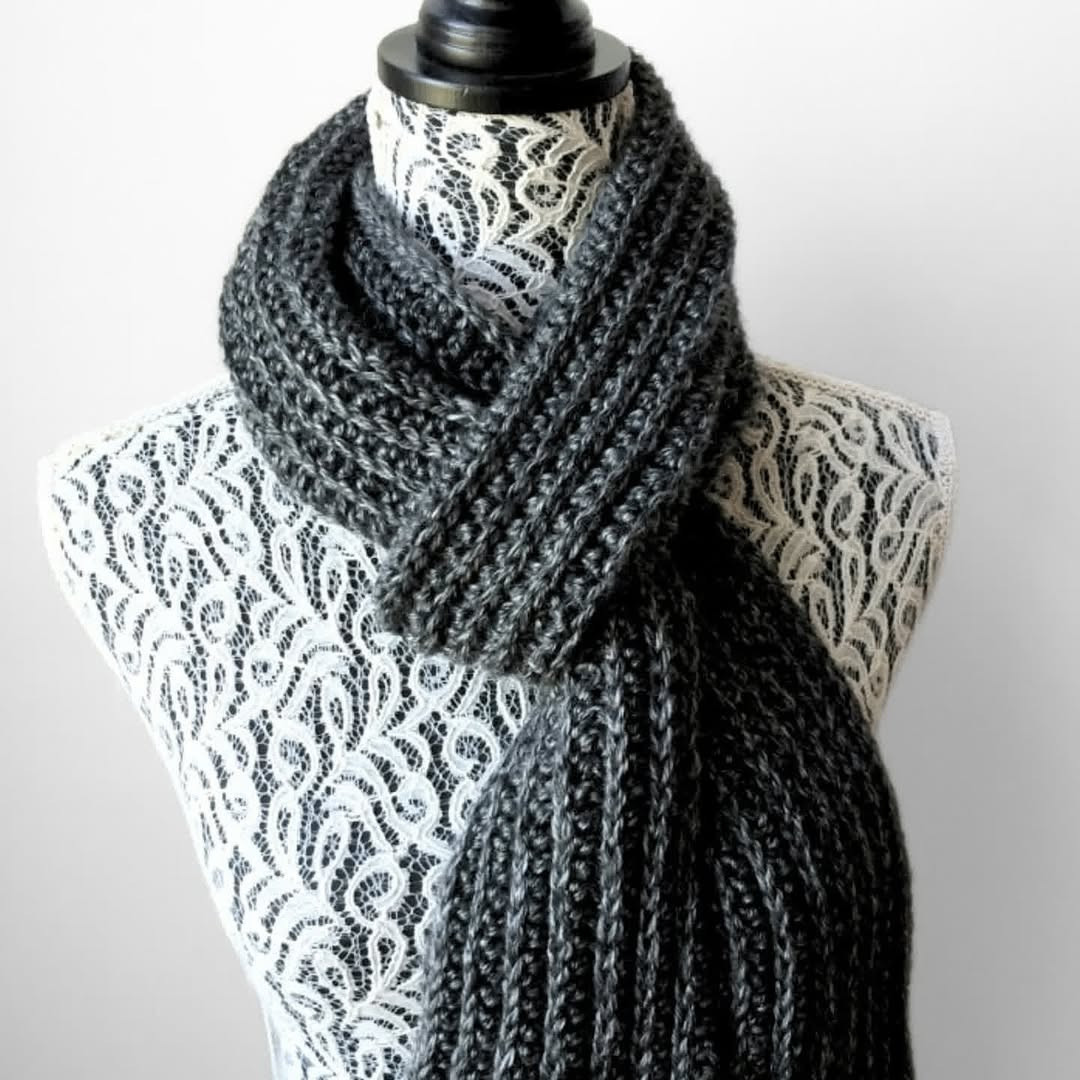
Chunky yarn is one of the easiest shortcuts in crochet. It fills space quickly, shows off deep texture, and turns a basic pattern into something dramatic. If you have ever seen a thick scarf with bold ridges and assumed it took real expertise, there is a good chance the secret was simply bulky yarn paired with a very repetitive stitch. That combination works in your favor from the first row. You finish faster, the scarf feels plush in your hands, and the final shape has that big, cozy look people usually connect with more advanced projects.
This kind of scarf is also easier on your patience. A thinner yarn can make progress feel slow, especially at the start when every row takes your full attention. Chunky yarn changes that. After one sitting, you can often hold up a piece that already drapes, folds, and looks like a real accessory. That quick progress keeps motivation high, which is a big deal when you are new.
Repetition creates the illusion of complexity
The best beginner-friendly chunky scarf patterns rely on one or two stitches repeated across the whole length. Moss stitch, simple ribbing, or an easy shell variation can create bold texture because the yarn is thick enough to show every line. The eye reads all that texture as detail. You just keep working the same sequence until the scarf reaches the length you like. It is calm work, and that calm often leads to neater results.
Color plays a part here too. Rich solids such as rust, ivory, black, or deep olive make the raised stitches stand out. A heavily speckled yarn can be fun, but it sometimes hides the pattern. If you want the scarf to look intricate, choose a shade that lets the stitch design show clearly. That is one reason handmade winter accessories in simple colors often look so polished.
How to keep the scarf soft, not stiff
One mistake beginners make with thick yarn is pulling too tightly. A chunky scarf should feel full and soft, not hard and board-like. Go up a hook size if your rows feel rigid, and pause after a few inches to see how the fabric bends. It should fold easily and feel comfortable against your neck. If it does, you are on the right track.
A well-made chunky scarf has presence without extra effort. It looks dramatic on a coat hook, feels warm right away, and makes a strong first project because the payoff is so visible. Few things build crochet confidence faster than finishing something large and beautiful before you have even learned the advanced stuff.
4. Beanies Built From Simple Rounds
The shape is easier than it looks
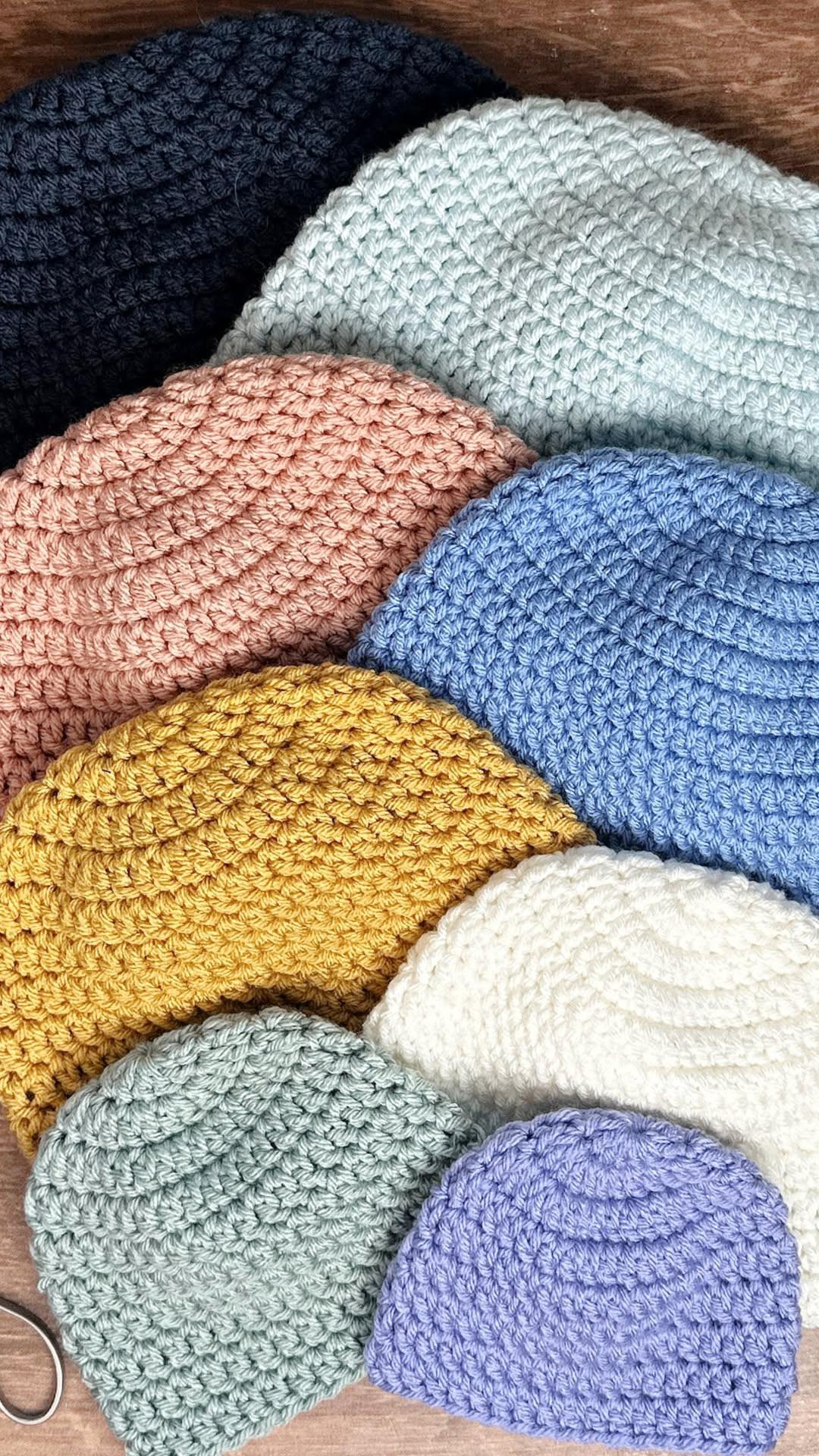
A beanie can seem harder than a scarf because it has shaping, and shaping sounds technical at first. In practice, many beginner hats are just rounds with steady increases at the top, followed by even rounds down the body. Once you see how the circle grows, the logic becomes clear. You are not solving a puzzle. You are repeating a pattern in a predictable way until the hat starts to form. That moment feels great, because a flat circle turning into a real beanie is one of the most satisfying changes in beginner crochet.
The finished hat also looks more advanced than it feels to make. A close, even fabric in a soft wool blend can look clean and fitted, especially in classic shades like black, oatmeal, navy, or blush. Add a folded brim, and the beanie instantly feels more structured. Many people assume a handmade hat takes much more skill than it actually does, which is why it makes such a strong confidence project.
Rounds, counting, and staying calm
The main skill here is paying attention to your stitch count. That sounds dry, but it becomes natural fast. Mark the first stitch of each round, count after increase rounds, and check the size against your head or a hat you already own. Small habits like that stop little mistakes from turning into major ones. A beginner does not need magic, just a method that keeps the shape on track.
If you are nervous about working in the round, start with a pattern that uses taller stitches and visible rounds. The structure is easier to read, and you can spot where each stitch should go. A common tip for first hats is to choose a light or medium color for the first attempt, because very dark yarn hides the stitch tops. You learn faster when you can clearly see what your hook is doing.
A hat you will actually wear
The best beginner beanies are simple enough to finish and stylish enough to leave the house with. That matters. If your first hat fits well and feels good, you will want to make another one. You can try a slouchy version next, or switch to a firmer beanie with a ribbed brim. The base skills stay similar, and each hat teaches you a little more about fit and drape.
A neat beginner beanie proves that shaping does not have to be scary. It can be direct, tidy, and surprisingly forgiving. Once you make one that fits, you stop seeing hats as advanced projects and start seeing them as quick, wearable wins.
5. Headbands With Twisted Style
The clever rectangle behind the look
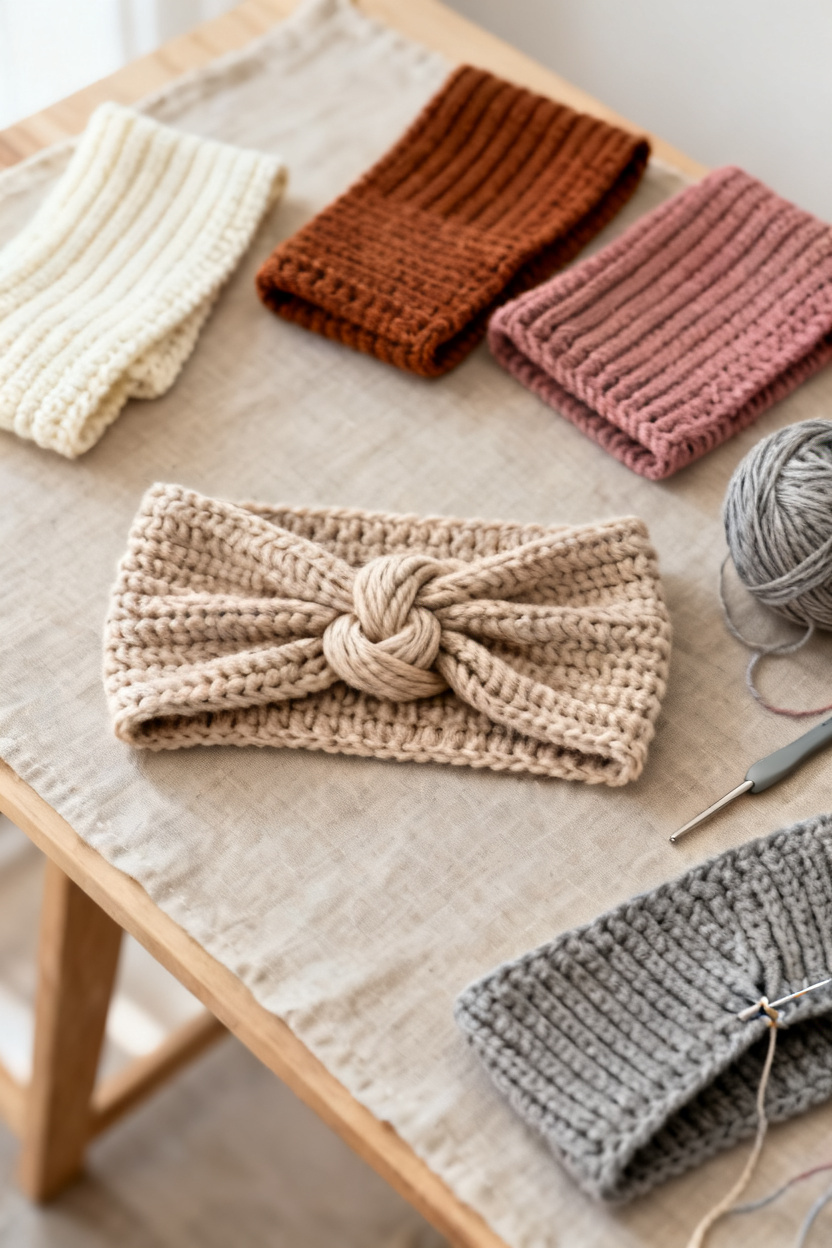
Twisted crochet headbands have a boutique feel that makes them look more complex than they are. Many of them start as a basic rectangle. You crochet to the width and length you need, then seam the ends in a way that creates that gathered twist at the front. The trick looks smart and stylish, but the process stays simple. For a beginner, that is a perfect mix. You get a project with shape and personality without needing difficult construction.
These headbands are also fast. Really fast. That speed makes them ideal if you want a satisfying finish in one evening or a low-pressure project between larger pieces. Soft yarn in cream, cinnamon, rose, or gray gives the headband a warm, handmade look, and textured stitches make the front twist stand out even more.
Stretch, texture, and a better fit
The best patterns use stitches that create a little give, so the headband sits snugly without feeling tight. Back-loop half double crochet is a favorite because it creates stretch and ribbing at the same time. Even simple rows of single crochet can work if the yarn has some bounce. The goal is comfort. A headband that looks pretty but pinches will not get worn, so a little attention to stretch makes a big difference.
Texture helps the project look finished. Raised rows, soft ribbing, or a subtle woven effect can turn a plain band into something that feels special. You do not need heavy decoration. The twist itself becomes the feature, and the stitch pattern supports it. That balance is part of why these pieces photograph so well and look so polished in real life.
A smart first gift project
Headbands are one of the easiest crochet gifts because sizing is flexible and the yarn amount is small. If you want to practice for friends, daughters, sisters, or teachers, this is an easy place to start. You can make several in different colors without spending much, and each one gives you more control over tension and seaming. Repeat practice on small, quick projects like these is where beginners tend to improve fastest.
A neat twisted headband gives you style, speed, and a useful lesson in construction all at once. It is proof that simple shapes can still look chic. Once you make one, you will start seeing how many “hard” crochet designs are really just clever basics put together well.
6. Blankets Made From Repetition
A good beginner blanket teaches you one of the best lessons in crochet: repeated rows can create something big, beautiful, and deeply satisfying. You do not need tricky shaping or fancy stitch changes to make a blanket that looks expensive. In fact, many of the most striking throws come from a steady rhythm and a strong texture, and that is why repetition works so well for new crocheters.
Why simple rows feel so impressive
Blankets look like major projects because they take up space, drape over a sofa, and become part of a room. That visual impact makes them seem harder than they are. Yet many beginner blanket patterns ask you to do the same row again and again, which gives you plenty of time to settle into the motion and catch mistakes early.
You also get freedom with size. If your stitch count is a little off at the edge, many textured blanket patterns still look lovely once the whole piece is finished. Projects like this reward consistency more than perfection, and that takes a lot of pressure off when you are still learning.
Textures that do the hard work
The easiest beginner blankets often use half double crochet, double crochet, or simple combinations of chain spaces and basic stitches. Those small moves create ridges, soft gaps, and visual lines that make the blanket look rich and layered. A moss stitch blanket is a great example. It looks neat and modern, but the pattern itself is very calm and repetitive.
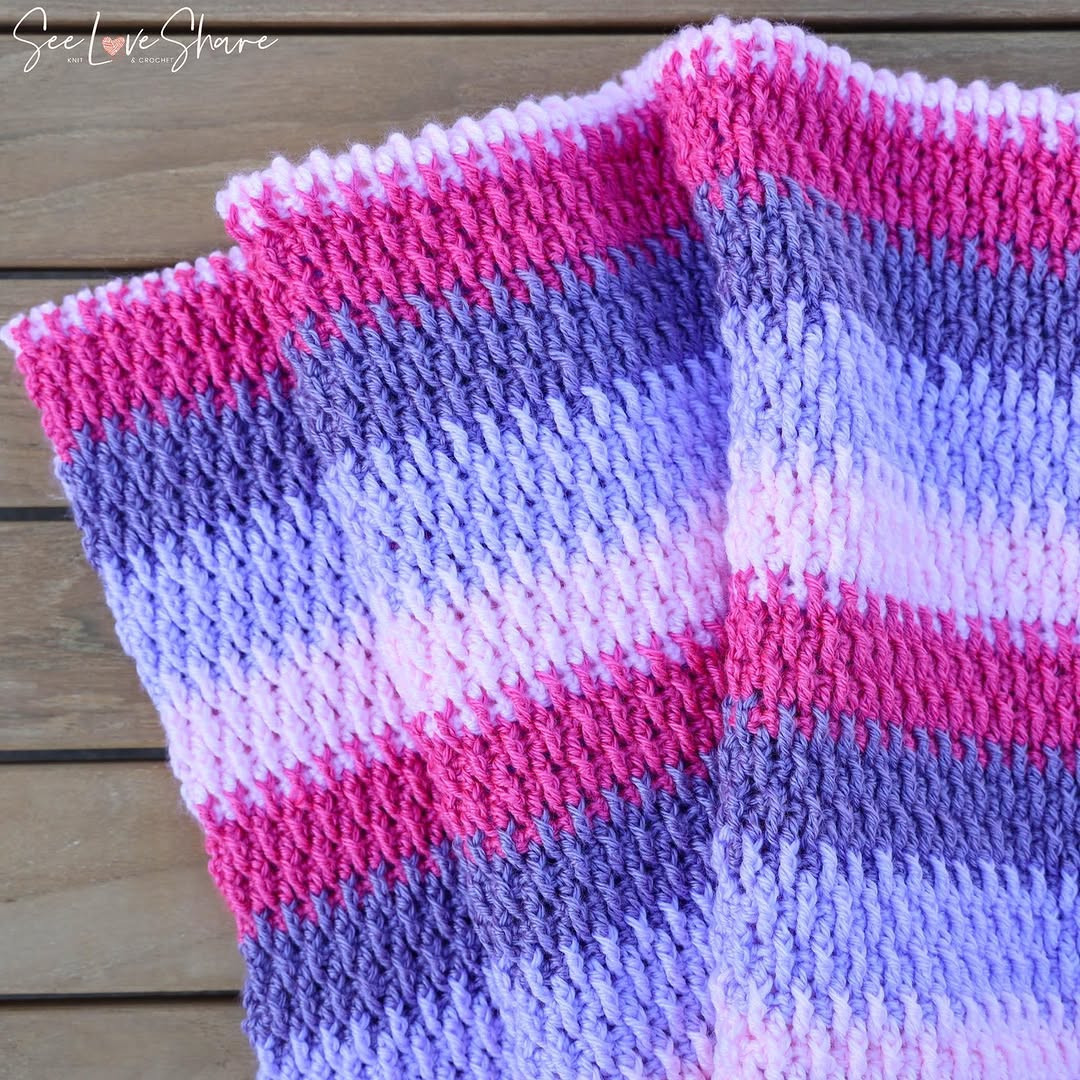
Striped blankets also help. Color changes can make a plain stitch pattern look custom and thoughtful, even if the stitch itself stays the same from start to finish. Wide stripes, cream and beige blocks, or soft rainbow bands all give a blanket personality without asking you to learn anything hard.
Where beginners usually do best
If you want a first blanket that feels manageable, start with baby blanket size or lap blanket size. You still get the satisfaction of finishing a real blanket, but the total row count feels less overwhelming. That smaller scale also helps you see progress sooner, which keeps your motivation strong.
Choose smooth yarn in a light or medium shade so you can see your stitches clearly. Dark fuzzy yarn can hide mistakes, but it also hides the stitch shape you are trying to learn. A simple border at the end, even just one round of single crochet, gives the blanket a clean finish and makes the whole project look more planned from the start.
7. Market Bags With Clean Structure
A crochet market bag feels useful right away. You can carry produce, books, yarn, or a quick grocery run inside it, and the shape looks neat and modern when it is done well. Many beginner patterns rely on basic increases, easy open spaces, and sturdy handles, so the finished market bag looks much more advanced than the actual steps behind it.
Why the shape looks smarter than it is
Part of the charm comes from structure. A flat base, a slightly widening body, and matching handles give the bag a crisp outline that reads as polished. Those details sound advanced, but they usually come from very simple moves, such as adding a few stitches at set points or working straightforward rows before joining the sides.
You do not need dense, complicated stitch work to make a bag feel special. Openwork does a lot of visual lifting here. Chain spaces and rows of double crochet create that airy grocery-bag look people love on Instagram, and those spaces also help the project grow faster in your hands.
Good patterns for first tries
The easiest options are rectangle totes and round-bottom produce bags. A rectangle tote often starts as two plain panels or one folded panel, which keeps the math easy. A produce-style bag often begins with a simple circle and then moves into mesh rounds, so you learn one new shape without juggling too many other steps.
When choosing patterns for this list, bags stood out to me as especially beginner-friendly because a little stretch is part of the design. If your stitches are not perfectly even yet, the bag still works. Once you put something inside, the shape settles, the stitches open up, and the whole project often looks better in use than it did lying flat on the table.
Small details that make it feel finished
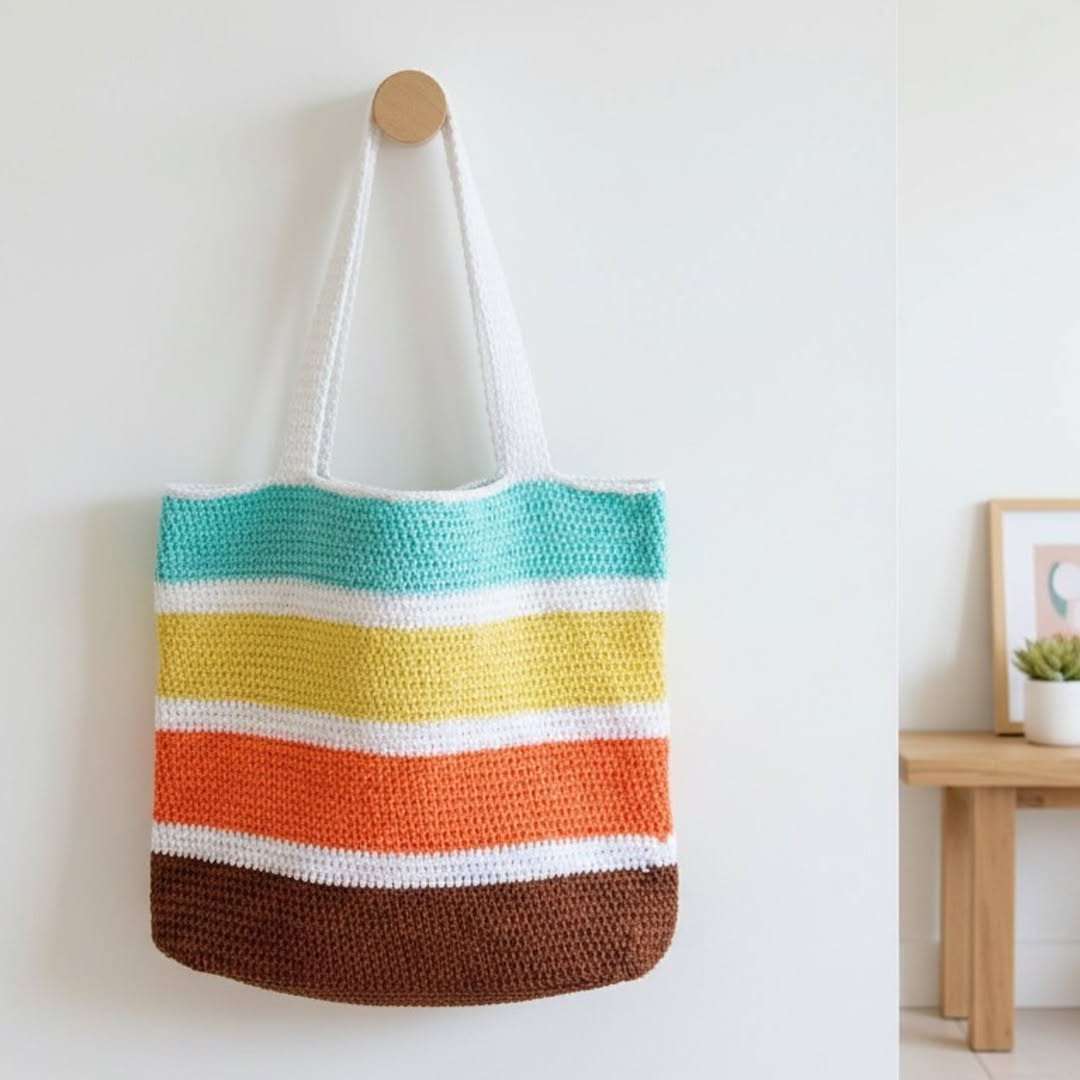
Yarn choice matters more than fancy technique. Cotton yarn helps the bag hold its shape and gives it a clean, practical feel. A striped body, a solid neutral handle, or a contrasting border can turn a very basic pattern into something that looks handmade in the best way.
One tip worth repeating: make the handles stronger than you think you need. Work them tightly, or add an extra reinforcing row if the pattern allows it. That one choice can make a beginner crochet bag feel reliable, and reliability is often what makes handmade items look truly well made.
8. Pillow Covers That Add Polish
Pillow covers are one of the smartest beginner crochet projects for home decor. They look tailored, stylish, and expensive, yet many are built from basic rectangles with a few finishing details. If you want a project that changes the look of a room without asking for difficult shaping, a pillow cover is a strong choice.
Why simple panels work so well
Most beginner pillow covers start with a front panel and a back panel, or with one long panel that folds into shape. That basic construction keeps the project calm. You can focus on stitch rhythm, tension, and texture instead of worrying about fitting sleeves, curves, or exact body measurements.
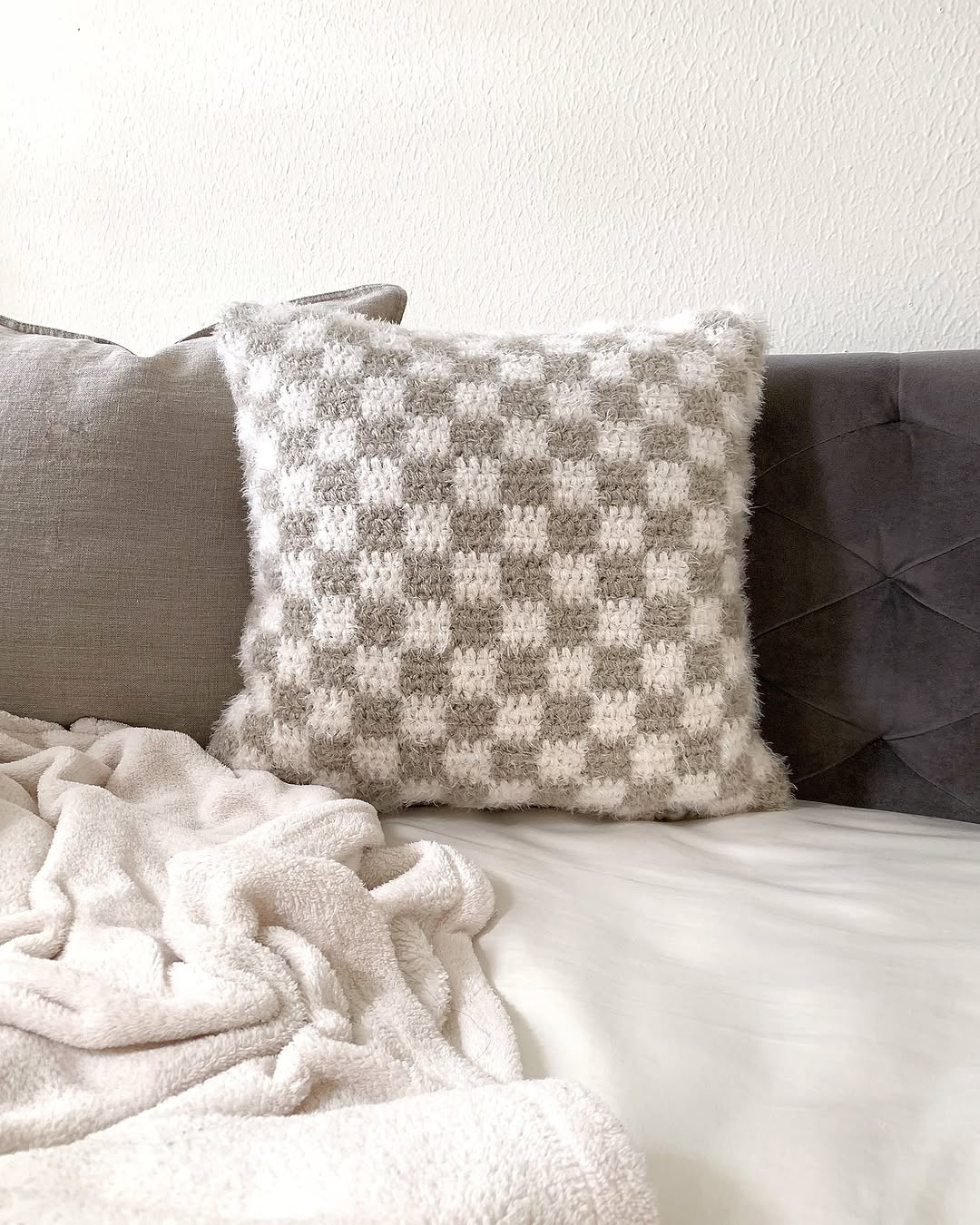
The payoff is huge because pillows live in plain sight. Put one textured crochet cover on a chair or bed, and it catches attention at once. Even a very easy stitch, repeated across a square panel, can look refined once it is wrapped around a cushion insert.
Texture makes the magic
This is where beginner crochet can really surprise you. Front-loop and back-loop work, simple bobble accents, or alternating rows of single and double crochet can create a surface that looks custom and layered. You do not need a hard stitch chart to get that effect. You just need a pattern with a clear repeat and enough patience to let the texture build.
Color also changes the mood. Soft cream and oatmeal shades feel classic and calm. Rust, olive, or charcoal can make the cover look more modern. Even a very plain pillow pattern can look high-end when the yarn color matches the room well.
Closures that look thoughtful
An envelope back is especially kind to beginners. It skips zippers and still gives you a tidy, removable cover. Buttons are another easy upgrade. Even a row of simple wooden buttons can make the whole piece feel more designed and less homemade in the rough sense of the word.
If you want the cleanest result, measure your pillow insert before you start and crochet the cover slightly smaller for a snug fit. That little bit of tension helps the finished pillow look full and crisp. Loose, saggy covers can make beautiful stitches fade into the background, but a fitted cover shows off every line and detail.
9. Simple Amigurumi With Big Charm
Amigurumi can look intimidating because the finished toys are so cute and expressive. Tiny ears, round heads, and sweet faces make people assume the pattern must be difficult. Many beginner-friendly designs are much simpler than they seem, though, especially when they use a few basic shapes and very little sewing. A small amigurumi project can teach you a lot without overwhelming you.
Start with shapes you can trust
The easiest amigurumi patterns rely on spheres, ovals, and short tubes. That means you usually work in rounds, increase to build the shape, then decrease to close it. Once you understand that rhythm, many animals and plush figures begin to feel related, almost like cousins built from the same base.
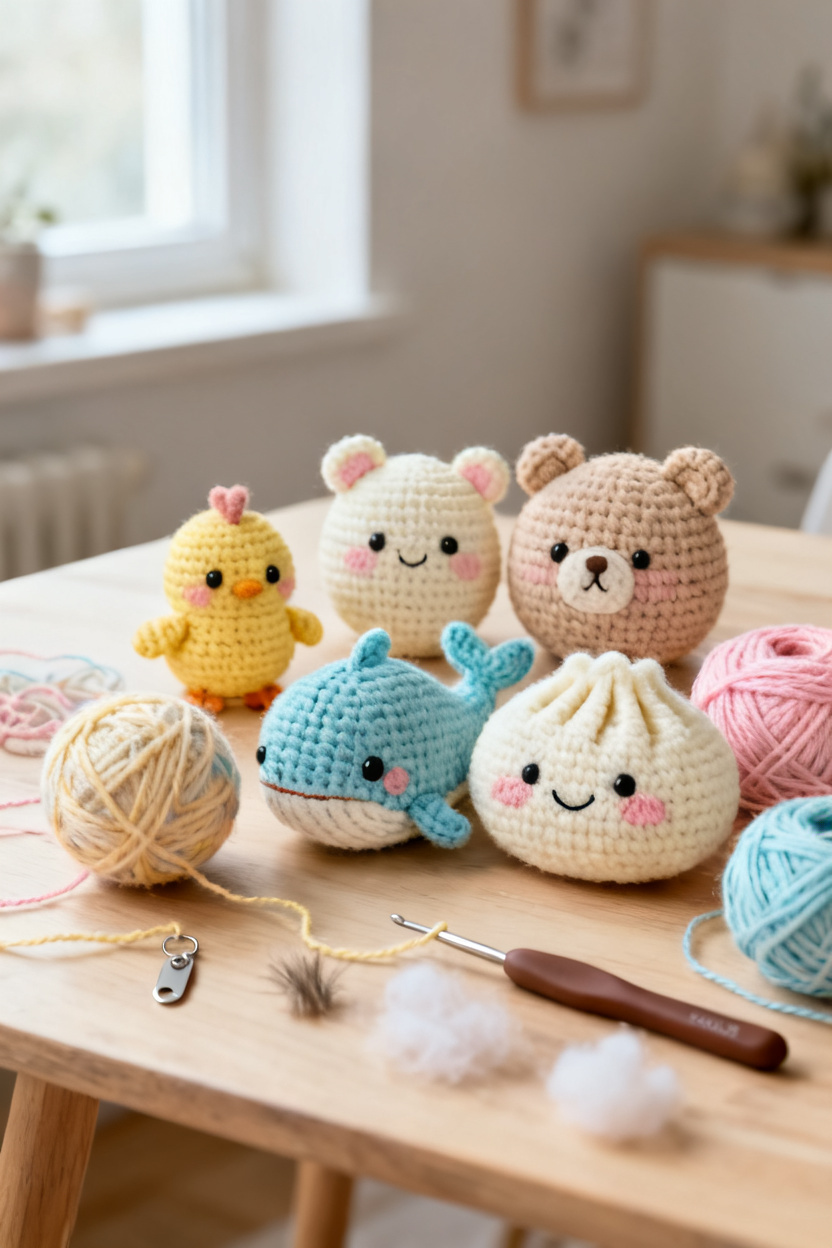
That is what makes these patterns so friendly for beginners. A chick, a whale, a tiny bear, or a smiling dumpling may look very different when finished, but the body often comes from the same simple idea. You learn one structure and use it again in a new way.
Less sewing, less stress
If you are new, look for patterns that attach limbs as you go or skip extra pieces altogether. A small octopus, blob-style bunny, or round ghost can deliver a lot of charm without asking you to sew on tiny arms and legs. That saves time, but it also avoids one of the biggest beginner frustrations: placing pieces evenly.
Faces matter here. Safety eyes, stitched smiles, and soft blush can bring a plain shape to life. This is the part that feels a bit magical. You can crochet a very basic ball, add two eyes and a tiny mouth, and suddenly it has personality.
How to keep the result neat
Tight stitches help stuffing stay hidden, so choose a hook slightly smaller than your yarn label suggests if the pattern allows it. That creates a firmer fabric and a cleaner shape. Count carefully, use a stitch marker, and stuff in small amounts instead of one large lump.
Beginners often think cute means complex, but amigurumi proves the opposite. The simpler the shape, the more the details stand out. A tiny plush with smooth curves and a balanced face often looks better than a more ambitious toy made with uneven shaping, so starting small is a smart move.
10. Cowls With Cozy Drape
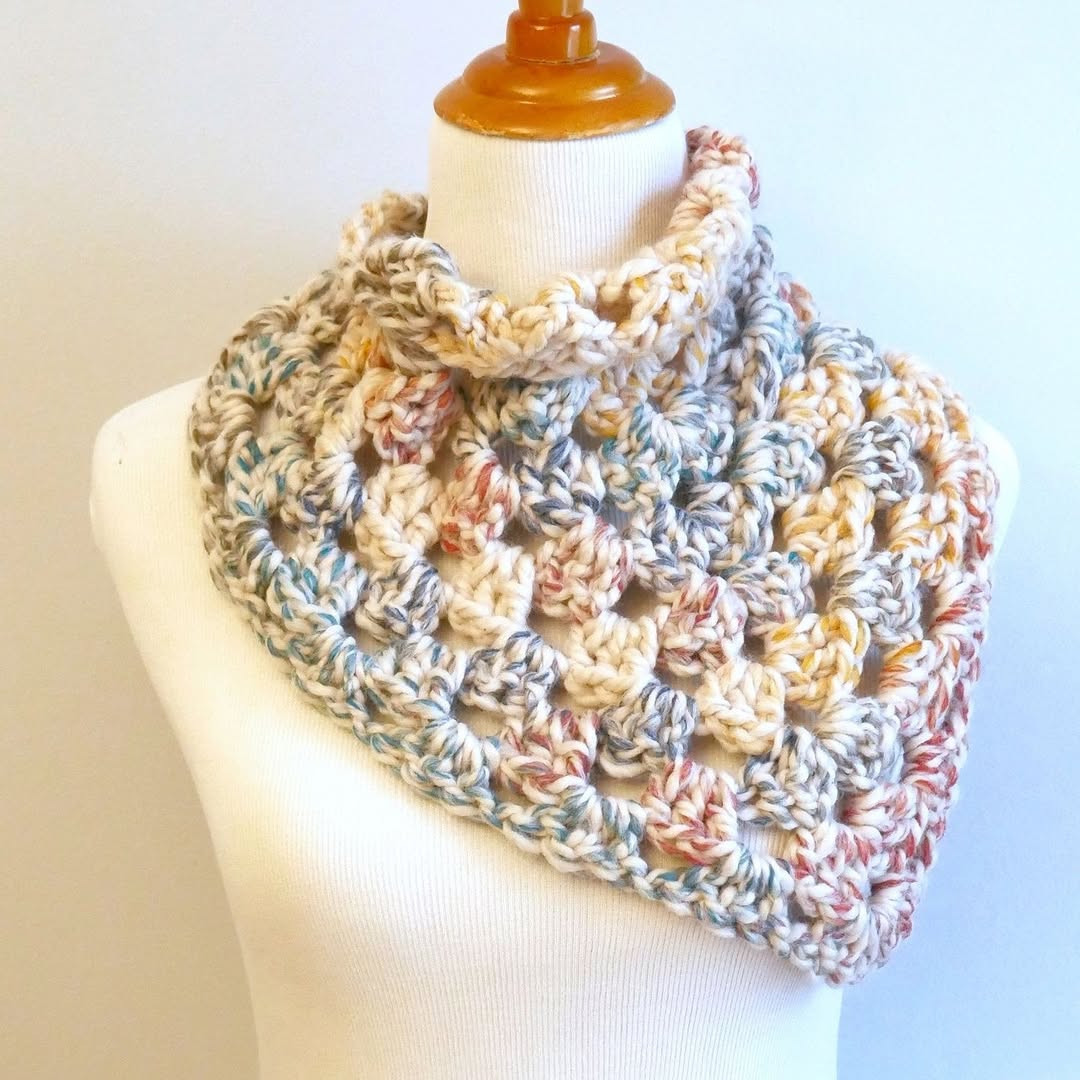
A cowl gives you the polished look of layered neckwear without the length and bulk of a full scarf. That makes it a smart beginner project. You get something wearable, stylish, and fast enough to finish before the excitement fades. Many easy cowl patterns use basic stitches in a tube or a flat piece joined at the end, so the finished cowl feels far more refined than the skill level suggests.
Why cowls look so put together
The shape does a lot of work for you. Because the cowl sits close to the neck, the fabric folds in soft waves and creates natural depth. Even simple half double crochet or double crochet can look rich once the piece starts to drape. Ribbed rows make that effect even stronger, especially in soft yarn with a little body.
You also do not need a perfect length the way you often do with a scarf. A cowl only needs enough width and depth to sit comfortably. That smaller scale helps beginners finish faster and make fewer counting mistakes.
Easy styles that still feel special
Infinity cowls are a great starting point because the construction is simple. You crochet a long rectangle and join the ends, or work in joined rounds from the start. A button cowl is another easy option. The buttons add style and shape, but the crochet itself can stay very basic.
Conclusion
Beginner crochet does not have to look beginner. A blanket, bag, pillow cover, plush toy, or cowl can all come from simple stitches and steady practice, yet still look beautiful enough to gift or keep on display. Start with the item that fits your life right now. If you want quick progress, try a cowl or market bag. If you want a cozy project to grow with, choose a blanket. Save the ideas that speak to you, pick a pattern with clear repeats, and let each finished piece build your confidence for the next one.