You want embroidery ideas that feel special, rich, and full of story. These 8 looks help you turn a simple thistle motif into art that feels Scottish, elegant, and easy to remember.
Think deep purple petals, misty green stems, soft linen, worn denim, and neat stitches that catch the light. These designs can help you choose the right project faster, avoid flat or dull layouts, and create pieces that look beautiful on hoops, clothes, and home decor.
Some ideas feel classic and formal. Others feel fresh, relaxed, and perfect for gifts. By the end, you will have 8 inspiring directions to try, each with its own mood, texture, and strong Scottish charm.
1. Thistle Hoop Art
A framed thistle design turns simple stitching into wall art with real Scottish character. This is one of the easiest ways to show off thistle embroidery because the hoop becomes part of the display. You get a finished piece that feels polished, even if the pattern itself stays simple.
Why this piece works so well
A thistle hoop gives you freedom. You can stitch one large bloom in rich purple and green, or build a fuller scene with leaves, buds, and a soft gray background that feels like a cool Highland morning. The round frame keeps the design tidy, which helps if you want a project that looks balanced without too much planning.
This idea also solves a common problem. Many embroidered pieces end up folded in drawers because they are lovely but hard to display. A hoop piece skips that issue. You can hang it on a wall, lean it on a shelf, or group it with tartan accents and pressed botanicals for a quiet Scottish look.
Two beautiful directions to try
One strong option is a single oversized thistle bloom with long stem lines and open space around it. That clean layout looks refined and modern, and it lets the thread color do the work. If you want a softer mood, use dusty lavender, sage, and cream instead of bright jewel tones.
The second direction feels more traditional. Add two smaller companion motifs, such as heather sprigs or a tiny knotwork border near the edge of the hoop. I like this style because it feels rooted and storied, as if the design belongs to an old family keepsake, even when you stitched it last week.
A choice that saves time
If you are short on time, start with a linen fabric in oatmeal or soft ivory. Those shades already give the design warmth, so you do not need a dense stitched background. Your thistle stands out faster, and the finished hoop feels textured without extra work.
Keep the outline light at first. Then build depth with darker purple at the base of each petal and lighter thread near the tips. That small shift adds shape and makes the bloom look fuller, which matters when the design is meant to hang on its own.

2. Linen Thistle Pillow
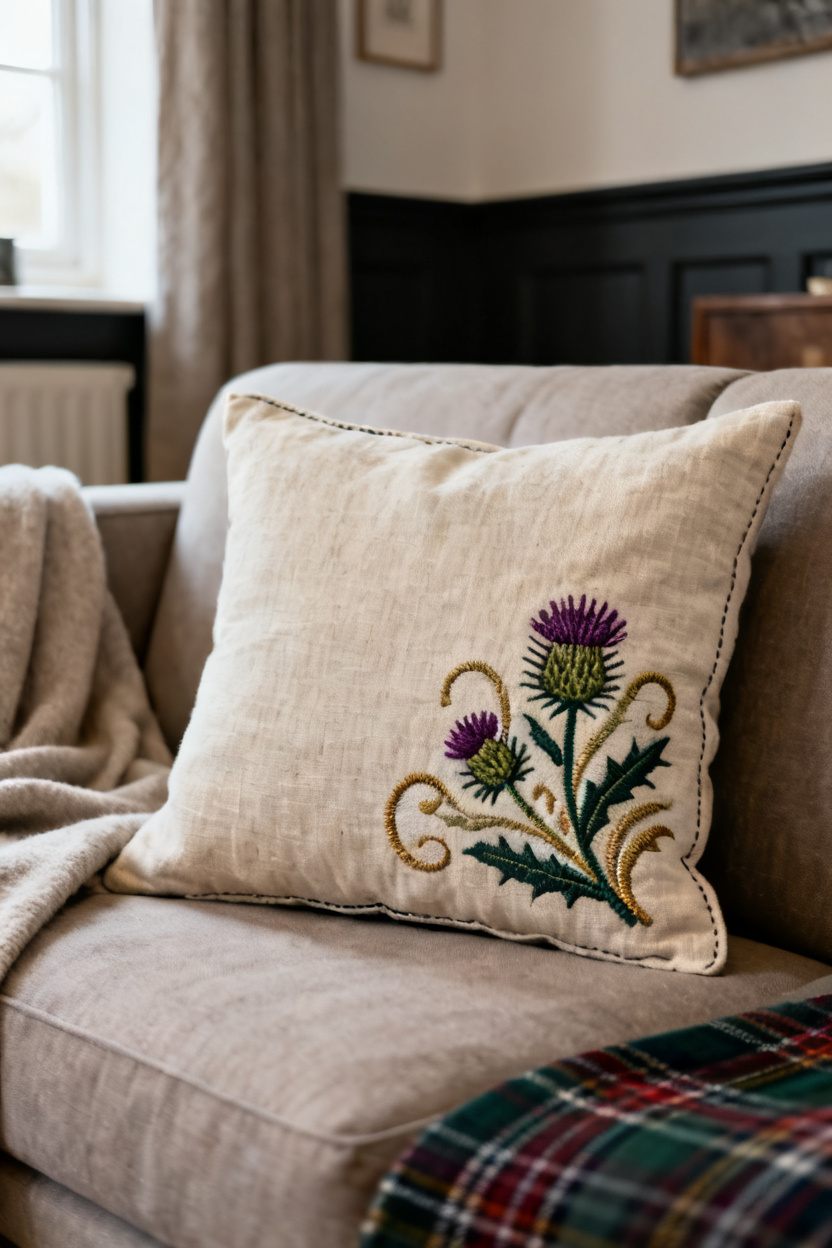
A thistle pillow brings Scottish flair into a room without making the space feel heavy or formal. If you want embroidery you can use every day, this idea has real value. It adds pattern, color, and meaning to a sofa, bench, or bed in a way that still feels calm and livable.
Soft texture, strong detail
Linen is a smart match for thistle embroidery because the fabric already has a natural, slightly rustic look. That texture pairs beautifully with the sharp, spiky shape of the flower. The contrast feels interesting right away, especially when you stitch in plum, olive, muted gold, or deep green.
A pillow also helps you scale your design. On a wall piece, tiny details matter more. On a cushion, you can go bolder with larger blooms, thicker stems, and a few repeating motifs across the front panel. This makes the project easier to see from across the room, and it gives your stitching more presence.
You do not have to place the thistle in the center. A centered floral cluster looks formal and stately, which works well in traditional rooms or gift pieces. Yet a corner design can feel more current. Place one thistle spray low on the pillow front, and let the empty space around it create a relaxed look.
I have always liked the off-center layout for modern homes. It feels less stiff, and it gives the fabric room to breathe. You still get the beauty of the motif, but the pillow looks styled rather than crowded.
Another idea is to stitch a pair of smaller thistles on each side of a seam or edge band. That creates a subtle, tailored effect. It works especially well if your room already has plaid throws, dark wood, or soft neutral upholstery.
Keeping it practical
Because a pillow gets handled often, think about thread weight and stitch density before you begin. Satin stitch looks rich, but heavy raised stitching on a high-use cushion can snag. A flatter mix of split stitch, stem stitch, and small filled areas usually holds up better over time.
Use a removable cover if you can. That simple choice makes the embroidered piece easier to clean and easier to protect. If the pillow is mainly for display, add fuller detail. If you know people will lean on it every day, keep the design a little cleaner and stronger.
3. Denim Thistle Jacket
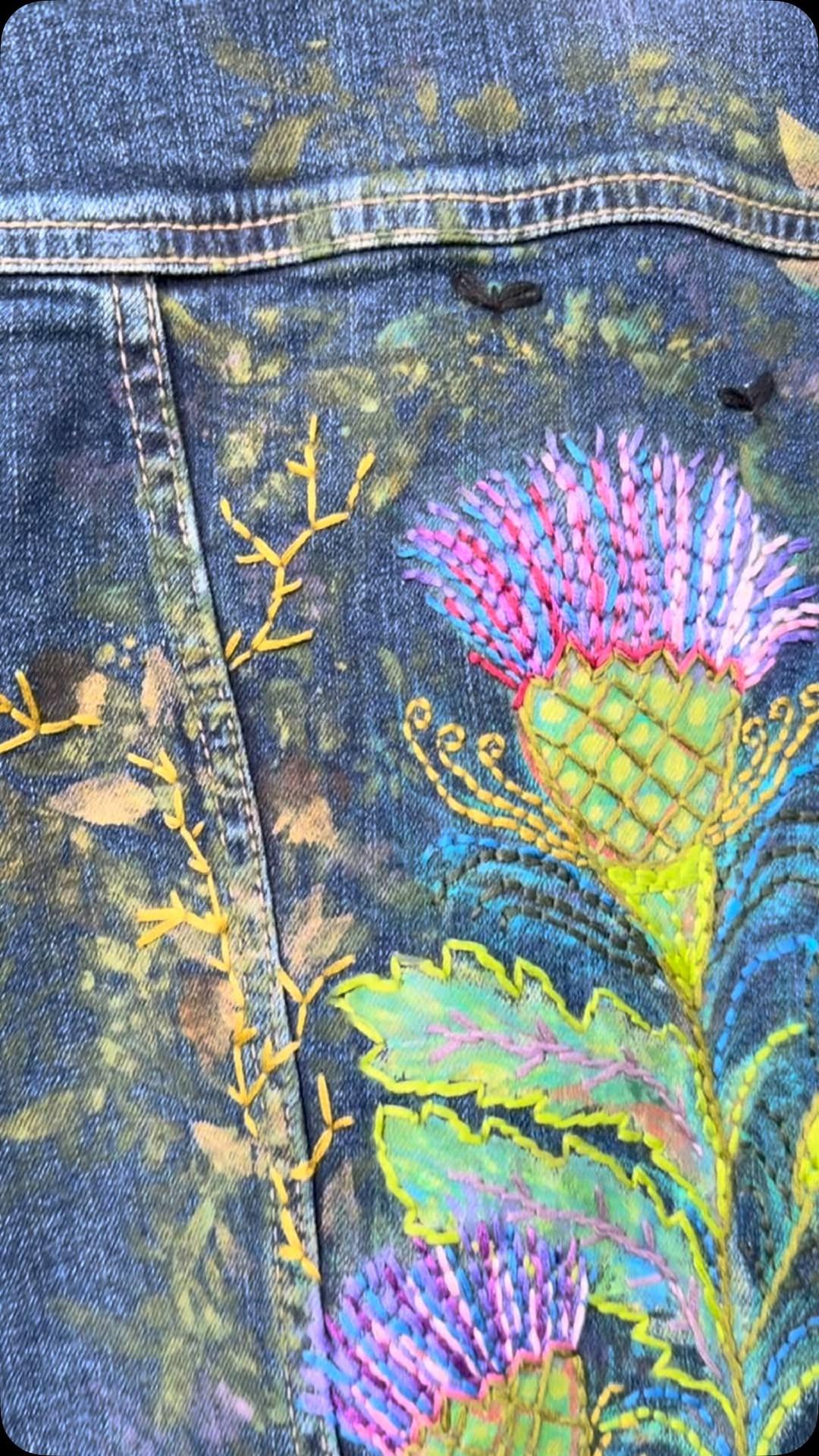
A stitched thistle on denim gives everyday clothes a personal, wearable Scottish accent. This idea works when you want your embroidery to move with you instead of staying at home. A jacket, shirt pocket, or back panel lets the thistle feel bold, modern, and full of life.
Where to place the design
Placement changes the whole mood. A small thistle on the chest or cuff feels subtle and easy to wear. A large spray across the back feels artistic and confident, especially on medium or dark blue denim where purple thread stands out clearly.
You can also use two smaller thistles on the shoulders for a balanced look. That choice has a bit more edge, and it works well if you like clothes with character. Searchable style matters here too, and looks like denim jacket embroidery or floral denim posts are common and easy to picture on social platforms.
Color choices that show up well
Denim needs thread colors with contrast. Soft lilac can disappear on darker jackets, so use deeper shades at the center of the flower. Plum, violet, moss green, and silver-gray all read clearly and still keep the Scottish feeling intact.
If you want a more weathered, vintage effect, choose faded tones rather than bright purple. They look beautiful on worn blue denim and feel less decorative, more lived in. This is a good route if you want the jacket to mix well with boots, black jeans, or simple white tees.
How to keep the fabric stable
Denim is sturdy, but large embroidery can pull if you rush the setup. Back the area with stabilizer before stitching, especially on the back panel. That helps the fabric stay flat and keeps the design from puckering around dense petals and long stems.
Work in sections and test your needle size first. Thick denim can make small stitches look uneven if the needle is too fine. A steady rhythm matters more than speed here, and the final result looks much cleaner.
A gift that feels personal
This project also makes a thoughtful gift. A thistle jacket can nod to family roots, a trip to Scotland, or simply a love of wild flowers with strong shapes. It feels custom in the best way, and people notice it because it does not look mass-made.
Keep the first version simple if clothing embroidery is new to you. One bloom, one stem, one small leaf cluster. That is often enough to make the jacket feel striking.
Credit to @ahjnaecollagebyclaudia
4. Thistle Table Runner
A stitched runner brings the thistle motif into everyday gatherings, holiday tables, and quiet seasonal decor. This idea feels warm and welcoming. It lets you spread Scottish style across a larger surface, so the design becomes part of the room instead of just one small accent.
Long lines suit this flower
The shape of a table runner is perfect for thistle embroidery because stems and leaves naturally travel in a long line. You can place a bloom at each end and keep the middle open, or create a gentle vine effect that moves across the fabric. Both layouts look graceful, and they guide the eye without crowding plates or centerpieces.
This is also a good project for people who enjoy symmetry. Matching end motifs feel orderly and elegant. On the other hand, an uneven spray of thistles and small leaves can feel looser and more organic, which suits relaxed dining spaces and country homes.
Fabric changes the mood
Natural cotton gives you a cleaner, simpler finish. Linen feels softer and more rustic. If you want a richer look for winter or special occasions, choose a heavier flax-toned fabric and use deeper thread shades with touches of muted gold.
I often think the background fabric matters almost as much as the stitching here. A pale oat or stone base makes the purple bloom look richer at once. Dark fabric can be dramatic, but it asks for more precise stitching and stronger contrast.
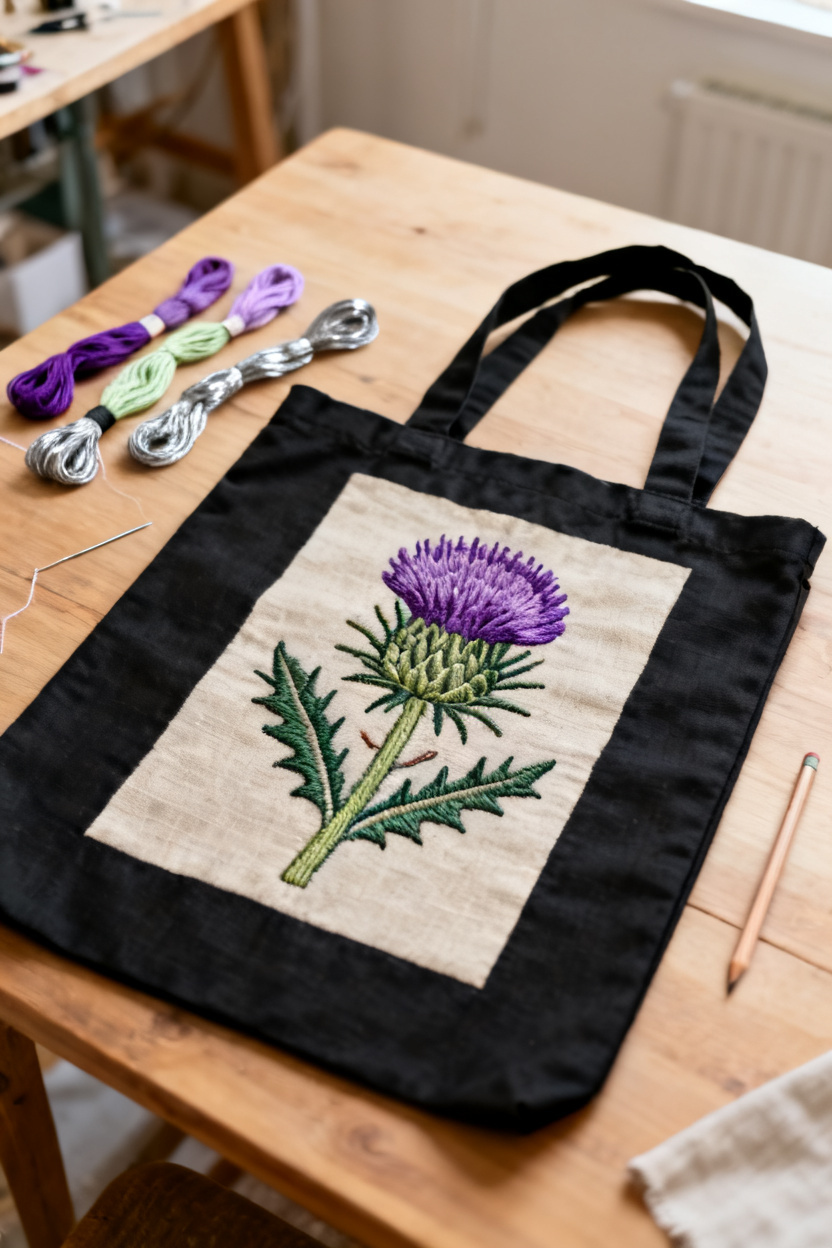
5. Thistle Tote Bag
A thistle tote bag turns a plain carryall into a piece you will want to use every week. It gives you a practical canvas for Scottish-inspired embroidery, and it works well for bold stitches or light detail. You get beauty and purpose in the same project, which is why this idea stays popular.
A bag you actually use
A tote bag makes sense because it gives your embroidery a life outside the craft room. You can carry books, groceries, or your daily basics, and the stitched thistle adds character without feeling too formal. If you like projects that do more than sit on a shelf, this one earns its place fast.
The flat front panel also makes stitching easier. You can mark your design clearly, place the thistle in the center or near one corner, and keep the rest of the bag simple. That clean layout helps the purple bloom and spiky leaves stand out.
Why this design feels special
People love this idea because it looks personal. A thistle on a tote bag feels thoughtful, almost like a quiet nod to Scotland that you can take anywhere. It also suits many styles, from rustic linen bags to black canvas totes with sharper contrast.
You can make it soft and pretty with pale green stems and muted lavender petals, or go richer with deep violet thread and a touch of silver-gray. I find that a slightly oversized thistle works best here, since the bag needs a design that still shows from a few steps away.
Best times to make one
This project is a smart choice when you want a gift that feels handmade but still useful. It also works well if you are building confidence, since the shape of a tote is simple and forgiving compared with fitted clothing or home decor with exact edge placement.
If you sell crafts, a thistle tote bag can also attract attention at markets. Shoppers often respond to pieces they can picture using right away, and this one is easy to imagine in daily life.
A small trick that helps
Choose a sturdy bag with a smooth weave before you stitch. Thick canvas holds embroidery well, but a very rough surface can fight your needle and blur fine detail. Draw your thistle slightly above the center line, because bags tend to fold at the middle and can hide part of the design when carried.
6. Framed Thistle Sampler
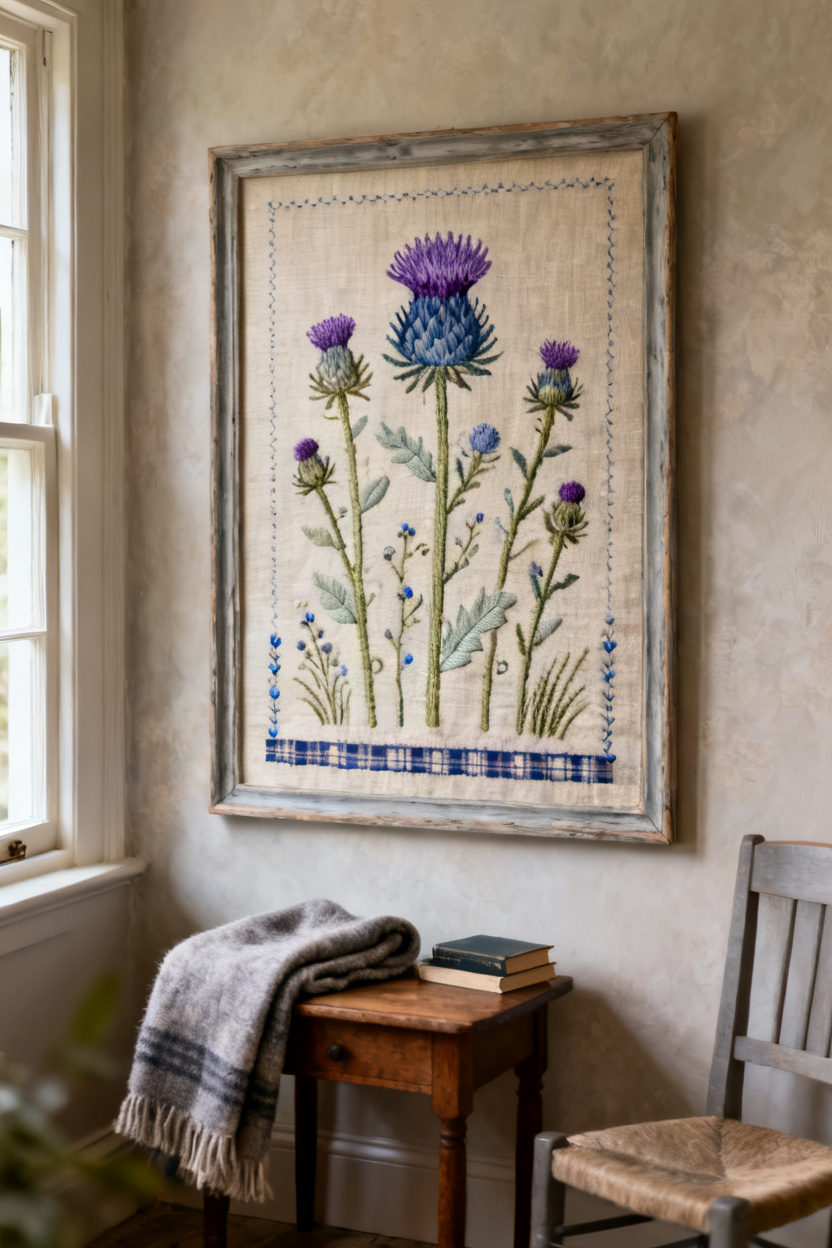
A framed sampler lets you show off thistle embroidery in a more classic, heirloom-style format. It feels calm, detailed, and a little old-world in the best way. If you want a project with strong Scottish flair, this one gives you room to tell a bigger story.
More than one thistle
A sampler gives you space to include several thistle stems instead of just one bloom. That changes the mood right away. The design can feel like a botanical study, a folk pattern, or even a memory of a Highland garden, depending on your colors and layout.
You can add small touches that support the theme, such as tiny knots for wild grass, soft blue accents for sky, or a narrow border that echoes tartan lines without copying them too closely. Those details make the finished piece feel thoughtful and layered.
Why stitchers keep saving this idea
This kind of project has lasting appeal because it looks finished and display-ready. You are not guessing where it should go once the stitching ends. Frame it, hang it, and enjoy it.
It also gives you freedom to practice more than one embroidery stitch in the same work. Satin stitch can shape petals, stem stitch can define outlines, and French knots can fill in small buds or background texture. That variety keeps the project interesting from start to finish.
I also like the pace of a sampler. You do not rush it. You build it bit by bit, and the slow progress becomes part of its charm.
Where it fits best
A framed thistle sampler is a good idea when you want wall art that feels handmade rather than store-bought. It suits hallways, reading corners, and guest rooms especially well, since those spaces often need a piece with warmth but not too much visual noise.
This idea also works if you want to mark a family connection to Scotland. A sampler can hold that meaning in a quiet way, and it often feels more timeless than trend-led decor pieces.
Make the frame part matter
Pick the frame before your final stitch count is set. That sounds small, but it saves trouble later. A thin wood or antique-look frame often suits thistles better than something glossy, and knowing the frame size early helps you leave the right amount of fabric border so the design does not feel cramped.
7. Thistle Tea Towel
A thistle tea towel brings embroidery into the kitchen with a simple project that still feels elegant. It is useful, easy to display, and full of cottage-style Scottish charm. For many people, this is one of the nicest ways to add the thistle to daily life.
Simple, but never dull
A tea towel has a long, narrow shape, so the embroidery placement matters more than you might think. A single thistle near the lower corner looks neat and classic, while a row of small thistles along the bottom edge gives a fuller look. Both styles work, and both keep the towel functional.
This project also suits clean stitching. The background is often plain, which means every color choice shows clearly. Soft white or oatmeal fabric gives the purple flower a crisp stage, and green stems add just enough movement without crowding the space.
Why people come back to it
One reason people love this idea is that it makes an ordinary item feel personal. A tea towel already belongs in the home, so adding embroidery does not ask you to find a new place for it. You simply upgrade something useful.
It is also a good gift. Housewarming baskets, holiday presents, and hostess gifts all feel warmer with a stitched towel tucked inside. You can even pair it with shortbread or tea for a stronger Scottish feel without doing anything overly themed.
Good moments to choose this project
This is a smart option when you want a faster finish. Compared with jackets, pillows, or large framed pieces, a tea towel asks for less fabric and usually less stitch time. That makes it ideal when your hands want a project, but your schedule says otherwise.
You may also enjoy it if you are testing a new thistle pattern. A towel gives you enough room to explore shape and color, but it does not demand weeks of work if you decide to keep the design simple.
Keep the fabric working for you
Use a towel with a tight, even weave so your stitches stay crisp after washing. Pre-wash it first, because kitchen linens can shrink and pull on embroidery later. If you want the thistle to last through regular use, keep the design near the decorative edge rather than the center, where folding and drying hands cause more wear.
8. Thistle Bookmark Charm
A thistle bookmark is a small embroidery idea with a lot of heart. It is neat, giftable, and easy to finish, which makes it perfect when you want Scottish flair in a compact form. Even a simple stitched bloom can make reading feel more personal.
Small scale, strong impact
This project works because the thistle has such a clear shape. Even in a narrow bookmark, the flower head, pointed leaves, and upright stem still read well. You do not need a large space to capture the look, and that makes the design feel efficient and satisfying.
A bookmark also lets you use rich thread without overwhelming the piece. Deep purple petals, moss green leaves, and a touch of gray or cream in the background can create a polished result on a very small surface.
Why it wins people over
Readers love useful handmade gifts, and this one feels thoughtful without becoming fussy. You can slip it into a birthday card, pair it with a novel, or keep it for your own nightly reading. It is small enough to finish in a short stretch, but it still feels complete.
I also think bookmarks are a good answer when you want to try thistle embroidery without the pressure of a large project. You can test colors, stitch order, and spacing in a format that stays manageable from start to finish.
Where this idea fits best
A thistle bookmark is a great choice when you want a travel-friendly project. It uses little fabric and thread, and the piece is easy to carry in a small pouch. It also suits craft fairs, book clubs, and seasonal gifts, since people often want handmade items that feel useful right away.
If you enjoy finishing details, this project gives you room for them. A felt backing, tassel, or neat stitched edge can make the bookmark feel refined without adding much extra work.
The detail that improves everything
Stabilize the fabric before you stitch, then back the finished bookmark with felt or another soft layer. That keeps the shape firm and hides the thread ends, so the piece looks clean from both sides. A bookmark gets handled often, so tidy finishing matters as much as the embroidery itself.
Conclusion
These four thistle embroidery ideas prove that Scottish style can live almost anywhere, from your kitchen to your bookshelf. You do not need a huge canvas to make the thistle feel bold, meaningful, and beautiful. Pick the project that fits your time, your skill level, and your space right now. A tote bag may suit your daily routine, while a bookmark or tea towel can give you a quicker win. Save your favorite idea, choose your thread colors, and start with one thistle. That single flower often leads to the next project, and then the next.