Your floors set the mood before anyone notices the sofa, art, or lighting. The right pattern can make a room feel richer, brighter, and far more pulled together.
These 12 ideas help you turn plain rooms into spaces with warmth, movement, and quiet luxury. Think honey-toned oak, smoky walnut, soft matte finishes, and light catching each angled plank as you walk across the room.
If your home feels flat, cold, or unfinished, the right floor choice can fix that fast. A smart herringbone layout adds depth, polish, and that designer look people save again and again.
Below, you’ll find 12 inspiring ideas that bring classic beauty into real homes. Some feel airy and calm. Others feel bold and dramatic. All of them are made to last.
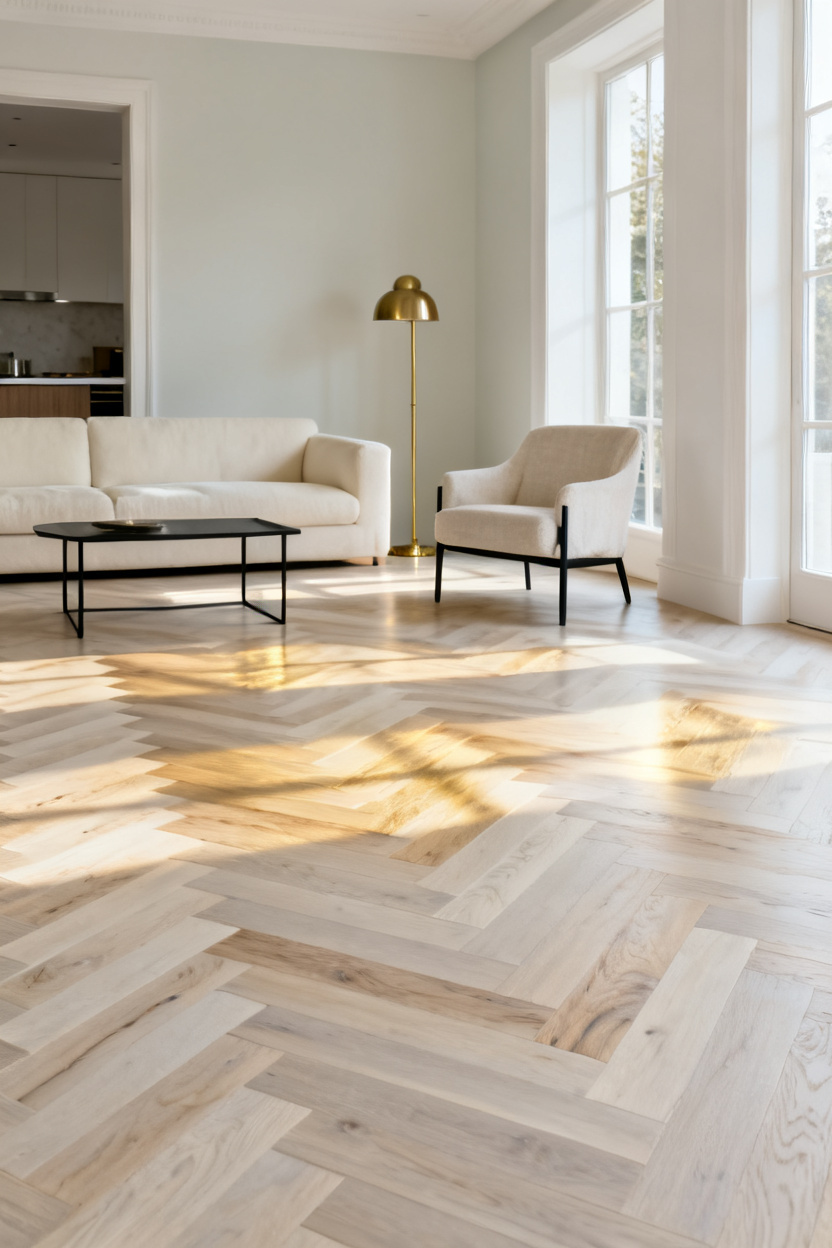
1. White Oak Glow
A pale white oak herringbone floor gives you that clean, expensive look without making a room feel cold. It reflects light in a soft way, which helps small rooms feel wider and dark rooms feel more open. If you want timeless elegance that still feels fresh, this is one of the safest and smartest choices you can make.
Why this tone feels so easy
White oak has a quiet warmth that sits between beige and soft brown, so it works with many styles without fighting for attention. You can pair it with cream walls, black metal, linen fabrics, or warm brass, and it still feels balanced. I like this option for homes that need flexibility, because your furniture can change over time and the floor still makes sense.
The herringbone pattern adds motion to the grain, which keeps a pale floor from looking flat. That detail matters. In a simple room, the angled layout becomes the texture that carries the whole space. You get interest underfoot, but the room still feels calm.
Where it works best
This look shines in living rooms, open-plan kitchens, and entryways where natural light can bounce across the boards. Morning sun brings out its soft gold notes, and in the evening it takes on a creamy, mellow tone that feels restful. If your walls are white or pale greige, the floor gives enough contrast to stop the space from feeling washed out.
You may also love it in apartments where every design move has to work harder. Pale wood can make one connected room feel bigger, and the pattern adds enough style that you do not need heavy rugs or lots of decor. The room feels polished with less effort.
A finish that keeps it timeless
Choose a matte or low-sheen finish if you want this idea to age well. High gloss can feel too formal and shows dust, footprints, and tiny scratches much faster. A matte finish keeps the natural grain visible, which is exactly what makes white oak so appealing.
If you want the pattern to stand out, ask for slightly longer planks with a clear grain match. That small detail helps each zigzag read clearly across the room. It is subtle, but you will notice the difference every day.
2. Dark Floors, Soft Light
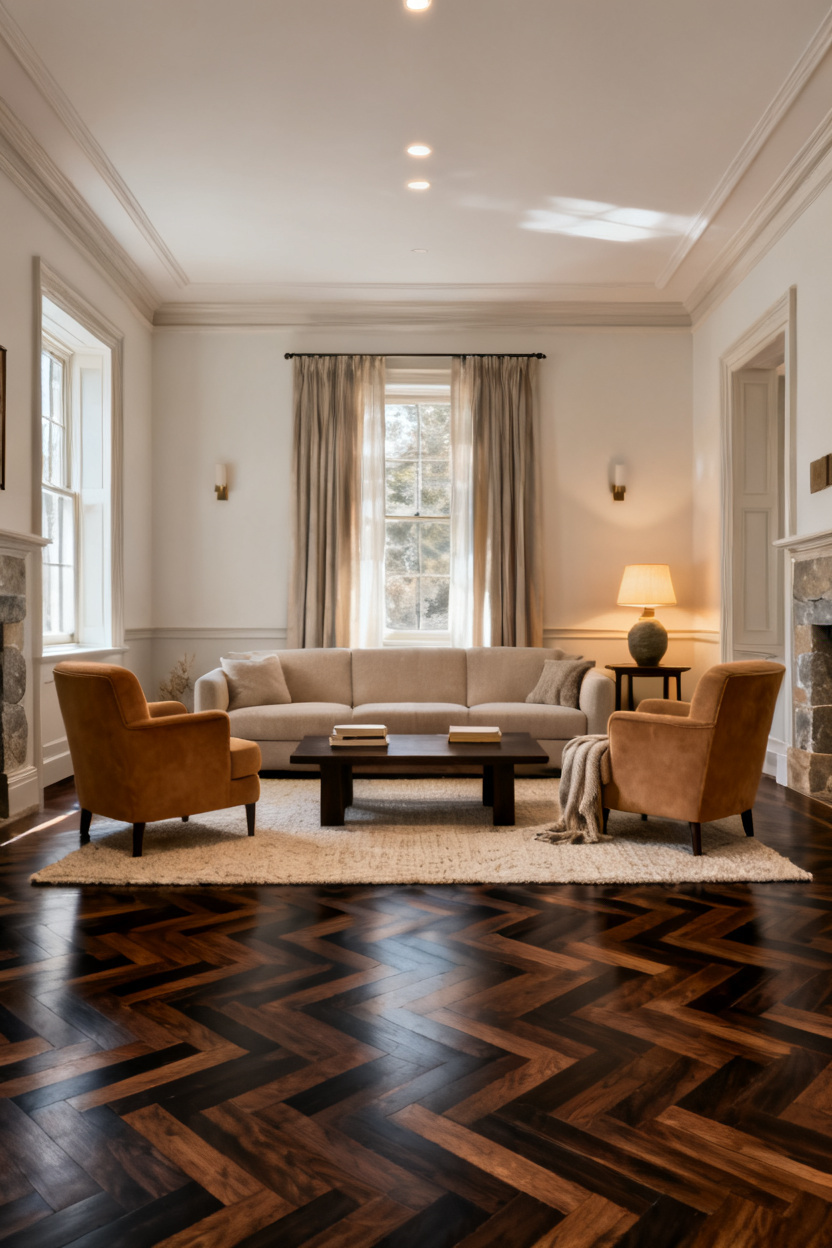
A rich walnut herringbone floor brings depth, contrast, and instant character. It can turn a plain room into one that feels layered and collected, almost like it has always been there. This is the choice for you if you want timeless elegance with a moodier edge.
The drama that still feels classic
Dark wood has a way of grounding a space. The herringbone layout makes that depth feel even more refined, because the angled pattern catches light differently from every direction. Instead of reading as one heavy block of color, the floor shifts in tone through the day, from espresso to chestnut to soft cocoa.
That movement is what keeps walnut from feeling dull. In a room with tall ceilings, pale walls, and simple furniture, it creates contrast that looks thoughtful rather than loud. I often think of it as the floor version of a tailored coat. It is strong, elegant, and never trying too hard.
How to keep it from feeling heavy
Balance matters here. Pair deep walnut floors with off-white walls, warm neutrals, or muted stone tones so the room still breathes. Upholstery in oatmeal, camel, or soft gray helps lighten the mood, and natural fabrics stop the space from looking too formal.
Lighting also does a lot of work. A dark floor looks best when you layer the room with table lamps, wall lights, and warm ceiling light instead of relying on one bright overhead source. That mix softens the shadows and brings out the wood grain in a much richer way.
Best rooms for this look
Walnut herringbone feels especially strong in dining rooms, studies, and formal living rooms. These spaces already benefit from a little weight and structure, so the floor supports the mood rather than fighting it. If you have classic trim, old doors, or traditional windows, dark wood makes those details feel more important.
It can also work in a bedroom if you want a cocoon effect. Add ivory bedding, layered curtains, and a textured rug at the side of the bed, and the room feels calm instead of dark. The floor gives you the depth. The soft materials keep it inviting.
A smart way to protect the look
Ask for a finish with a little variation in tone rather than one flat, very dark stain. That small shift hides dust better and helps everyday marks blend in. You still get the bold look, but the floor is easier to live with in a busy home.
If you have pets or children, this detail matters even more. You want a floor that looks beautiful on a Sunday morning and on a rushed Tuesday night. Walnut can do both when the finish is chosen well.
3. Scandi Calm Underfoot
A light blonde herringbone floor creates that airy, restful feeling so many people want at home. It makes rooms feel cleaner, softer, and more open, yet the pattern keeps the look from becoming plain. If your goal is a home that feels bright and peaceful, this idea deserves a close look.
The beauty of barely-there color
Blonde wood sits close to sand, flax, and pale straw, which gives it a soft natural look. That gentle color works well when you want the floor to support the room instead of stealing attention from it. The herringbone pattern then adds the shape and rhythm that a simple shade might otherwise lack.
This is one of my favorite choices for modern homes that still need warmth. Painted walls, simple cabinets, and clean-lined furniture can start to feel hard if every surface is crisp and flat. A pale wood floor with visible grain fixes that problem in a quiet way.
Rooms that benefit most
Kitchens, breakfast nooks, and family rooms all suit this look because the lighter tone helps these spaces feel fresh and easy. In homes with limited daylight, blonde boards can lift the whole mood of the room. You notice the difference right away when sunlight moves across the pattern and gives it a soft glow.
This style also works beautifully in small homes. A lighter floor color creates visual continuity, and the angled layout draws your eye across the room instead of stopping it. That sense of flow can make compact spaces feel more generous.
Materials that pair well
You will get the best result if you layer this floor with materials that have their own texture. Think limewashed walls, woven chairs, brushed oak cabinets, soft wool rugs, and matte ceramics. Each one adds depth without taking away from the calm feeling underfoot.
Black accents can sharpen the look, but use them lightly. A few dark frames or a slim light fixture are enough. Too much hard contrast can interrupt the soft, quiet effect that makes this floor so appealing in the first place.
The detail people often miss
Keep the plank width moderate. Very narrow pieces can make the pattern feel busy, and very wide boards may lose some of the crisp herringbone shape. A balanced size helps the pattern read clearly while keeping the room relaxed and uncluttered.
If you are choosing stain samples, test them in morning and evening light. Pale woods can shift more than you expect. A sample that looks creamy at noon may lean gray by sunset, so it pays to check before you commit.

4. Old Wood, New Luxury
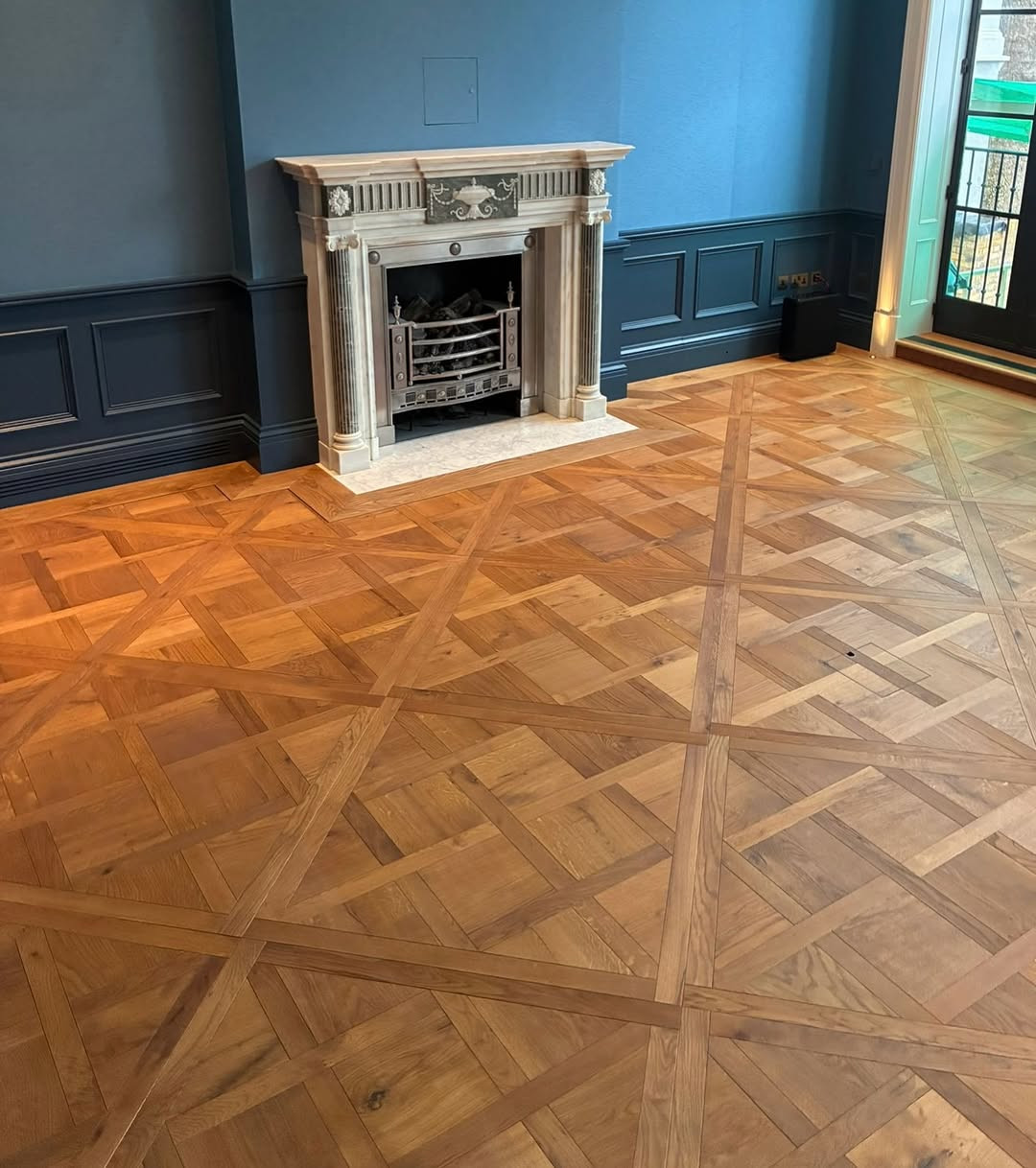
A reclaimed wood herringbone floor gives you age, texture, and story in one strong design move. It feels warm and lived-in, yet the herringbone layout adds order and polish. That mix of rustic character and classic pattern creates a home that feels personal, grounded, and quietly grand.
Why the contrast works
Reclaimed boards often carry knots, saw marks, color shifts, and small imperfections that new wood does not have. In a straight layout, those details can sometimes feel too rough. In herringbone, they look intentional and refined because the pattern brings structure to the natural variation.
This balance is what makes the style so attractive. You get history and charm, but the floor still feels designed. I have seen this work especially well in homes that mix old and new pieces, like a modern sofa with an antique table or sleek lighting in a farmhouse kitchen.
Where it makes the biggest impact
Large entry halls, dining rooms, and open living spaces are ideal places for reclaimed wood because the pattern has room to show itself. As you move across the floor, every change in grain and tone adds depth. The room feels layered before you bring in much furniture.
It also suits renovated older homes where you want new updates to respect the building’s character. A reclaimed floor can bridge that gap. It ties fresh paint, new cabinets, and modern fixtures back to the age of the house in a believable way.
How to keep it polished
The trick is choosing wood with character but not chaos. Too much contrast between boards can make the pattern feel scattered, especially in a busy room. Look for a mix that shows age and patina, yet still shares a common undertone such as warm brown, weathered honey, or muted umber.
Credit to @element7flooring
5. The Border That Finishes It
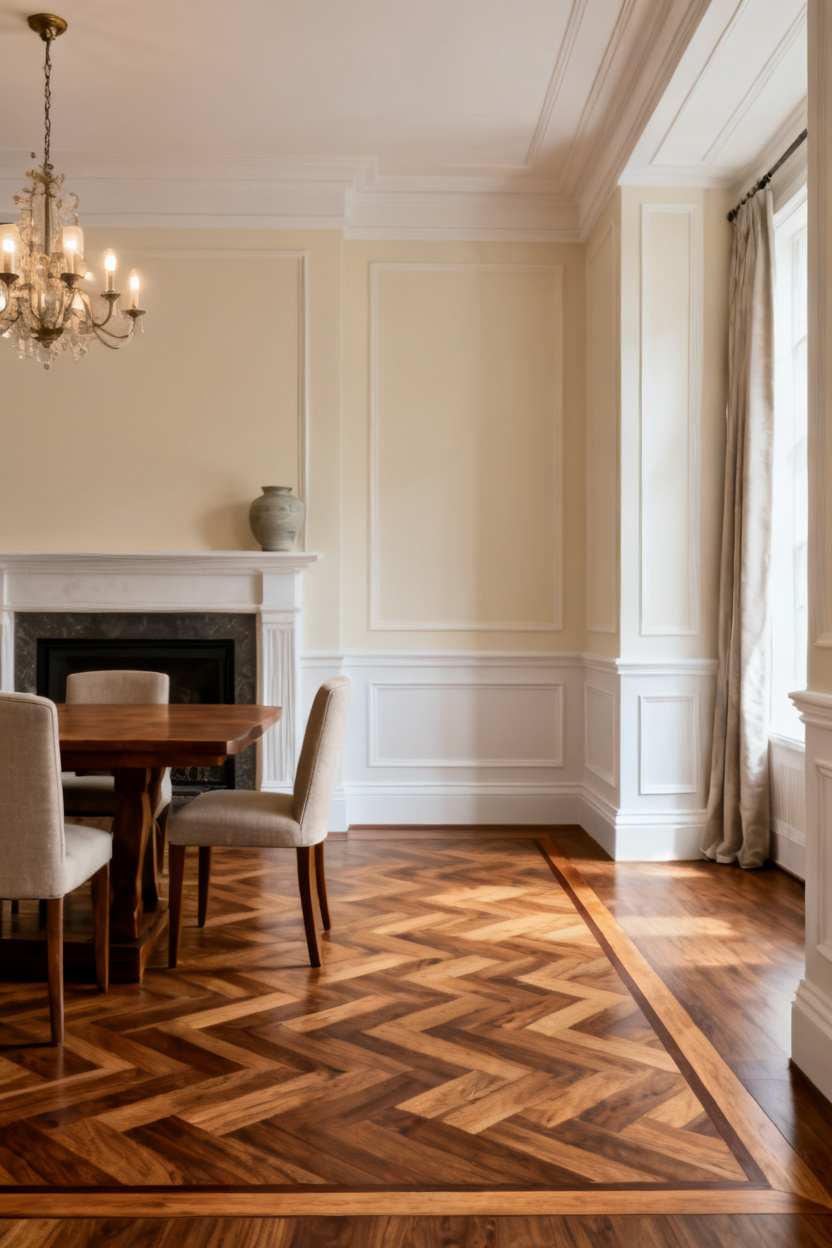
A framed herringbone floor uses a simple wood border around the pattern to give the whole room a more tailored, finished look.
A plain herringbone layout already feels refined, but a border changes the mood. It turns the floor into a design feature with clearer lines and stronger shape. In dining rooms, studies, and formal living spaces, that extra detail can make the room feel planned instead of merely decorated.
A room with sharper definition
The border acts like a frame around art. It tells your eye where the pattern begins and ends, which gives the space more order. If your room has tall baseboards, a fireplace, or classic trim, this idea often fits right in because the floor starts to echo those strong architectural lines.
You also get more control over proportion. In a wide room, a narrow border keeps the floor from looking too busy. In a smaller room, a slightly wider border can make the center pattern feel more intentional and less crowded. I have seen this work especially well in old homes where the floor needs to hold its own against detailed walls and moldings.
Why people keep saving this look
You get a more custom result without changing the basic pattern. That matters because many homeowners want a floor that feels special, but they do not want something so bold that it becomes tiring after a year or two. A border adds interest in a controlled way, and that is why it tends to age well.
This idea also hides awkward room edges better than a full-pattern layout that runs straight into every wall. Corners, alcoves, and slight wall shifts look neater when the herringbone field sits inside a clean frame. That small design move can make a room feel more expensive, even if the wood itself is simple.
Where it makes the most sense
This style works best when you want the floor to feel formal, calm, and balanced. Dining rooms are an easy match because the border helps anchor the table area. Bedrooms with classic furniture also benefit, since the framed layout adds softness and structure at the same time.
You should also think about it if your home has open doorways between rooms. The border creates a graceful stopping point, so one room can feel complete before the next flooring zone begins. That visual pause makes the whole floor plan easier to read.
A detail worth planning early
Border width matters more than many people expect. Ask your installer to map the room first so the center of the herringbone pattern lands evenly and the border does not end up too thin on one side. A border that feels balanced will always look more polished than one added as an afterthought.
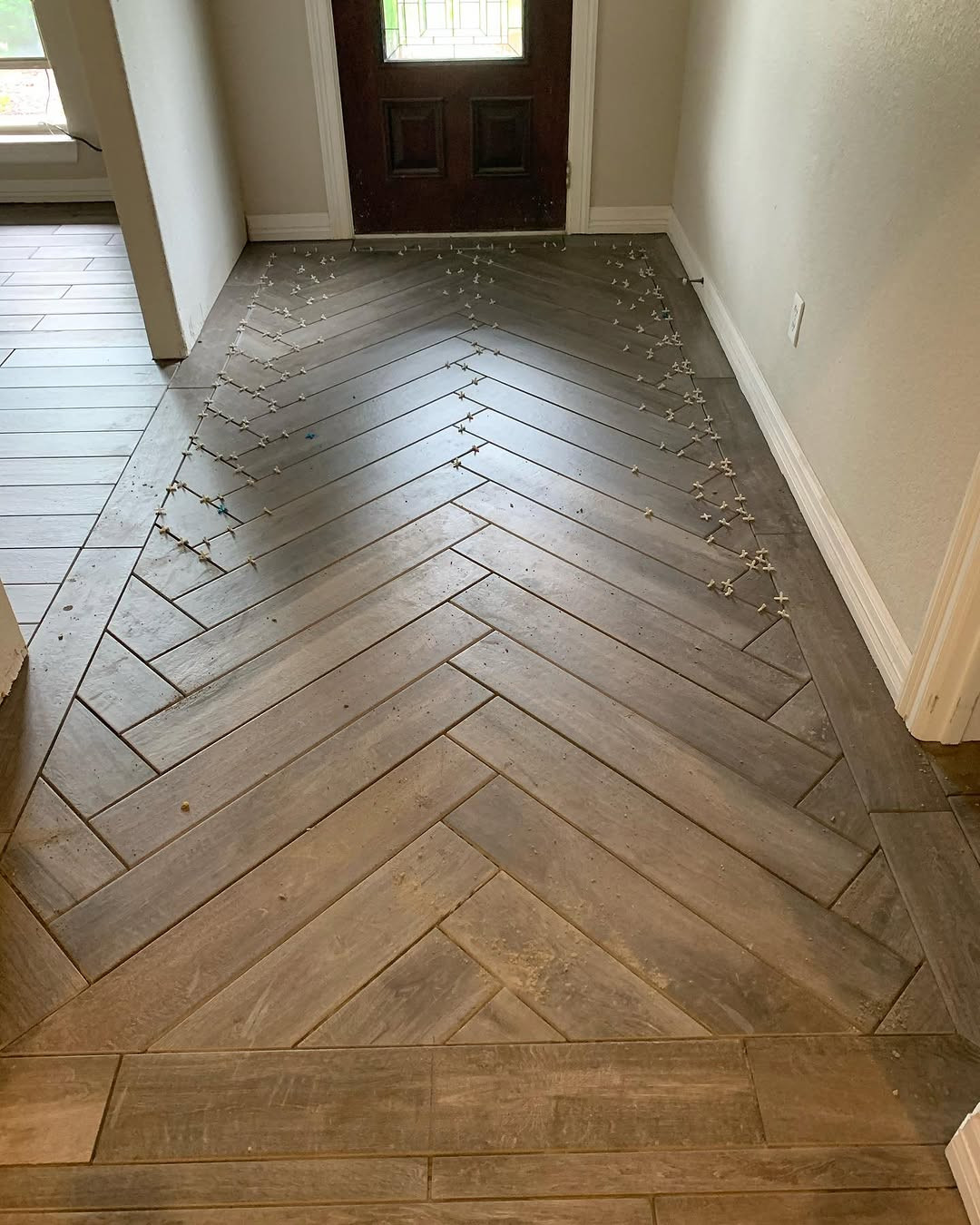
6. Tiny Entry, Grand First Look
Herringbone in a small entry or hallway turns a tight passage into a memorable first impression.
Many people focus on large rooms and forget the narrow spaces that connect the house. Yet your entry is where the tone begins. A well-placed herringbone floor can make that slim area feel more designed, more welcoming, and far less forgettable.
Why small spaces benefit most
In a compact entry, every surface has to work harder. The floor often carries most of the visual weight because there may be little wall space once you add a mirror, hooks, or a console table. Herringbone gives the area movement, which helps the space feel active and considered instead of plain.
The pattern can also help guide the eye. If the layout runs in the direction of the hall, the space tends to feel longer. If it is set on a diagonal, the floor can soften a boxy shape and make the area feel a little wider. That is a smart trick in older homes where entries are tight and awkward.
The appeal is practical too
This is not only about style. Smaller spaces are easier to upgrade because they need less material, so you can often choose better wood or a more careful installation without blowing your budget. That gives you a high-end look in the exact place where guests notice it first.
You also gain contrast against plain walls, simple benches, and everyday storage pieces. A striking floor can carry the room, which means you do not need to crowd the entry with decor. If you prefer a cleaner home, that matters.
When this idea fits your home
It makes sense if your front door opens straight into a narrow hall, or if your home lacks a true foyer. It also works well in apartments where the entry area is small but visible from the living room. In that setting, the floor acts like a soft divider without the need for walls.
I also like this idea for side entrances and mudroom-adjacent spaces that need a touch of grace. You can choose a durable finish and still get that timeless pattern, so the area stays hard-working without looking overly plain.
The smartest move before install
Pattern direction should match the shape of the space. Before the boards go down, stand at the doorway and decide where you want the eye to travel first. That one choice affects how large, calm, or dramatic the entry feels, and it is much easier to settle it on paper than after the first row is cut.
Credit to @macfloorsdfw
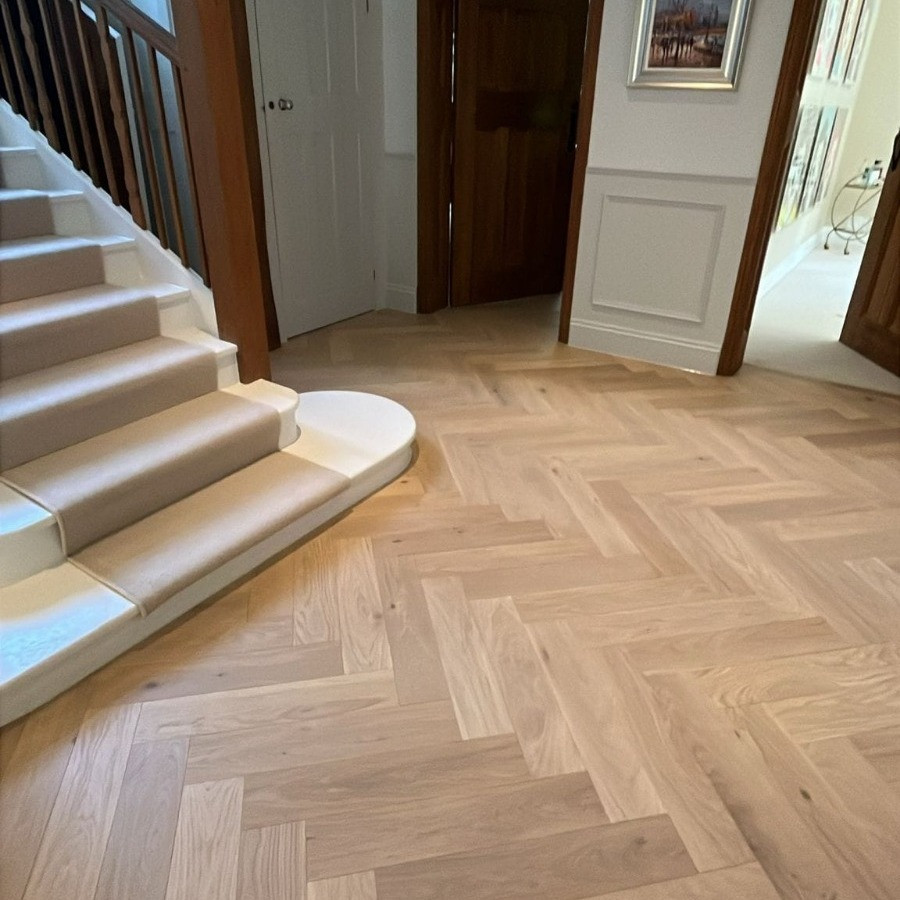
7. Matte Herringbone, Less Fuss
A matte finish gives herringbone wood floors a softer look that hides everyday wear better than a shiny surface.
Glossy floors catch light, but they also show everything. Dust, small scratches, and footprints become more obvious fast. A matte herringbone floor keeps the elegance of the pattern while making daily life easier, which is why so many busy homes now lean this way.
The softer look that lasts
Matte finish changes how the pattern reads. Instead of bouncing light sharply, the boards show more natural grain and tone. That makes the floor feel calm and grounded, and it helps the herringbone layout look rich without becoming flashy.
This style suits homes that mix old and new pieces. You can pair it with vintage furniture, modern lighting, or simple linen textiles and the floor still feels right. The finish lets the pattern speak in a quieter voice, which often creates a more timeless result.
I often think matte floors look more believable in real life. They do not seem staged. They feel lived in, in the best way.
Why busy households love it
A lower-sheen finish is forgiving. That matters if you have kids, pets, or rooms that see a lot of traffic from the kitchen to the back door. The floor still looks refined, but you are less likely to notice every mark by midweek.
There is another benefit. Sunlight tends to read more gently on matte wood, so the floor does not glare as much during the day. In bright homes, that can make the room feel warmer and easier on the eyes.
Where this finish works best
This is a strong option for family rooms, open-plan spaces, and primary bedrooms where comfort matters as much as style. It also works in homes with large windows because the softer finish balances the strong natural light. If you want a floor that feels elegant but not formal, this is often the safer bet.
You should also consider it if you already have a lot of reflective surfaces, such as polished stone counters, glossy tile, or metal fixtures. The matte floor brings in balance and keeps the room from feeling too hard.
A finish choice that pays off
Low-sheen sealers deserve a close look when you sample boards. Ask to see the same wood and stain in more than one sheen level, then place each sample in morning and evening light. Many people think they want shine until they see how much calmer and more expensive the matte version feels in an actual room.
Credit to @dwjprojects1
8. Herringbone Up the Stairs
Running herringbone from the main floor onto the stairs creates a strong visual flow and gives the home a custom, high-end feel.
Most people stop the pattern at the base of the staircase. That is the safe choice, but it is not the only one. When the floor continues upward, the house feels more connected, and the stairs become part of the design instead of a separate practical zone.
Why this look feels so custom
Stairs naturally draw attention because they rise through the home and catch light from several angles. A herringbone layout gives them rhythm and shape, which can make even a simple staircase look more architectural. If your railing is plain, the floor pattern can supply the detail that the staircase lacks.
The effect is strongest in homes with open sightlines. From the front door or living room, you can see the pattern travel upward, and that movement gives the whole space more depth. It feels thoughtful because it is less common and harder to fake with surface decor.
The design benefits beyond style
Carrying the same wood floor onto the stairs can make the main level and upper hall feel tied together. That helps smaller homes feel less chopped up. It also reduces abrupt material changes, which can make a renovation look cleaner and more settled.
9. Pattern Meets Warm Gray
Warm gray herringbone gives you a softer take on classic wood flooring, and it works well when you want pattern without strong red or yellow tones. You still get the charm of wood, but the color feels calmer and a bit more tailored, which helps the herringbone layout stand out in a quiet, refined way.
A softer route to contrast
Some wood floors bring a lot of color into a room. Warm gray does something different. It sits between brown and ash, so your furniture, rugs, and wall paint get more freedom. If you like black accents, linen upholstery, or creamy walls, this shade creates a clean base that does not fight for attention.
I like this option in homes that need balance. A dark herringbone floor can feel dramatic, and a very pale one can read beachy or stark. Warm gray lands in a sweet spot. It feels current, but it does not chase trends too hard.
Where this look shines
You can use this floor in a living room, dining room, or open-plan main area and get a polished result. It works especially well in homes with mixed finishes, like brass lighting, black window frames, and soft wood furniture. The pattern gives you interest. The color keeps the room steady.
This is also a smart choice if natural light changes a lot during the day. Morning sun can warm the floor, and cooler afternoon light will pull out the gray tones. That shift gives the boards depth, which helps the herringbone pattern look more layered and rich.
A detail worth getting right
Ask for large floor samples and place them in at least two rooms before you decide. Warm gray can lean taupe, mushroom, or smoky brown depending on your wall color and sunlight. If the sample still looks balanced in bright light and shadow, you likely found the right tone.
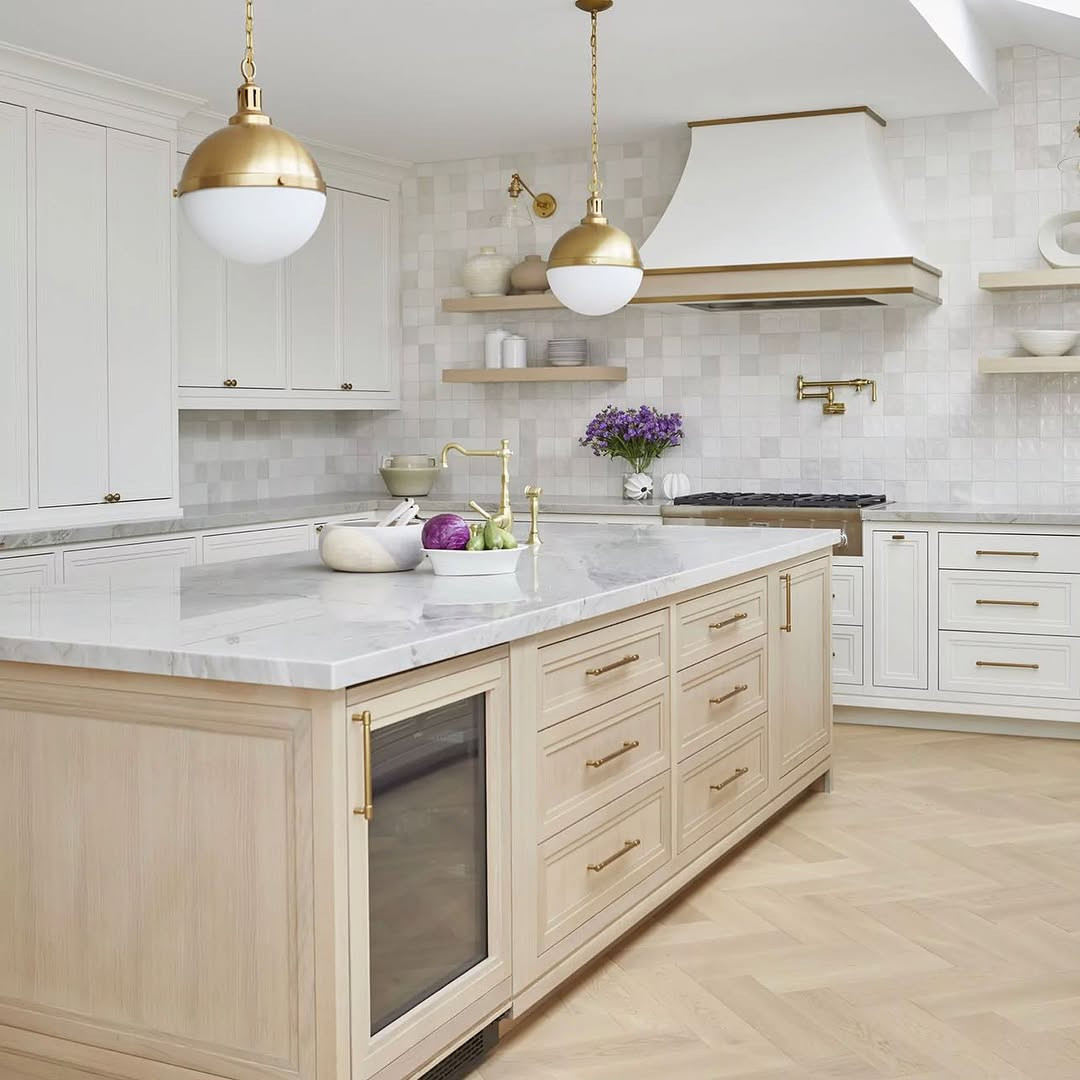
10. Kitchen Floors With Rhythm
Herringbone in the kitchen turns a hard-working room into one that feels designed from edge to edge. The pattern adds motion under cabinets and islands, and it gives even a simple kitchen a custom look that tile does not always achieve.
Why wood works here
Many people think of herringbone wood floors for living rooms first, yet the kitchen may be the more surprising choice. It brings warmth to a room filled with hard surfaces like stone counters, painted cabinets, and metal hardware. That contrast matters. It helps the whole space feel less cold and more welcoming.
If your kitchen is long or open to another room, the angled layout can also guide the eye through the space. A straight plank floor often fades into the background. Herringbone has more presence, so it can make a builder-grade kitchen feel planned and personal.
Smart pairings that keep it timeless
This idea looks strongest with simple cabinet fronts and quiet stone. Shaker doors, slab cabinets, or even classic inset styles all work because the floor already carries pattern. I would skip a busy backsplash if your herringbone is tight and detailed. Too many competing lines can make the room feel restless.
Medium-tone oak, walnut-look finishes, and sealed engineered wood are often practical choices here. They hide crumbs better than very dark floors and show less wear than glossy finishes. If you cook often, that matters more than people admit.
What helps it last
Use runners near the sink and range, and choose a finish with low sheen so scratches show less. In kitchens, life happens fast. A floor that looks good after spills, chair movement, and dropped utensils will stay beautiful longer. Good placement and a durable top coat make the style feel easy, not precious.
Credit to @dvirainteriors
11. One Room, Better Flow
Continuous herringbone flooring can connect several rooms and make your home feel larger, calmer, and more expensive. Instead of stopping the pattern at every doorway, you let it run through the main spaces, which creates a stronger visual line and a more custom result.
The power of one uninterrupted floor
Small breaks can chop up a home. Threshold strips, sudden plank changes, and different floor colors make each room feel separate, even when you want an open, easy mood. A continuous herringbone wood floor fixes that. It pulls spaces together and gives your layout more confidence.
This works well in older homes with several connected rooms, but I also love it in newer houses that need more character. The pattern adds history. The long run from room to room adds polish. You feel both the charm and the order.
Planning matters more than people expect
This idea looks simple when it is done well, but the layout needs careful planning. The installer must decide where the center line starts, how the pattern turns through doorways, and how each sightline will look from the front door or main hall. A rushed plan can make the pattern drift, and that ruins the calm effect.
You should also think about transition zones before work starts. If one room needs tile, place the change in a spot that feels natural, like a pantry entry or mudroom break. That keeps the main living areas strong and unified.
The finish that keeps it believable
Choose one wood tone and one finish across the connected spaces, even if the rooms have different wall colors or furniture styles. That steady base lets each room keep its own personality without losing the overall flow. If you want contrast, bring it in through rugs, paint, and textiles, not floor changes.
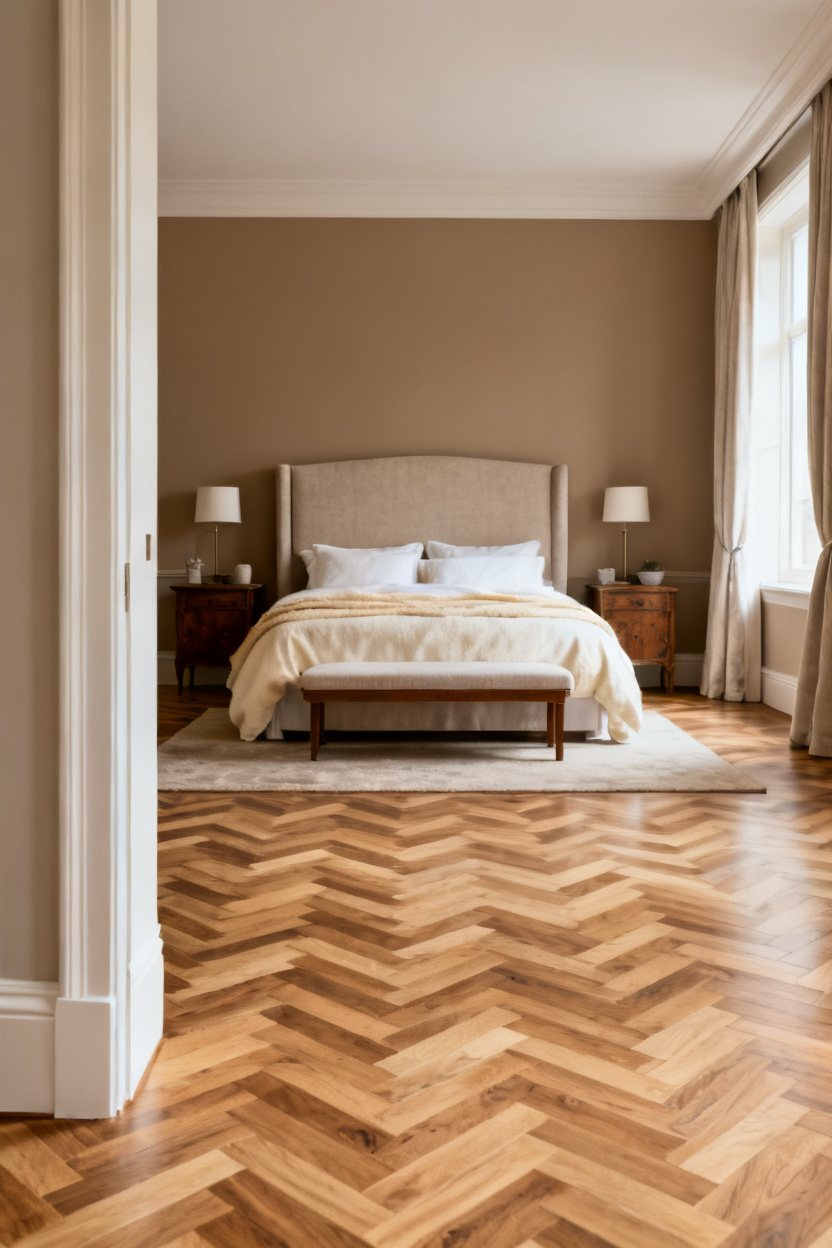
12. Herringbone Around the Bed
Bedroom herringbone floors bring a quiet kind of luxury that feels restful instead of showy. The pattern adds detail underfoot, yet the room still stays calm when you pair it with soft bedding, simple curtains, and gentle color. In a space where comfort matters most, that mix feels just right.
A polished look that still feels soft
Bedrooms often rely on textiles for warmth, but the floor sets the mood before the rug goes down. Herringbone wood gives the room shape and movement, which helps a plain bedroom feel finished. You do not need bold furniture when the floor already adds interest in a subtle way.
This idea works especially well in primary bedrooms with enough open floor to show the pattern. Place the bed so the layout is visible at both sides and at the foot. That view makes the room feel more thoughtful, almost like a boutique hotel, but still personal.
How to keep the room restful
The trick is balance. Use a softer stain, a low-sheen finish, and rugs that leave some of the pattern exposed. If you cover almost the whole floor, you lose the point of the design. If you leave too much bare wood in a very large room, the bedroom can feel cooler than you want.
I also like this floor with upholstered beds, warm whites, mushroom paint, and antique wood nightstands. Those pieces soften the strong lines of the pattern. The room feels layered, not stiff, and that makes it easier to live with every day.
A small choice with big effect
Set the bed on the longest wall and check how the herringbone points lead your eye when you enter the room. If the pattern seems to push attention away from the bed, adjust the rug size or bench placement to pull the focus back. Little layout moves can make the floor support the room instead of stealing the scene.
Conclusion
The best herringbone wood floor ideas do more than look pretty. They shape how your home feels as you move through it. A warm gray tone can calm a room, a kitchen pattern can add life, a continuous layout can create flow, and a bedroom design can bring quiet luxury where you need it most.
If one of these ideas fits your home, save it and study the details before you start. Sample boards, room light, layout direction, and finish choice all make a real difference. Pick the version that suits your life, and your floor will keep its timeless elegance for years.