Your planter can do more than hold soil. With the right pot, it can become a tiny escape filled with mossy paths, worn stone steps, little doors, and that soft storybook feeling you wish you could keep on your patio all year.
These 9 ideas help you turn plain containers into scenes that feel rich, layered, and full of charm. You will see delicate teacups, rough tree stumps, cracked pots, old metal buckets, and hanging baskets transformed into miniature worlds with texture, color, and real personality.
If your garden feels flat or your porch needs a focal point, these ideas give you a simple way to add wonder without needing much space. Expect weathered wood, cool gray stone, velvety green moss, and tiny details that make every planter feel alive.
1. Teacup Pots for Tiny Cottages
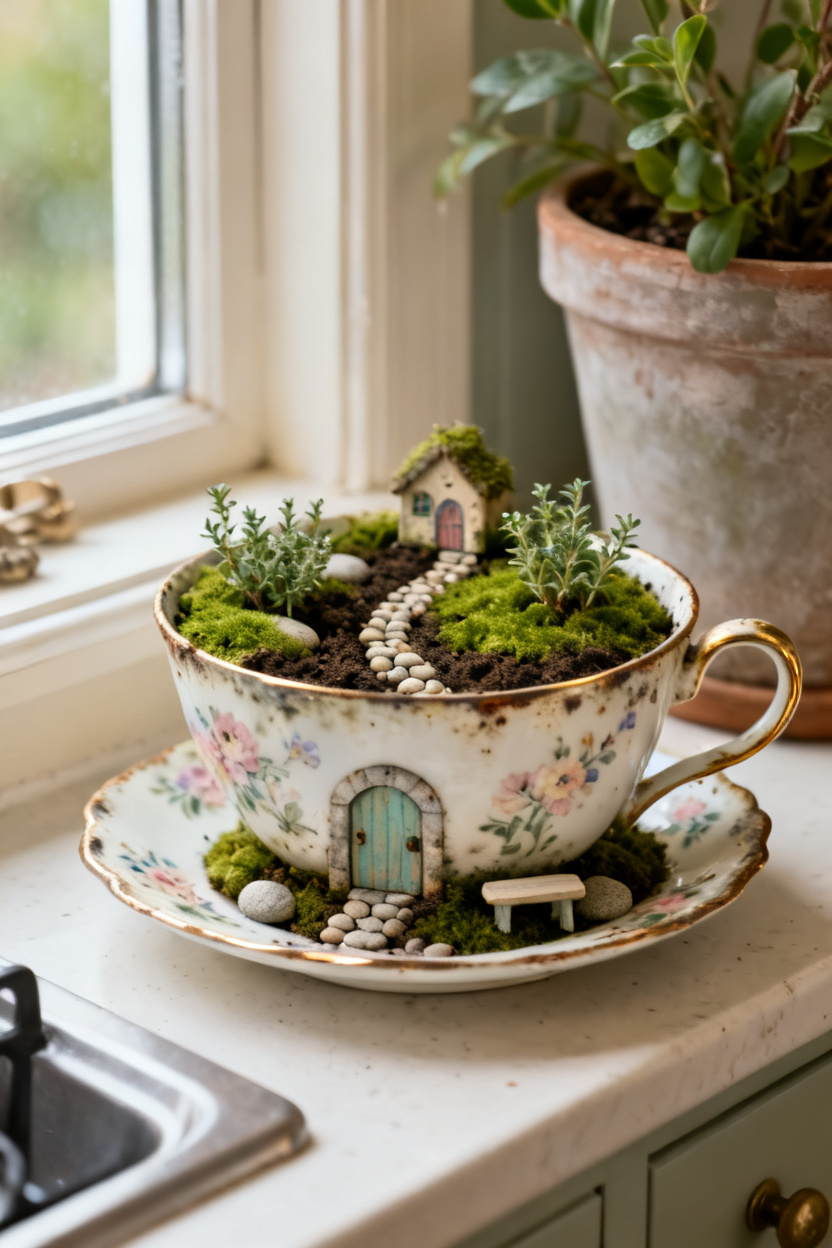
A vintage teacup gives you a small stage, but that is exactly why it works so well. You can build a quiet little scene that feels precious and complete, with just a pinch of moss, a pebble path, and a tiny painted door tucked near the rim. The scale does the magic for you, because every small detail looks bigger, sweeter, and more intentional inside a cup.
A soft look with big charm
Teacup fairy gardens are loved for their gentle, old-fashioned mood. Floral china, faded gold trim, and curved handles already feel decorative, so the pot does half the styling before you even add plants. If you like a cozy, storybook look, this is one of the easiest ways to get it.
You also do not need much room. A teacup fits on a kitchen windowsill, side table, porch shelf, or even beside a larger planter where it acts like a secret little world hidden in plain sight. I like that kind of detail. It catches the eye slowly.
How to make the small scale work
The best plants for this setup stay low and neat. Moss is a natural choice because it makes the cup feel old and settled, as if fairies have lived there for years. Tiny herbs such as thyme can work too, especially if you want a cottage look with a useful plant mixed in.
Choose just two or three accessories, then stop. A mini door, one small stone path, and a pebble bench often look better than a crowded collection of tiny pieces that fight for space. In a teacup, restraint matters. Every inch shows.
If your cup has no drainage hole, add only a thin layer of soil and keep watering light. You can also set a nursery pot inside the teacup if you want better control. That simple trick keeps roots healthier and helps the arrangement last longer without turning soggy.
2. Tree Stump Planters with Forest Charm
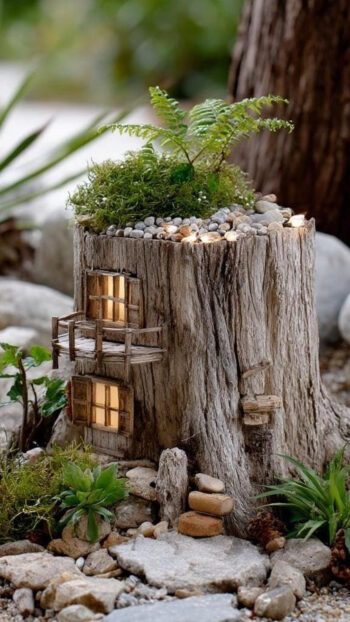
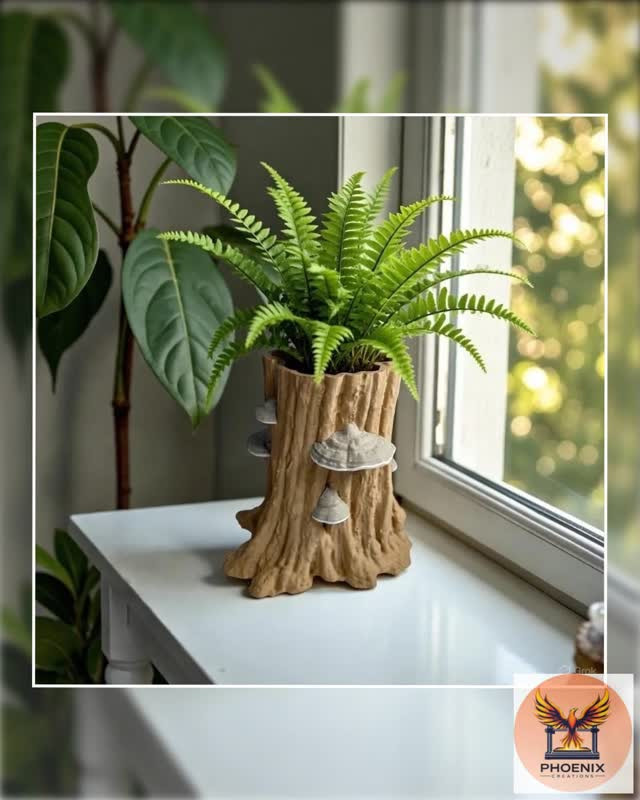
A tree stump planter already looks like it belongs in a fairy tale. Its rough bark, weathered cuts, and natural cracks create the kind of texture you cannot fake with new materials. When you add moss, mushrooms, and a winding path, the whole pot starts to feel like a hidden woodland clearing.
Why the rustic texture matters
Tree stump planters give your fairy garden instant age and character. The outside looks rugged, the inside feels earthy, and that contrast makes delicate fairy pieces stand out more. Tiny white mushrooms or a painted red door seem more believable when they sit against bark and old wood grain.
This style also helps your garden blend into the rest of your yard. If you have ferns, hostas, ivy, or other leafy plants nearby, the stump does not look staged. It looks settled, as though it grew there and slowly turned into a home for something magical.
You can lean into that woodland mood with deep green moss, bark chips, acorns, and smooth river stones. Those simple materials add shape without looking flashy. The result feels calm, shaded, and a little mysterious, which is exactly the mood many people want from a forest-inspired pot.
Best times to use this idea
This planter style works especially well when you want a bigger fairy garden with more texture than color. It is a smart choice for patios with lots of natural wood, for shady corners, or for spots that need a stronger focal point than a plain ceramic pot can give.
Keep the arrangement loose and natural. Let one side stay uneven. Tuck the fairy house slightly off-center. That small bit of imbalance makes the scene feel more real, and real is often what makes a miniature garden feel magical instead of overly neat.
Credit to @phoenixcreations777
3. Broken Pot Scenes with Layered Paths
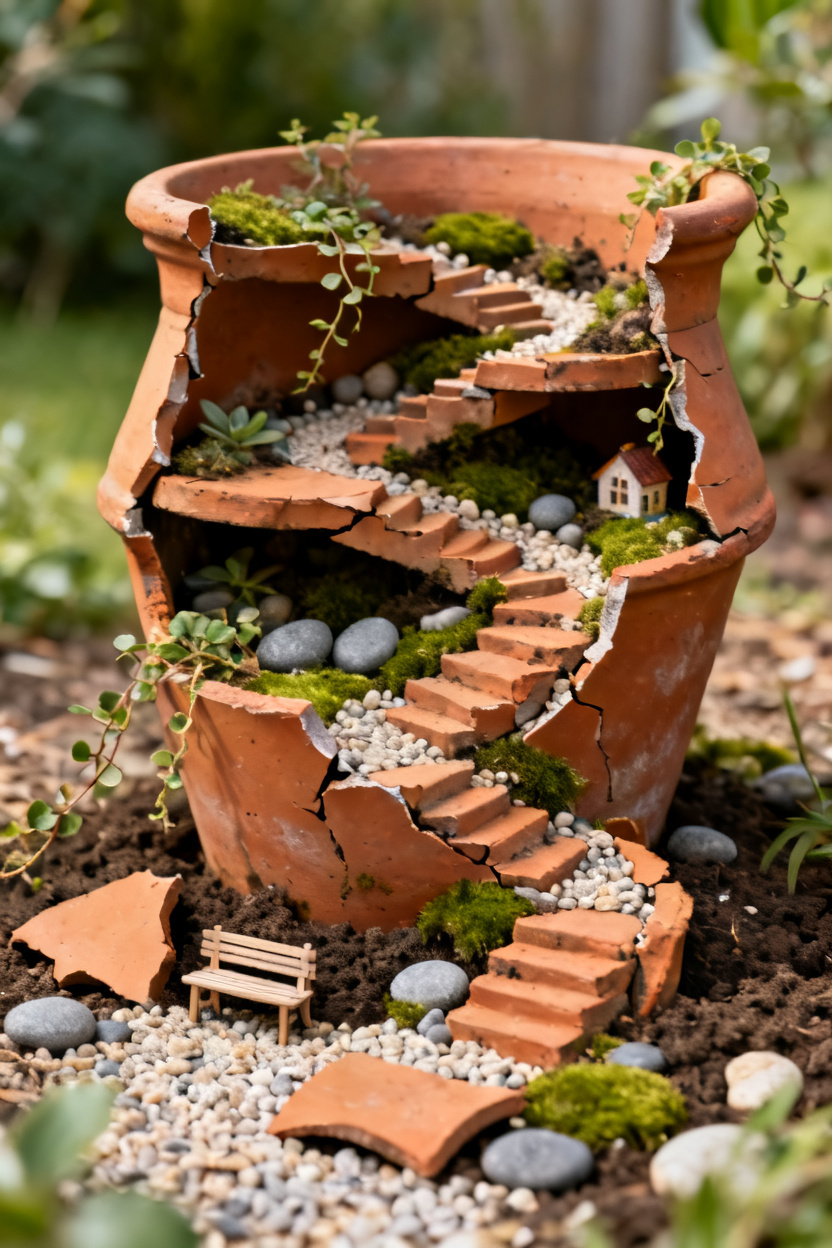
A cracked planter can become the most interesting pot in your garden. Instead of hiding the damage, you use it to build levels, steps, and little terraces that pull the eye upward. The broken edges give the scene movement, and that layered look makes even a small fairy garden feel deep and dramatic.
Turning damage into depth
Broken pot fairy gardens stand out because they tell a visual story. The missing pieces create natural openings for stairways, ledges, and tiny paths that seem to lead somewhere. A plain round planter gives you one flat surface, but a broken one offers angles, shadows, and places to hide details.
This style is perfect if you want more than a simple moss bed with one accessory. You can make a winding staircase from chipped terracotta, then add pebbles between the levels so the whole piece feels connected. Every tier gives you another chance to place something small and surprising.
I love this look because it feels alive. Your eye keeps moving from one level to the next, from a little bench at the bottom to a tiny house near the top. That sense of discovery makes people pause and look longer.
The color helps too. Warm clay tones, green moss, gray pebbles, and pale gravel create a soft, earthy palette that feels natural in almost any outdoor space. Even when the planter is small, it reads as a complete miniature landscape.
How to build it so it lasts
Start by setting the largest broken pieces firmly into the soil to form stable terraces. You do not want loose shards shifting after watering. Press soil behind each piece, then test it with your fingers before adding decorative items.
Use trailing plants sparingly. A little spillover softens the edges and makes the levels feel older, but too much growth can hide the paths you worked to create. Keep the steps visible, and the whole scene will feel more intentional and much easier to enjoy from a distance.
4. Galvanized Buckets for Rustic Villages
An old metal bucket gives your fairy garden a relaxed farmhouse mood that feels collected over time. The soft gray finish, small dents, and worn edges add history before you plant a single thing. If you want a planter that feels casual and nostalgic, this one has a lot of personality.
The easy farmhouse mood
Galvanized buckets are strong visual anchors. Their cool metal tone makes green moss look richer, and it sets off warm touches like wood slices, tiny ladders, or miniature cottage doors. That contrast between weathered metal and soft planting is what gives this style its charm.
These buckets also fit many outdoor spaces. They work on porches, by garden beds, beside a back step, or lined up on a small patio. Because the material already looks a bit aged, the display does not need to feel polished. In fact, a slightly imperfect setup often looks better.
How to make the scene feel lived in
Think of the bucket as a tiny village square instead of a single fairy house plot. Add a curved pebble path, a low patch of moss, and one or two structures that feel handmade, such as a small shed, a fence, or a tiny bench. The wider opening of many buckets gives you room to spread details out so the scene can breathe.
This style is especially useful when you want a fuller fairy garden without the formal feel of glazed pots. Buckets have a friendly, practical look. They suggest age and use, which makes the miniature village seem more believable.
If the bucket is deep, raise the planting area with filler at the bottom so your design sits closer to the rim. That one change matters more than many people expect. It brings the tiny details into view and stops the garden from looking sunken and lost inside the container.
I also like to keep the color palette simple here. Green, gray, brown, and one muted accent color often feel right. Too many bright pieces can fight with the quiet, weathered style that makes bucket planters so appealing in the first place.
5. Hanging Baskets as Floating Worlds
A hanging basket changes the whole mood of a fairy garden because it lifts the scene off the ground. That sense of height makes the planter feel light, almost suspended in its own little world. When the basket sways in a breeze, the effect becomes even more magical.
Why height changes everything
Hanging basket fairy gardens pull the eye upward, which gives your porch or garden corner a stronger sense of shape. Ground-level planters can disappear among larger pots, but a suspended one feels special right away. It creates a small focal point without taking up floor space.
The basket shape also helps you build a soft, rounded world. Trailing plants can spill over the sides like vines on a cliff, while moss and miniature features sit safely in the center. That layered effect makes the planter feel lush from every angle, not just from the front.
This idea is especially good for small homes, balconies, and compact patios. You get the detail of a fairy garden without giving up precious surface space. That alone makes it worth saving if you like decorating with plants but do not have much room.
Design choices that keep it clear and beautiful
Because a hanging basket sits above eye level or just below it, your best details need to read clearly from a short distance. Choose larger miniature pieces than you would use in a teacup, and avoid clutter near the edges. A simple house, a visible path, and one standout accent often work better than many tiny objects.
Think about movement too. Light accessories can tip, slide, or vanish into foliage once the basket starts to sway. Press pathways firmly into the soil, anchor decorations well, and keep heavier items near the center where the basket is most stable.
6. Terracotta Bowls for Desert Fairies
A wide terracotta bowl gives you space to build a low, open fairy garden that feels sunbaked and calm. It suits a desert look so well because the clay already carries warm color, and the shallow shape lets every tiny path, stone, and plant stay visible from above.
Warm, Open Desert Style
This idea works best when you lean into dry textures and simple shapes. Use sandy soil, pale gravel, and small succulents that stay compact, such as hens and chicks, echeveria, or haworthia. A bowl planter makes the scene feel broad and quiet, almost like a tiny desert village tucked into a hidden courtyard.
People love this style because it looks detailed without feeling crowded. You can add a mini adobe-style house, a few flat stepping stones, and one curved twig as a weathered fence, then stop. That restraint is part of the charm. The whole scene feels peaceful, and it stays easy to care for since succulents need less water than many fairy garden plants.
Best Use and A Simple Trick
This is a smart choice if you have a sunny porch, a patio table, or a hot corner where leafy fairy gardens struggle. The low bowl shape also helps if you want children or guests to see the design clearly without lifting the pot. I like it for people who want a magical planter that still feels neat and grown-up.
One tip makes a big difference here. Tilt the soil slightly higher in the back before you plant. That small slope gives your fairy garden depth, so the tiny home and stones show up better from the front. It also helps the arrangement look more natural, as if the little world formed over time instead of being placed all at once.
Keep the color palette tight. Terracotta, sand, soft green, and a touch of faded white usually look better than too many bright accents. In a desert fairy garden, the quiet details do the real work.
7. Drawer Planters with Storybook Appeal
An old drawer planter has built-in character, which is why it feels so right for a fairy garden with a storybook mood. The straight sides create a natural frame, and the worn wood makes even new mini furniture look as if it has been there for years.
Why An Old Drawer Feels Special
A drawer gives you more room to create tiny neighborhoods instead of one single focal point. You can place a small cottage on one side, a pebble path through the middle, and a bench or birdbath near the edge. Trailing plants softening the corners make the whole setup feel older and more lived in.
Many people love this planter style because it turns a forgotten piece into something imaginative. It also feels personal. A drawer from a dresser, desk, or cabinet often has scratches, paint marks, or metal pulls that add charm you cannot fake. Those little flaws help the fairy garden feel believable, like a miniature place with a past.
This idea is especially good if you want a fuller arrangement with moss, creeping thyme, baby tears, or small ivy. The rectangular shape gives you planting zones, so you can mix textures without the scene becoming messy. If your style leans cottage, vintage, or shabby chic, this one fits in fast.
How To Keep It Charming, Not Cluttered
The risk with a drawer planter is trying to fill every inch. You do not need that. Leave some open soil or gravel path between features so each little item can breathe. A fairy garden often looks more magical when the eye can wander slowly from one detail to the next.
Drill drainage holes before adding soil, and line the base with mesh so dirt does not spill out. Then treat the drawer as a tiny yard, not a storage box. I have found that one house, one path, and two accent pieces usually look better than a packed scene full of mini signs and decorations.

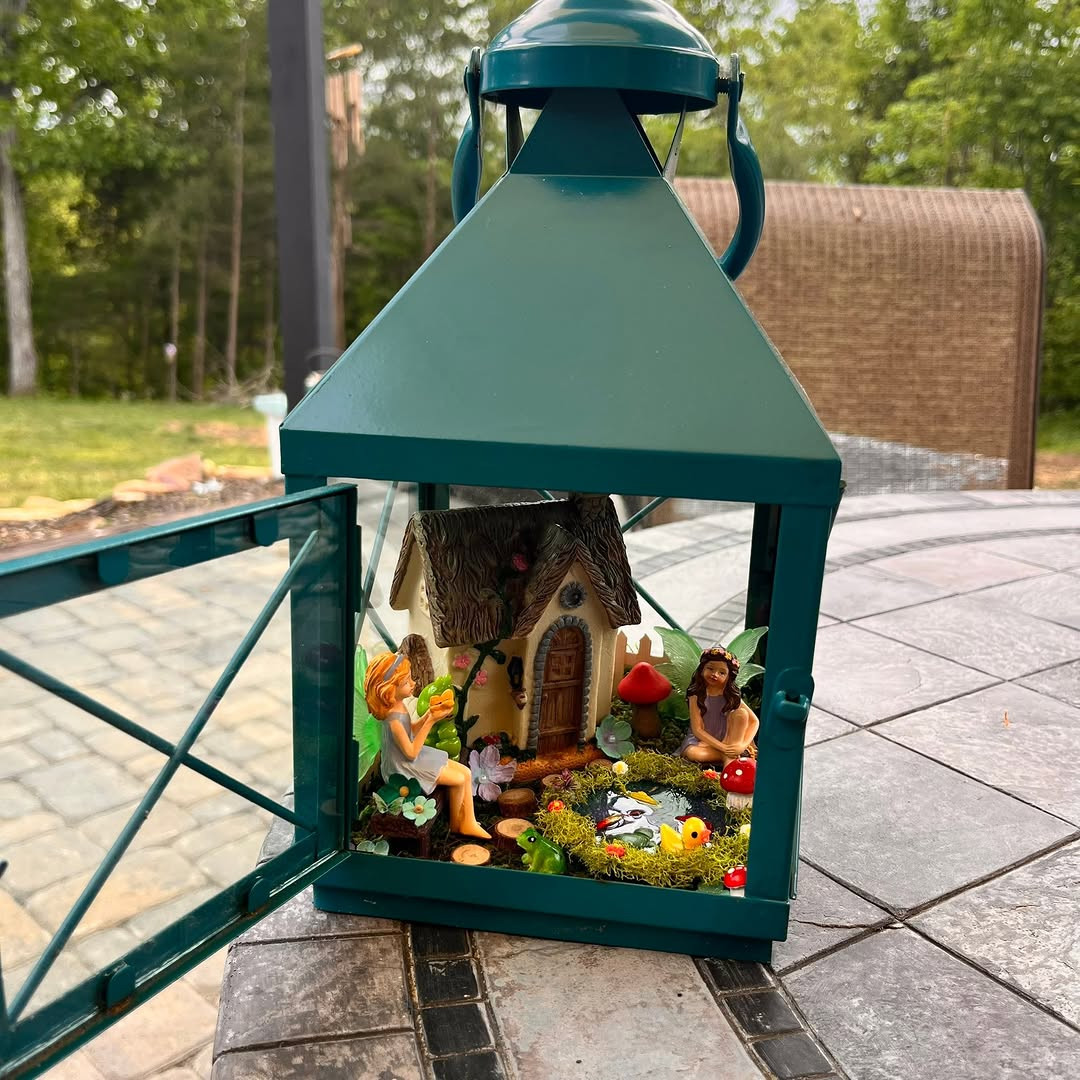
8. Lantern Containers with Evening Glow
A lantern container brings something most fairy garden pots do not have, light. Even in the daytime, the frame creates a sheltered look, and by evening the whole garden feels softer, warmer, and more alive.
Soft Light Changes Everything
This style works because the lantern already suggests a tiny protected space. Add small plants around the base, tuck in moss, and place a battery tea light or safe micro light inside, and the fairy garden starts to feel like a little hideaway. At dusk, that glow turns simple details into something memorable.
People are drawn to this look for a few clear reasons. First, it adds mood without much effort. Second, it suits small spaces, since even a compact lantern can hold a complete design. Third, it stands out on a porch step, balcony table, or windowsill where evening light matters. You get decoration by day and atmosphere by night.
Where It Works Best
This is a good idea for covered patios, apartment balconies, and front steps where you want a fairy garden with a bit more presence. Choose petite plants that stay in scale, such as moss, small ferns, or creeping fig, if the lantern gets partial shade. If the spot is brighter, use tiny sedums and keep the look cleaner and more open.
The smartest move is to treat the light as part of the design, not an add-on. Place the brightest point behind a fairy door, near a tiny bench, or beside a curved path so the scene has direction. That gives the eye somewhere to go. A lantern fairy garden should feel like a secret you notice slowly.
Keep materials simple. Black metal, aged brass, or white painted lanterns all photograph well and pair nicely with miniature accessories. If you want a fairy garden pot that feels romantic in the evening, this one is hard to beat.
Credit to @sweetnsaltymermaid
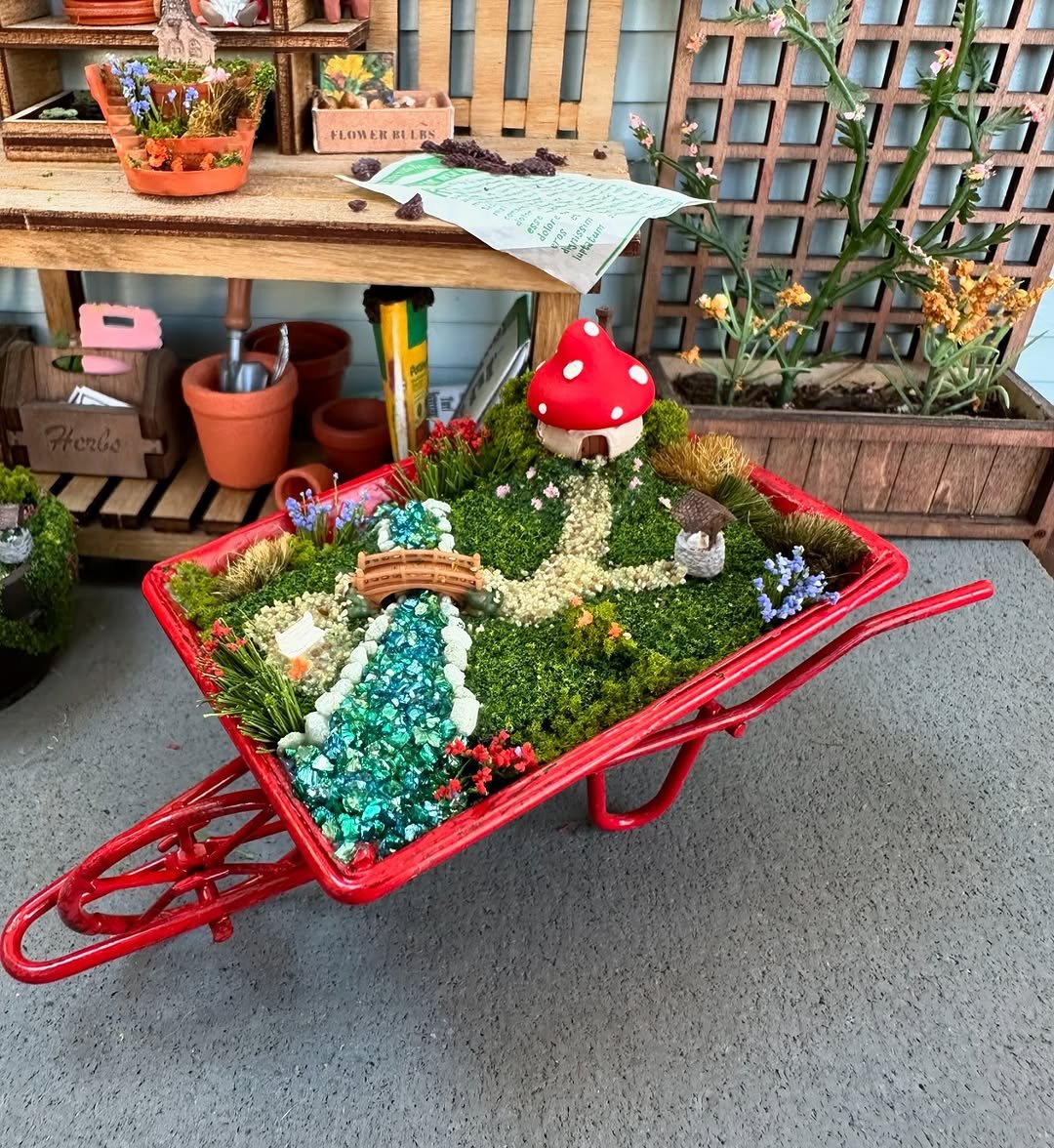
9. Wheelbarrow Pots for Cottage Yards
A wheelbarrow pot brings movement and charm to a fairy garden in a way few containers can. It feels playful from the start, and that makes it perfect for a tiny cottage-yard scene with flowers spilling over the sides. The shape tells a story before you even add one miniature house or path.
Cottage Character In A Small Space
This planter works well because it looks useful, not decorative in a stiff way. That simple farm-and-garden feel gives your fairy setup a relaxed mood. Fill it with low flowers, moss, and one small cottage, and the whole piece starts to look like a fairy gardener left it there after a busy morning in the yard.
People love this idea because the angled basin makes arrangements look full fast. You can plant higher in the back, let soft growth spill toward the front, and create a natural sense of abundance. It is also a good pick for anyone who likes a cottage garden style with a bit more color, since mini roses, alyssum, and creeping Jenny suit it so well.
A Better Way To Style It
Use the wheelbarrow like a tiny moving garden, not a deep flower pot. Keep one clear focal point, such as a fairy house, watering can, or curved stone path, then let the planting support that story. I would also keep the handle and wheel visible, because those parts give the planter its charm.
Set the tallest plant at the back, medium texture in the center, and trailing growth near the lip. That layout helps the wheelbarrow feel balanced and keeps the scene easy to read from a distance. For the strongest cottage look, choose soft pink, white, and green instead of too many bright colors.
Credit to @kayteekays.minis
Conclusion
Fairy gardens feel more special when the container has its own personality. A terracotta bowl creates a dry, quiet world. A drawer adds story. A lantern brings evening mood, and a wheelbarrow gives you playful cottage charm.
If one of these ideas fits your space, start small and build around one clear theme. Save the look you love most, gather a few plants, and let the pot shape guide the design. That is often the easiest way to turn an ordinary planter into a magical mini world that feels worth keeping out all season.